




Leading ELISA Kit Suppliers Globally
Table of Contents
In life science research, obtaining consistent and reproducible results is essential for reliable experimental conclusions. However, many researchers encounter challenges including unstable reagent performance, variable enzyme activity, and significant batch-to-batch inconsistency. These issues often arise from insufficient quality control, unstandardized production, or inappropriate experimental handling, which can disrupt research progress and delay important findings.
Global demand for high-performance ELISA kits continues to rise, driven by the increasing requirement for accurate and stable quantitative detection. ELISA remains one of the most reliable and widely applied techniques in biomarker identification, drug development, and routine laboratory analysis. Its ability to detect low-abundance targets with reliable precision makes it an indispensable tool in life science research.
Selecting a reagent supplier represents a decision about long-term experimental stability, technical reliability, and professional support. Among global manufacturers, Beijing Solarbio Science & Technology Co., Ltd. has established a strong reputation for providing well-validated, high-stability ELISA kits supported by a comprehensive life science product platform. This article outlines the core principles of ELISA kits and the key characteristics of world-leading suppliers.
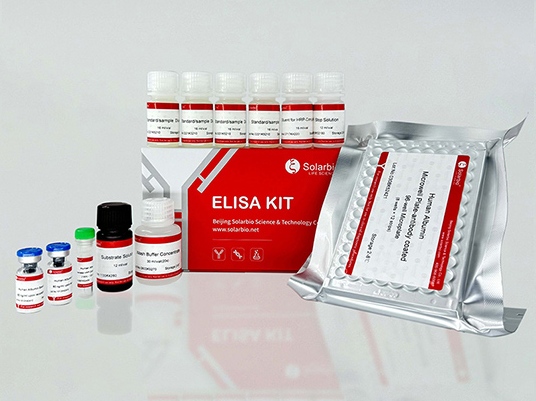
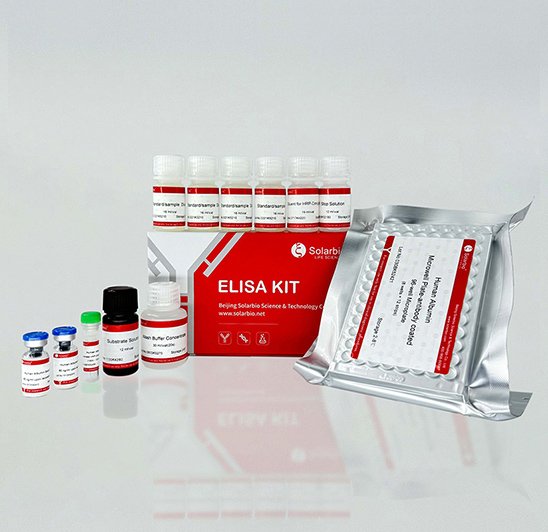
What Are ELISA Kits and Why Are They Essential in Modern Research?
ELISA kits are standard analytical tools for the qualitative and quantitative detection of proteins, antibodies, hormones, and other biological molecules in liquid samples. Their value lies in a balanced combination of high sensitivity, reliable accuracy, and adaptability to diverse experimental systems.
Before selecting a supplier, it is important to understand the technical mechanism of ELISA, as well as its enduring advantages over emerging detection methods.
Core Principle of ELISA Technology
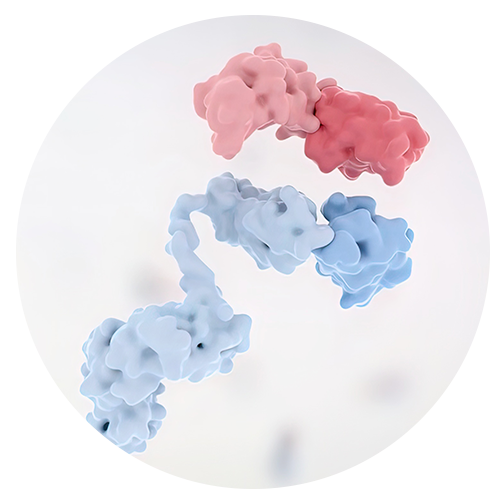
ELISA is based on highly specific antigen–antibody binding combined with enzyme-mediated colorimetric reactions. In a typical procedure, the target analyte is immobilized on a solid-phase surface. Enzyme-conjugated detection antibodies are then introduced, followed by the addition of a chromogenic substrate to produce a measurable color signal. Signal intensity is directly proportional to the concentration of the target analyte.
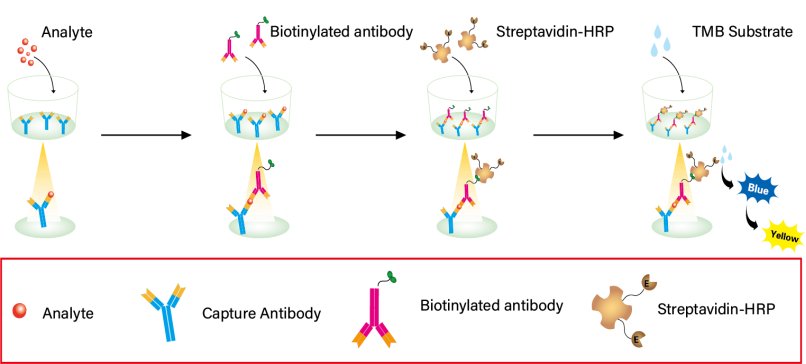
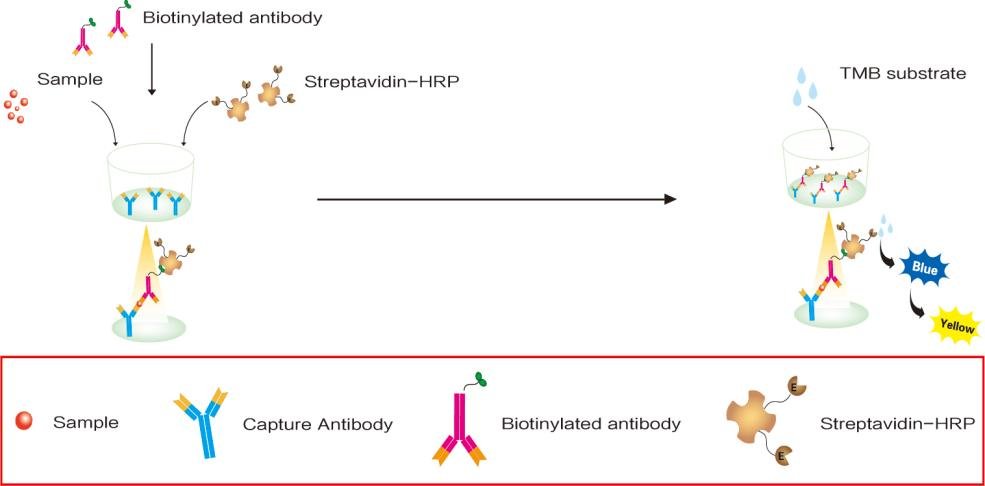
The assay mainly involves immobilization, recognition, and color development. Stable antigen–antibody interaction ensures specific detection, while the enzymatic reaction generates a color change that can be accurately quantified by a microplate reader.
Key Application Scenarios
ELISA kits are widely used across multiple fields. In biomedical research, they support cytokine detection and biomarker profiling. In pharmaceutical development, they enable drug screening and pharmacodynamic evaluation. Food safety laboratories rely on ELISA for the detection of contaminants, while agricultural research uses the technique for pathogen monitoring.
In most laboratories, ELISA serves as a primary analytical method prior to more advanced detection techniques, as it provides an optimal balance of cost, accuracy, and throughput.
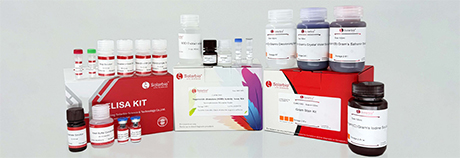
A full range of cytokine ELISA kits such as TNF-α(SEKH-0047 Human TNF-α ELISA Kit,SEKM-0034 Mouse TNF-α Elisa Kit), IL-6 (SEKH-0013 Human IL-6 ELISA Kit,SEKM-0007 Mouse IL-6 ELISA Kit)and IL-1β(SEKH-0002 Human IL-1β ELISA Kit,SEKM-0002 Mouse IL-1β ELISA Kit)are available for immune and inflammatory research, while multiple biomarker kits support cardiovascular and metabolic mechanism studies.
What Defines Leading ELISA Kit Suppliers Globally?
Not all ELISA kits deliver equivalent performance. Differences in antibody quality, validation standards, and manufacturing control can significantly affect final results. For this reason, the capability of the supplier becomes a decisive factor.
Identifying a top-tier supplier depends on evaluating practical performance indicators rather than marketing claims.
Product Coverage and Technical Depth
A reliable supplier offers a comprehensive portfolio of ELISA kits for diverse species and research objectives. Leading manufacturers provide kits for human, mouse, rat, and other model organisms, including non-traditional species such as fish and poultry. This breadth is particularly valuable for cross-species and translational studies.
In addition to conventional kits, specialized formats including high-sensitivity ELISA and low-sample-volume kits are designed to meet specific experimental constraints.
Quality Management and Certification
Consistent experimental results depend on strict quality control systems. Top suppliers implement standardized quality frameworks covering process monitoring, statistical analysis, and continuous improvement, from raw material procurement to final product inspection.
Certifications including ISO 9001 and ISO 13485 demonstrate that production processes comply with international quality standards. While certifications alone do not guarantee performance, they reflect a systematic and stable quality management system.
Supply Chain and Technical Support
In practical laboratory settings, supply delays can severely disrupt research projects. Suppliers with established logistics networks and regional warehouses ensure more reliable and rapid delivery. Equally important is professional technical support. When abnormal results occur, access to experienced support teams is critical for timely troubleshooting.
How Beijing Solarbio Science and Technology Co., Ltd. Stands Out?
Among global suppliers, a small number of companies distinguish themselves through long-term commitment to life science reagents and sustained product innovation. Beijing Solarbio Science & Technology Co., Ltd. has become a trusted choice for researchers worldwide.
Established R&D and Production System
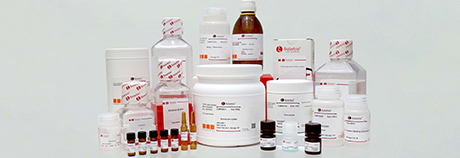
Founded in 2004, the company has built an integrated system covering research and development, manufacturing, and technical services. It operates multiple technology platforms for antibodies, recombinant proteins, ELISA kits, and basic biochemical reagents. This integrated structure enables strict control over product stability and consistency.
Its internal system includes dedicated departments for R&D, quality assurance, production, and distribution, all working together to maintain stable output and minimize batch-to-batch variation.
Strong Quality Control Framework
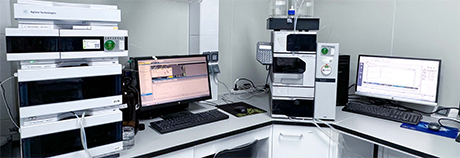
The company implements a comprehensive quality management system covering design, process monitoring, performance verification, and continuous improvement. Statistical process control and root-cause analysis are applied to ensure manufacturing stability.
This systematic approach reduces experimental uncertainty, resulting in minimal unexpected variation between batches—a common concern in ELISA-based experiments.
Comprehensive Overview of Solarbio ELISA Kit Products
The strength of a supplier is often reflected in its product portfolio. Solarbio offers a broad range of ELISA kits designed to adapt to diverse experimental conditions.
Wide Range of ELISA Kit Types
The product lineup includes sandwich ELISA and competitive ELISA kits. One-step and high-sensitivity formats are also available for applications requiring rapid operation or lower detection limits. Our SEKM-0034(OS) Mouse TNF-α (One-Step) ELISA Kit is engineered for maximum efficiency without compromising performance. Unlike conventional ELISA kits that require a 3-hour incubation workflow, this one-step kit completes the entire assay in just 1 hour, significantly accelerating your research pace. By integrating all key reagents into a single reaction system, it simplifies the operational steps, minimizes manual handling errors, and delivers consistent, reproducible results with high sensitivity.
Supporting reagents including TMB substrate(SEKF 104) and streptavidin-HRP conjugate(SEKF 121) are provided to ensure complete assay compatibility.
Species Coverage and Target Diversity
The ELISA product line covers over 1,400 targets across multiple species, including human, mouse, rat, rabbit, and more.This extensive coverage eliminates the need to source products from multiple suppliers.
Such diversity supports flexible research design, especially when projects transition from animal models to human sample analysis.
Application Areas of ELISA Kits in Scientific and Industrial Fields
ELISA kits are widely applied beyond academic research, serving multiple industries where precise quantitative detection is required.
Biomedical and Clinical Research
In biomedical studies, ELISA kits are used to quantify cytokines, hormones, and disease-related biomarkers. They support pathological research and treatment response monitoring.
In basic research, they facilitate studies of immune function, signaling pathways, and protein expression profiles.
Industrial and Applied Fields
Beyond life science research, ELISA is used in food safety testing, environmental monitoring, and agricultural research. It enables the detection of contaminants, pathogens, and residues in complex sample matrices.
Why Do Researchers Prefer Solarbio ELISA Kits?
When selecting ELISA kits, experimental stability often outweighs theoretical sensitivity. Many researchers choose products based on verified performance and published literature support.
Validation through Scientific Publications
Numerous high-quality scientific papers have been published using Solarbio ELISA kits, including studies in high-impact-factor journals. This demonstrates that the products have been validated in rigorous real-world research environments.
Such external validation provides confidence for researchers requiring reliable data for publications or regulatory submissions.
Stable Performance and Technical Support
Solarbio ELISA kits are engineered for high sensitivity, accuracy, and stability. In practical use, this translates to improved signal resolution and low background interference.
How to Choose The Right ELISA Kit Supplier For Your Needs?
Selecting a suitable supplier requires a practical, performance-based approach. Balancing assay performance, cost efficiency, and long-term reliability is essential.
Evaluate Product Performance and Compatibility
Verify whether the kit is compatible with your sample type and target species. Review sensitivity ranges, validation data, and published literature using the same product when available.
Consider Supply Stability and Support
Stable supply ensures uninterrupted experimental progress. Technical support should be easily accessible and responsive to troubleshooting inquiries.
Selecting the right ELISA kit supplier is crucial for the reliability and accuracy of your research. With a diverse portfolio of validated products and comprehensive species coverage, Beijing Solarbio Science & Technology Co., Ltd. is committed to supporting your research goals. Contact the Solarbio team to explore our full range of ELISA kits and identify the optimal solution for your specific requirements.
Reference:
- Feng, X.Ma, K.Cheng, G.Liu, Y.Li, Y.Yue, J.Liang, L.Zhang, T.Zhang, X.Wang, X.Gao, G.Nie, X.Zhao, Engineered Bacterial Outer Membrane Vesicles as Controllable Two-Way Adaptors to Activate Macrophage Phagocytosis for Improved Tumor Immunotherapy. Adv. Mater.2022, 34, 2206200.
- Sun, Li, YutingZhang, WangDong, JingzuSun, TaoWang, FeiShao, HuanqinDai, et al. 2025. “Akkermansia muciniphila-Derived Hypoacylated Rough-Type Lipopolysaccharides Alleviate Diet-Induced Obesity via Activation of TLR4−IL-23−IL-22 Immune Axis.” iMeta4, e70066.
- Huang, WQ., You, W., Zhu, YQ. et al. Autophagosomes coated in situ with nanodots act as personalized cancer vaccines. Nat. Nanotechnol. 20, 451–462 (2025).
- Wang, X.Wang, W.Zhang, D.Ma, F.Li, R.Jia, M.Shi, Y.Wang, G.Ma, W.Wei, Shielding Ferritin with a Biomineralized Shell Enables Efficient Modulation of Tumor Microenvironment and Targeted Delivery of Diverse Therapeutic Agents. Adv. Mater.2022, 34, 2107150.
- Ren, T.Chu, B.Li, et al. “Personalized 3D Vaccine Integrates Immunotherapy and Antiangiogenic Therapy to Prevent Oral Squamous Cell Carcinoma Recurrence.” Adv. Mater.37, no. 39 (2025): 2417708.
- Wei Qian, Jinzhao Ou, Jiaodan Jin, Kejia Li, Xiaoyan Ju, Meng Zhu, Ye Tian, Zhongwei Niu,Antigenic peptide-tobacco mosaic virus conjugates as a fungal vaccine candidate,Colloids and Surfaces B: Biointerfaces,Volume 245,2025,114251,ISSN 0927-7765
FAQ
Q1: Why is the reproducibility of my ELISA results inconsistent?
A: Inconsistent ELISA results may stem from unstable reagent quality, improper sample handling, or non-standardized operation. Ensure reagents are within their expiry date, stored under recommended conditions, and used according to the protocol. Standardize incubation temperature, timing, and washing procedures to reduce variability.
Q2: How do I choose the right ELISA kit for my experiment?
A: Selection depends on the target molecule type, sample species and matrix, and preferred detection format (sandwich, competitive). Always refer to product specifications to confirm compatibility with your experimental system.
Q3: What should I do if my ELISA results show low sensitivity or high background?
A: Low sensitivity or high background is commonly related to reagent quality, improper sample dilution, or inconsistent washing. Optimize sample and reagent dilutions, ensure complete washing cycles, and use the recommended detection wavelength. For persistent issues, contact the supplier’s technical support team for targeted troubleshooting.
Q4: How can I minimize errors in my ELISA assay process?
A: Strictly follow the standard protocol, use calibrated pipettes, maintain consistent incubation timing, and properly prepare and store samples. Include appropriate controls and test samples in duplicate or triplicate to improve reliability. Solarbio technical support can provide customized troubleshooting guidance.
Q5: How can you verify the reliability of an ELISA kit supplier?
A: Evaluate the supplier’s quality certifications, independent scientific publications using their products, and the integrity of their quality management system.
 Consult
 Whatsapp
 Leave Message
 top
top