



Related news
Biochemical Reagents for Immunology & Protein Research | Solarbio
Table of Contents
In the areas of immunology and protein research, the precision of your results depends on more than just your tools or techniques. Buffers, enzymes, substrates, inhibitors, staining reagents, cell detection kits, and protein assay systems work together to preserve protein structure. They also help maintain stable reaction conditions. Furthermore, they reduce background interference and turn biological changes into measurable data. This is why choosing biochemical reagents with clear details, dependable batches, and good compatibility with your process is so important. Such decisions are critical from early sample preparation through final data review.
1.1 A Research-Focused Supplier for Immunology and Protein Workflows
Beijing Solarbio Science & Technology Co., Ltd. started its work in 2004. Since that time, it has developed into a producer of life science reagents. The main emphasis is on items for research uses, plus quality checks, manufacturing, sales, and expert help. From a specialist viewpoint, its key advantage comes from a broad and connected range of products. This extends past simple list items. The selection includes molecular biology, cell biology, immunology, protein research, biochemical assay kits, peptides, analytical standards, small molecule compounds, staining reagents, recombinant protein workflows, cell detection, enzyme assays, and custom options for CRO requirements.
One study rarely relies on just one product. A common process might start with cell treatment. Then it moves to protein separation. Next, it covers protein measurement. Finally, it finishes with enzyme activity tests, fluorescence labeling, pathway regulation, or cell function checks. When stages use mismatched supplies, troubleshooting becomes more time-consuming. But a single product system lets you combine buffers, enzymes, inhibitors, protein assay systems, detection reagents, and special services in one straightforward flow.
Additionally, the company is certified under ISO 9001, ISO 13485, ISO 14001, and ISO 45001 guidelines. These practices ensure batch oversight, controlled production, and full quality records. In fields like immunology and protein research, these details let you judge product fit before using valuable samples.
1.2 Why Biochemical Reagents Matter in Immune and Protein Assays
Before selecting specific product numbers, it is vital to explain the role of each part in your test. Studies in immunology and proteins often need three main factors. These are keeping protein form intact, providing a stable reaction environment, and getting even signal detection. Biochemical reagents support all these parts.
1.2.1 From Target Preservation to Signal Readout
A weak result does not always mean your target is missing. Things like protein damage, changing pH values, enzyme activity decrease, poor substrate quality, wrong lysis methods, or dim fluorescent tags can all weaken signal strength. High background can come from wrong detergents, weak blocking steps, dirty substrates, or uneven sample preparation.
| Research Step | What the Reagent Must Do | Recommended Product Examples |
| Protein extraction | Protect target proteins | P8340 PMSF, T8200 Triton X-100[1], S8010 SDS |
| Buffer control | Maintain pH and ionic strength | T8060 Tris Base, T8230 Tris-HCl, P1003 PBS Powder, P1004 DPBS |
| Cell processing | Prepare samples with less variation | T8150 Trypsin 1:250[2], L8120 Lysozyme |
| Protein normalization | Standardize sample loading | PC0020 BCA Protein Assay Kit[3] |
| Signal and cell status detection | Convert biological change into visible output | B8030 Hoechst 33258, P8080 Propidium Iodide[4], CA1210 CCK-8 Cell Proliferation And Cytotoxicity Assay Kit[5] |
Viewing biochemical reagents as interconnected components of a larger workflow enables more predictable experimental planning. As a result, problems can be identified more rapidly when outcomes deviate.
1.3 Classify Reagents by Function Before You Build the Workflow
A successful technical process does not start with just a shopping list. Rather, it begins with their planned roles. In immunology and protein research, most items act as reactants, helpers, or boosters. This grouping avoids picking mismatched products.
1.3.1 Reactants and Targets Define Biological Meaning
Reactants or targets mean the materials that change, join reactions, get measured, or affect biological paths. In protein research, these might include ATP, glucose, peptides, substrates, signaling items, or controllers for small molecule paths.
For example, in protein phosphorylation studies, A8270 Adenosine-5’-triphosphate Disodium Salt Hydrate[6] provides an exact nucleotide for key reactions. In protein work linked to metabolism, G8150 D-Glucose helps build calibration curves and setups for glucose testing. For path adjustments, small molecule modulators like inhibitors, agonists, and antagonists allow changes to signaling before checks.
| Application | Recommended Product Direction | Selection Focus |
| Protein phosphorylation | A8270 Adenosine-5’-triphosphate Disodium Salt Hydrate | Nucleotide integrity |
| Glucose-linked protein study | G8150 D-Glucose | Purity and standard curve stability |
| Pathway regulation | Small molecule compounds | Solubility and bioactivity |
| Peptide-related research | Peptide products | Sequence match and purity |
| Protein amount comparison | PC0020 BCA Protein Assay Kit | Standardized quantification |
If the reactant or target material is not stable, final results might differ even with a good protocol. So, picking biochemical reagents should focus on their role, purity, and storage needs.
1.3.2 Supporting Reagents Protect Protein Integrity
Supporting reagents set up the reaction conditions. They clean cells, break membranes, guard proteins, control pH, and prepare samples for study. Even though these biochemical reagents may not appear in your final results, they affect every reading.
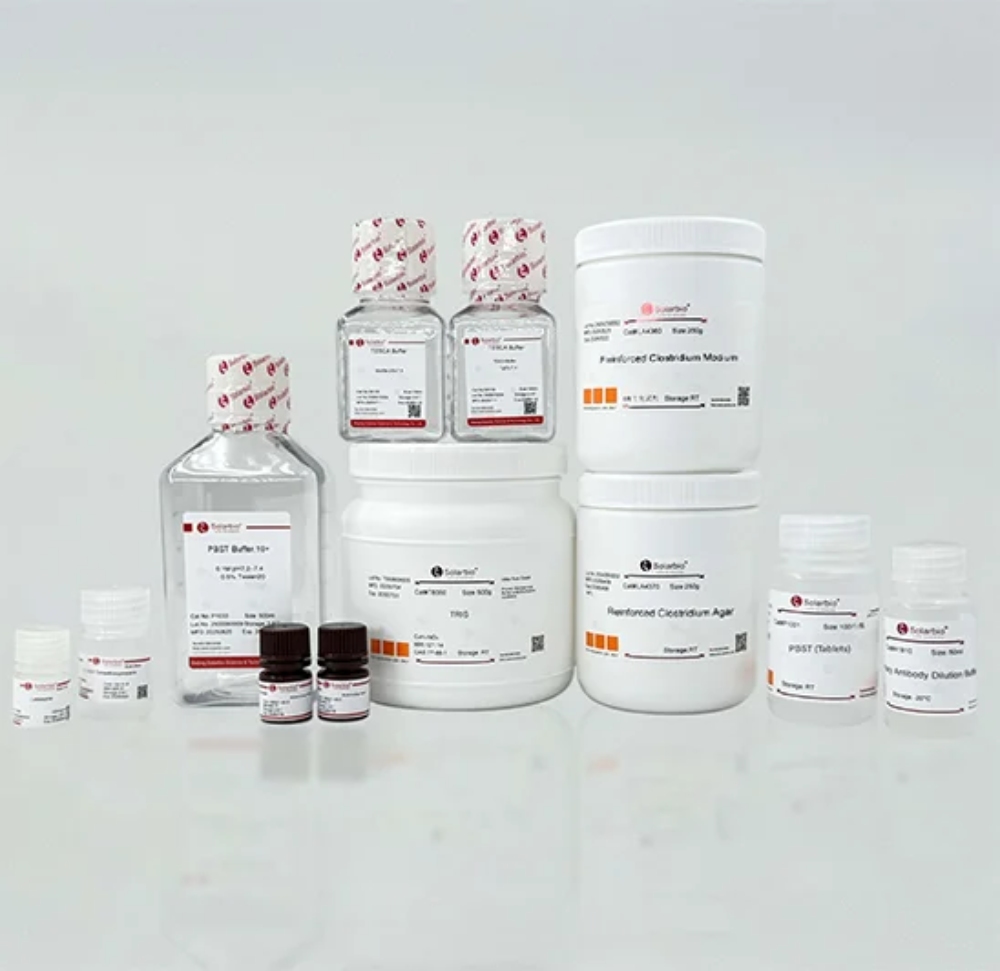
T8060 Tris Base and T8230 Tris-HCl fit uses in protein electrophoresis, enzyme work, and buffer making. P1003 PBS Powder and P1004 DPBS help with washing, diluting, and cell care. P8340 PMSF helps stop protein damage during separation. T8200 Triton X-100 and S8010 SDS support membrane breaking, cell lysis, and sample setup for protein tests.
In processes for recombinant proteins, I8070 IPTG boosts induction in bacterial systems. When checking expression in different samples, even induction and protective separation are crucial.
1.3.3 Catalysts Drive Enzyme-Linked Biochemical Detection
Catalysts speed up reactions without getting used up. In protein research, enzymes have a central role in digestion, lysis, glucose sensing, and many biochemical tests. A catalyst must match the reaction setting. Otherwise, the signal could fade, lose linear response, or vary.
| Catalyst or Enzyme Product | Key Parameter | Main Use |
| P9460 Proteinase K | ≥40 U/mg, pH 4.5-12.5 | Protein digestion, DNA/RNA sample preparation |
| D8071 DNase I | ≥1,500 units/mg, Mg²⁺/Mn²⁺ required | DNA removal from RNA samples |
| T8150 Trypsin 1:250 | >250NFU/mg | Cell dissociation |
| L8120 Lysozyme | ≥20,000 U/mg | Bacterial lysis |
| G8030 Glucose Oxidase | 10ku/32.7mg | Glucose detection |
In tests related to glucose, G8030 Glucose Oxidase pairs with P8020 Peroxidase and G8150 D-Glucose to create a solid GOD-POD system. In this setup, glucose serves as the reactant. The enzymes push the reaction along. Color-changing parts then produce the visible signal.
1.4 Match Immunology Applications With Product Choices
Once you identify the role of each item, you can match product picks with real needs in immunology and protein research. The official product catalog helps in reviewing biochemical reagents, biochemical assay kits, peptides, protein expression products, cell detection kits, staining reagents, and small molecule compounds.
1.4.1 Cell Status Detection for Immune-Related Studies
The state of cells often impacts data in immune and protein analyses. Factors such as viability, apoptosis, nuclear morphology, membrane condition, and metabolic function can all shape your findings. For jobs involving viability and toxicity, CA1210 CCK-8 Cell Proliferation And Cytotoxicity Assay Kit gives a simple option. In situations for nuclear marking and apoptosis viewing, B8030 Hoechst 33258 allows fluorescence detection. For checking membrane condition and cell death, P8080 Propidium Iodide is useful.
| Research Need | Recommended Product Examples |
| Cell viability | CA1210 CCK-8 Cell Proliferation And Cytotoxicity Assay Kit |
| Nuclear staining | B8030 Hoechst 33258 |
| Cell death and membrane integrity | P8080 Propidium Iodide |
| Cell dissociation | T8150 Trypsin 1:250 |
| Cell washing and handling | P1003 PBS Powder, P1004 DPBS |
These reagents enable the correlation of immune-related changes with cell health status.Thus, you avoid treating cell status as a separate issue.
1.4.2 Biochemical Assay Kits for Metabolism and Protein-Linked Readouts
Studies in proteins and immunity often link with metabolic processes. Items like glucose, ATP, oxidative stress, redox balance, and enzyme function can all add to practical insights. For glucose-linked measurements, BC2490 Blood Glucose Content Assay Kit supports metabolic review. For protein amounts, PC0020 BCA Protein Assay Kit standardizes samples before more analysis. In phosphorylation work, P1260 Phosphatase inhibitors keep signal strength during handling.
| Research Need | Recommended Product Examples |
| Blood glucose content | BC2490 Blood Glucose Content Assay Kit |
| Total protein measurement | PC0020 BCA Protein Assay Kit |
| Phosphorylation preservation | P1260 Protein Phosphatase Inhibitors |
| Glucose detection system | G8030 Glucose Oxidase, P8020 Peroxidase |
| Energy metabolism | A8270 Adenosine-5’-triphosphate Disodium Salt Hydrate |
These reagents enable the correlation of protein functions with biochemical roles. This link is especially useful in studies of immune control and cell responses.
1.5 Support Protein Research From Expression to Quantification
Protein research usually moves from expression to isolation, protection, measurement, and function confirmation. Each stage requires biochemical reagents that keep protein quality high and cut down on differences.
1.5.1 Expression and Sample Preparation
I8070 IPTG supports induction of recombinant proteins. After expression, isolation tools like Triton X-100 and SDS help release target proteins from cell or membrane parts. P8340 PMSF reduces protease effects during extraction. In bacterial systems, L8120 Lysozyme helps break cell walls. For handling tissues or separating cells, T8150 Trypsin 1:250 aids preparation tasks.
If expressing your target protein is tough, a focused protein expression service can offer support. This covers gene assembly, vector construction, expression validation, purification, and result review. Such help is valuable when usual conditions do not produce enough amount or strength.
1.5.2 Quantification and Pathway Validation
Measuring protein levels improves the reliability of later comparisons. PC0020 BCA Protein Assay Kit standardizes sample amounts before enzyme tests, function checks, or pathway reviews. P1260 phosphatase inhibitors protect phosphorylation signals. This is particularly helpful in signaling pathway studies.
For protein research focused on pathways, you can blend small molecule compounds, biochemical assay kits, enzyme items, and cell detection tools. For instance, pathway modulators can change a signaling path. At the same time, items like CCK-8, Hoechst 33258, or Propidium Iodide show shifts in cell function or state after treatment.
1.6 Use Quality Evidence to Improve Reproducibility
Product names give basic direction. However, quality papers protect your work. Before buying biochemical reagents, look at the Certificate of Analysis, purity numbers, activity levels, batch codes, storage tips, validation info, and use instructions.
1.6.1 What to Check Before Ordering
| Quality Item | Why It Matters |
| CoA | Confirms batch identity and quality indicators |
| Purity method | Reduces interference in protein and immune-related assays |
| Enzyme activity | Protects catalytic efficiency |
| Buffer compatibility | Maintains stable pH and ionic conditions |
| Storage guidance | Decreases activity reductions |
| Batch traceability | Supports long-term comparison |
| Product application notes | Helps match the reagent to your workflow |
In projects that last several months, batch tracking becomes very important. Small changes in enzyme output, inhibitor lasting power, or substrate quality can affect the whole data set.
1.6.2 When to Move From Catalog Products to Service
Standard catalog items meet most test needs. Some projects, though, need custom support. The technical service page is useful for tasks like primer synthesis, peptide production, protein expression, or CRO work.
| Research Situation | Suggested Service |
| Antigen peptide needs design | Peptide synthesis |
| Protein is hard to express | Protein expression |
| PCR/qPCR upstream step needs support | Primer synthesis |
| Pathway project needs integrated validation | CRO service |
| Standard products cannot meet sample needs | Custom technical support |
These choices move your work away from constant trial and error. They guide toward a clearer technical workflow.
1.7 Final Selection Checklist and Next Step
Before getting biochemical reagents for immunology or protein research, think about these main questions. What role does the material play? Does it work as a reactant, supporting reagent, or catalyst? Is the purity right for your method? Is the enzyme activity well defined? Does the kit fit your sample types? Are storage rules clear? Can you get related technical papers?
Top biochemical reagents cannot replace a strong experimental plan. Still, they remove hidden factors. They help protect samples, lower background, steady signals, and create reliable data.
If you want biochemical reagents with steady batches and fewer experimental errors, start by checking the full product list. You can also ask for official technical papers or contact the support team about your goal, sample type, test approach, and hoped-for outcomes. This way offers a quicker path from ongoing fixes to more solid results in immunology and protein research.
1.8 FAQ
Q1. How do biochemical reagents affect immunology experiments?
A1. They impact buffer stability, enzyme-based signal creation in biochemical processes, cell condition review, background level, and total output trustworthiness.
Q2. Which biochemical reagents are important for protein extraction?
A2. Tris buffers, PBS/DPBS, Triton X-100, SDS, PMSF, Proteinase K, Lysozyme, and related inhibitors can support lysis, washing, protein protection, and sample readiness.
Q3. How should I choose products for cell status detection?
A3. Pick based on the detection type needed. CCK-8 helps viability tests, Hoechst 33258 aids nuclear marking, and Propidium Iodide supports review of membrane condition or cell death.
Q4. When should I use a BCA protein assay kit?
A4. Use it when total protein measurement is required before enzyme reviews, pathway checks, function tests, or sample standardization.
Q5. What should I check before ordering enzyme-related products?
A5. Look at the activity unit, best pH range, working temperature, needed cofactors, possible inhibitors, storage conditions, and freeze-thaw resistance.
Q6. What product types support pathway-based protein research?
A6. Small molecule compounds, phosphatase inhibitors, biochemical assay kits, enzyme products, and cell detection kits can help connect pathway changes with visible shifts at cellular or protein levels.
Q7. What should I do if no standard product fits my target?
A7. Choose custom support like peptide synthesis, protein expression, primer synthesis, or CRO services, based on your goal and test setup.
-
Yamei C, Shihao Z, Tianyuan L, et al. Epithelial cells activate fibroblasts to promote esophageal cancer development[J]. Cancer cell, 2023, 41(5):903-918.e8.
-
Jiadi L, Yuying L, Siqi M, et al. Gasdermin E mediates resistance of pancreatic adenocarcinoma to enzymatic digestion through a YBX1-mucin pathway[J]. Nature cell biology, 2022, 24(3): 364-372.
-
Shang Y, Hu X, Ren M, et al. Understanding the toxicity induced by radiation-triggered neuroinflammation and the on-demand design of targeted peptide nanodrugs[J]. Signal Transduction and Targeted Therapy, 2025, 10(1): 286-286.
-
Yandong G, Bing B, Nianqin S, et al. Ex utero monkey embryogenesis from blastocyst to early organogenesis[J]. Cell, 2023, 186(10): 2092-2110. e23.
-
Deng S, Zhang Y, Wang H, et al. ITPRIPL1 binds CD3ε to impede T cell activation and enable tumor immune evasion[J]. Cell, 2024, 187(9): 2305-2323. e33.
-
ShengLi M, Shuang Z, Qi W, et al. Inhibition of USP14 influences alphaherpesvirus proliferation by degrading viral VP16 protein via ER stress-triggered selective autophagy[J]. Autophagy, 2022, 18(8): 1801-1821.
 Consult
 Whatsapp
 Leave Message
 top
top