




Related news
Alpha-Amylase Activity Explained: Function, Starch Metabolism and Enzyme Activity Detection
Table of Contents
Starch is easy to think of as nothing more than stored carbohydrate. In the lab, things get a little less simple.
Rice, wheat, corn and many other plants put a large part of their energy reserve into starch. That reserve only becomes useful once the long carbohydrate chains start breaking down. Alpha-amylase takes part very early in that process.
For plant experiments, food testing and enzyme work, this makes alpha-amylase a fairly common target. One project may be looking at seed germination. Another may be comparing stress-treated plants. A food lab may simply want to know why starch disappears faster in one sample than in another.
There is also a practical reason for measuring activity rather than only checking for the enzyme itself. Alpha-amylase can be present and still work poorly. A change in pH, temperature, substrate level or sample handling can be enough to shift the result.
So when the real question is “what is the enzyme doing?”, activity usually matters more than presence alone.
Solarbio supplies enzyme activity detection products and related research tools for biochemical analysis and metabolism studies.
What Is Alpha-Amylase?
Alpha-Amylase Breaks Down Starch Into Smaller Carbohydrates
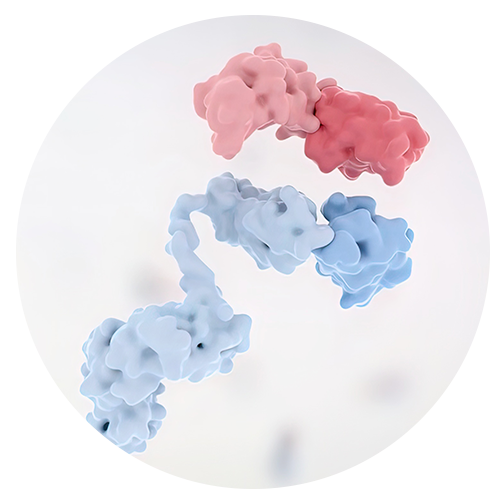
Alpha-amylase (EC 3.2.1.1) is a hydrolytic enzyme found in plants, animals and microorganisms. It cuts alpha-1,4-glycosidic bonds within starch molecules.
That “within” part is important.
Starch is a polymer of glucose residues linked together in long chains. Alpha-amylase does not break down the starch from the ends, cleaving glucose residues one at a time, rather it breaks internal bonds between glucose residues in the starch molecule to form smaller molecules such as dextrins, maltose, and oligosaccharides of various lengths.
Another familiar case of digestion by enzymes is that of starch by salivary alpha-amylase in the mouth and then by pancreatic alpha-amylase in the intestines.
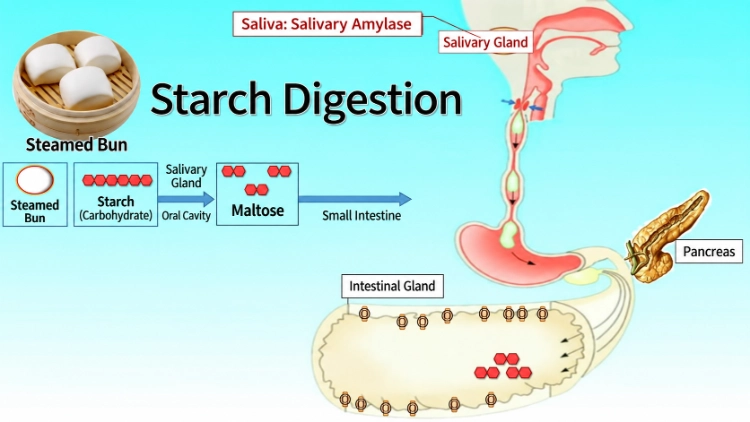
Plants use the enzyme in another setting. A germinating seed has a limited amount of stored material to support early growth. Starch is one of those reserves. Once germination begins, that reserve has to be opened up quickly enough for the young plant to use it.
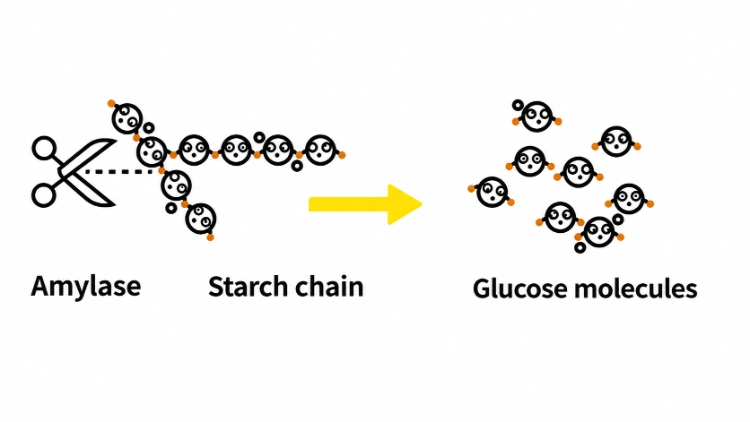
Changes in alpha-amylase activity can therefore show up together with changes in starch use.
Carbohydrate metabolism is rarely explained by one enzyme, though. Related biochemical research solutions from Solarbio cover other laboratory work around this type of pathway.
Different Starch Metabolism Enzymes Have Different Functions
Alpha-Amylase, Beta-Amylase and Other Starch-Related Enzymes
Alpha-amylase gets a lot of attention, but it is not working alone.
Beta-amylase attacks starch differently and removes maltose units from the ends of the chain. Gamma-amylase can push degradation further and release glucose.
Then the pathway turns the other way.
Soluble Starch Synthase (SSS), Granule-Bound Starch Synthase (GBSS) and ADPG Pyrophosphorylase (AGP) are involved in making and storing starch.
That distinction becomes useful when a starch result does not look as expected.
Say starch content falls after a treatment. Faster degradation is one explanation, but not the only one. Synthesis may have slowed. The two sides may even change together.
Interpreting a single alpha-amylase value can be challenging. Looking at the levels of several enzymes can provide more relevant information and help avoid making wrong assumptions about the sample later.
How Does Alpha-Amylase Work During Starch Conversion?
The Role of Alpha-Amylase in Energy Release
A large starch molecule is not especially useful until it starts getting cut down.
Alpha-amylase hydrolyzes alpha-1,4-glycosidic bonds along the starch chain. Once that happens, the original structure is broken into smaller carbohydrate fragments that can move into later reactions.
The same basic reaction shows up in several very different areas.
Plant researchers may check alpha-amylase during germination, seed development or stress treatment.
Food work looks at the enzyme for another reason. Starch conversion can change fermentation behavior, texture and processing performance.
In industrial enzyme applications, alpha-amylase is often used when starch needs to be broken down under controlled reaction conditions.
The chemistry is the same, but the question behind the experiment changes.
When the project is more pathway-focused, enzyme activity is often read together with other measurements. Solarbio’s research pathway resources cover related targets and research areas.
Why Is Alpha-Amylase Activity Detection Important?
Enzyme Quantity Does Not Always Mean Enzyme Activity
This is one of the easier mistakes to make in enzyme work.
More enzyme does not always mean more activity.
A sample may contain a reasonable amount of alpha-amylase and still give a weak catalytic result. pH may be off. The reaction temperature may not suit the enzyme. Substrate can become limiting. The sample may also have lost activity during preparation.
None of those problems are solved by simply knowing that alpha-amylase is present.
An activity assay answers a more practical question: how much work is the enzyme actually doing under the conditions being tested?
That can make a big difference when comparing treatment groups.
One sample may contain a similar amount of enzyme but show much stronger starch degradation. Another may look fine at the protein level and still perform poorly in the activity test.
Those two measurements are describing different things, so it is worth keeping them separate.
Selecting the Right Alpha-Amylase Activity Assay Kit
EPS-G7 Colorimetric Method for Alpha-Amylase Detection
The assay should match the job.
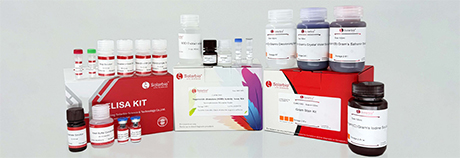
For alpha-amylase activity measurement, the Alpha-Amylase Activity Assay Kit (EPS-G7 colorimetric method) gives a colorimetric option for comparing activity across biological samples.
Starch metabolism work may also need the Beta-Amylase Activity Assay Kit, depending on the pathway question.
For synthesis-related measurements, Solarbio also offers the Soluble Starch Synthase (SSS) Activity Assay Kit, ADPG Pyrophosphorylase (AGP) Activity Assay Kit and Granule-Bound Starch Synthase (GBSS) Activity Assay Kit.
They are used for different parts of starch metabolism.
That may sound obvious, but it is worth saying because adding more enzyme tests does not automatically make an experiment better. If the project is only about starch breakdown, synthesis-related assays may add little. If the aim is to explain a broader shift in carbohydrate metabolism, checking both sides makes more sense.
Factors That Can Affect Enzyme Activity Results
Strange numbers do not always mean strange biology.
Sample preparation is often the first place worth checking.
If extraction is poor, less active enzyme reaches the reaction. If samples sit too long, warm up, or go through inconsistent handling, activity can fall before measurement even begins.
The reaction itself can introduce another layer of variation.
Temperature, pH, reaction time and substrate concentration all affect the final reading. Even small differences can become noticeable when the biological change between groups is modest.
For repeat work, consistency matters more than trying to make every step complicated.
Use the same amount of sample. Keep extraction timing close. Avoid unnecessary delays. Run comparable groups under the same reaction conditions.
Solarbio also provides laboratory products for biochemical research, molecular biology and related life science work.
Applications of Alpha-Amylase Research
Food Processing and Industrial Enzyme Applications
Alpha-amylase does not stay inside the research lab.
Baking is one common example.
Starch breakdown changes what is available during dough processing and can affect final bread texture. The exact result depends on the formulation and process, but enzyme activity is part of that picture.
Brewing and fermentation use the same enzyme for a more direct reason. Starch-rich raw materials need to release fermentable sugars before microorganisms can make good use of them.
Textile processing is a very different case.
There, alpha-amylase can help remove starch-based sizing material from fabric. The aim is not food production or metabolism. It is simply a practical use of the enzyme’s ability to break down starch.
Same reaction, different job.
Plant Science and Metabolism Studies
Plants give alpha-amylase another role entirely.
A seed stores carbohydrate because early growth has to be supported before the new plant can fully rely on photosynthesis.
That stored starch has to be mobilized.
Alpha-amylase is part of the breakdown side, while Soluble Starch Synthase (SSS), ADPG Pyrophosphorylase (AGP) and Granule-Bound Starch Synthase (GBSS) sit on the synthesis side.
Putting these measurements together can be helpful in drought experiments, temperature treatment, nutrient studies and developmental work.
For example, a rise in alpha-amylase with a drop in starch synthesis enzyme activity tells a different story from a result where both degradation and synthesis rise together.
That kind of comparison usually gives more to work with than one isolated enzyme value.
How Solarbio Supports Enzyme Activity Research
Enzyme Detection Products for Different Research Needs
Alpha-amylase may be the same enzyme name on paper, but the sample in front of you can be very different.
A leaf extract is not a grain sample. A grain sample is not an animal tissue homogenate.
That matters when choosing the assay and preparing the sample.
Solarbio supplies enzyme activity assay products, biochemical reagents and related research tools used across biochemical analysis, molecular biology, cell research and other life science work.
The product center can be used when comparing available assay products and related reagents.
If the sample type or assay choice is less straightforward, technical service support is also available for product selection and application questions.
It is usually easier to work backward from the experiment.
Start with the enzyme. Then look at the sample. After that, choose the detection method that makes sense for the actual job.
Conclusion
Alpha-amylase matters because starch has to move from storage into use.
In animals, that is part of digestion. In plants, it helps release stored energy. In food and industrial work, the same enzyme is used for practical starch conversion.
For laboratory research, activity gives information that simple detection cannot.
An enzyme can be present and still perform poorly.
And if the question is really about starch metabolism rather than alpha-amylase alone, Beta-Amylase, Soluble Starch Synthase (SSS), ADPG Pyrophosphorylase (AGP) and Granule-Bound Starch Synthase (GBSS) can add useful context.
The numbers become easier to read when both starch breakdown and starch synthesis are considered together.
Solarbio provides enzyme activity assay products, biochemical reagents and related support for this type of work.
More information about Solarbio and its research product range is available through the official website.
FAQ
Q1: What does alpha-amylase do in starch metabolism?
A1: Alpha-amylase cuts alpha-1,4-glycosidic bonds inside starch. This breaks the large starch structure into smaller carbohydrates such as dextrins and maltose.
Q2: Why is alpha-amylase activity measurement important?
A2: Because finding the enzyme and knowing how well it works are not the same thing. Activity measurement shows how the enzyme performs under the actual test conditions.
Q3: What samples can be tested with an Alpha-Amylase Activity Assay Kit?
A3: It depends on the assay method. Plant tissues, grains, fungi, animal tissues and other biological samples are commonly used in alpha-amylase activity work.
Q4: What factors influence alpha-amylase activity results?
A4: Sample handling can matter just as much as the reaction itself. Extraction conditions, enzyme stability, pH, temperature, reaction time and substrate concentration can all shift the result.
Q5: What other enzymes are related to starch metabolism research?
A5: Beta-Amylase, Soluble Starch Synthase (SSS), ADPG Pyrophosphorylase (AGP) and Granule-Bound Starch Synthase (GBSS) are common choices when both starch degradation and synthesis need to be checked.
Q6: Which Solarbio products can be used for starch metabolism enzyme analysis?
A6: Solarbio provides Alpha-Amylase Activity Assay Kit (EPS-G7 colorimetric method), Beta-Amylase Activity Assay Kit, Soluble Starch Synthase (SSS) Activity Assay Kit, ADPG Pyrophosphorylase (AGP) Activity Assay Kit and Granule-Bound Starch Synthase (GBSS) Activity Assay Kit.
Q7: How can researchers choose the right enzyme assay product?
A7: Start with the target enzyme and sample type, then look at the detection method. There is little value in adding an assay that does not answer the actual research question.
Q8: Where can I learn more about Solarbio research products?
A8: Product, service and research information is available through the Solarbio website. Application questions can also be sent through the contact page.
 Consult
 Whatsapp
 Leave Message
 top
top