



How to Optimize Your ELISA Experiments for Maximum Accuracy and Efficiency
جدول المحتويات
ELISA has long been a fundamental routine technique in laboratory research. Although the workflow appears straightforward in standard descriptions, subtle operational details often determine the clarity and reliability of final data. Even strict adherence to a basic protocol may still result in weak signals or inconsistent replicate readings. Such issues typically arise from experimental design, reagent performance, and standardized management throughout every procedural stage.
In routine laboratory work, reagent quality profoundly influences overall assay outcomes. As a professional manufacturer, بيجين سولاربيو ساينس آند شركة التكنولوجيا المحدودة has established reliable industry credibility through standardized production and rigorous quality control systems. The company provides over 1,000 validated ELISA kits covering human, mouse, rat and other common research species, with widespread citation in peer-reviewed scientific publications. Its official platform offers accessible product specifications, detailed application guidelines and professional technical support, helping researchers optimize experimental strategies and resolve abnormal assay results in a timely manner.
Why Is ELISA Optimization Critical for Experimental Success?
ELISA is widely applied for the detection and quantification of proteins, cytokines, hormones and specific antibodies. This technology relies on precise antigen–antibody interactions, which are highly sensitive to minor environmental fluctuations and procedural adjustments. Slight changes in incubation duration or washing intensity can directly alter final signal intensity.
Common technical challenges occur frequently during operation: high background noise usually results from insufficient washing; faint low signals may be caused by degraded samples or weak antibody binding; poor reproducibility is generally associated with irregular pipetting or unstable reagent conditions.
Research evidence and practical laboratory experience confirm that optimized ELISA parameters effectively improve detection limits (LOD) and reduce replicate variation. With pre-validated antibody combinations and stable high-quality reagents, the coefficient of variation (CV) can be controlled below 10%. Such optimization is particularly critical for comparative analysis between sample groups and longitudinal experimental monitoring.
How To Choose the Right ELISA Kit for Your Application?
Matching the appropriate assay format with research objectives is the core principle of kit selection. Sandwich ELISA is ideal for large molecular proteins with multiple distinct epitopes. Competitive ELISA suits small-molecule analytes with a single binding site. And one-step ELISA save overall operation time, while partial detection sensitivity may be compromised.
Detection performance cannot be judged merely by technical datasheet indicators; the applicable sample concentration range must also be evaluated carefully. For target analytes existing at pg/mL ultra-low abundance, conventional standard kits cannot achieve accurate identification, while professional high-sensitivity ELISA kits are specially developed for such scenarios.
Species compatibility is another easily overlooked key factor. Antibody recognition strictly matches sample origin; species mismatch often leads to extremely weak signals even when the target analyte is present in the sample.
بيجين سولاربيو ساينس آند شركة التكنولوجيا المحدودة provides ELISA kits validated for multiple sample types. A series of low-sample-volume products effectively support experiments using precious serum specimens and rare tissue homogenate samples.
How To Prepare Samples Correctly To Improve ELISA Accuracy?
Sample handling is often underestimated, yet it represents one of the most common sources of experimental error. Long-term storage of samples at room temperature causes protein degradation; repeated freeze–thaw cycles damage molecular structure and reduce antibody binding efficiency.
Sample Storage and Aliquoting Specifications:
- Long-term storage: -80 ℃ (stable for 6–12 months); short-term storage: -20 ℃ (stable for 1–3 months)
- Strictly prohibit room temperature placement for more than 30 minutes to avoid protein denaturation
- For samples requiring multiple analyses, aliquot into single-use volumes (10–100μL per aliquot) before freezing to eliminate repeated freeze-thaw cycles.
- Hemolytic or lipemic samples are not recommended for direct use.
Appropriate sample dilution is also critical. All diluted samples must fall within the linear range of the standard curve. Excessively high concentrations cause signal saturation, while overly low concentrations merge with background interference. Many researchers pre-test multiple dilution gradients to confirm the optimal loading ratio before formal detection.
Buffer composition also affects detection accuracy. Interfering substances such as lipids and hemoglobin may interfere with absorbance readings. Applying high-quality optimized buffers from reputable suppliers can effectively reduce such interference. Supporting guidelines provided by بيجين سولاربيو ساينس آند شركة التكنولوجيا المحدودة include practical sample preparation protocols summarized from extensive laboratory experience.
How To Optimize Key ELISA Steps For Better Performance?
For commercially available pre‑coated ELISA kits, standardized execution of washing, incubation, pipetting, chromogenic development and termination constitutes the core guarantee for reliable assay performance. Rational optimization of these critical operational procedures effectively minimizes systematic errors, stabilizes signal output, and ensures consistent accuracy and reproducibility across independent experiments.
Washing Procedure Optimization
Washing procedures require stricter standardization than conventional awareness.
Incomplete washing leaves unbound antibodies or enzyme conjugates, increasing non-specific interference; excessive rigorous washing may elute stable immune complexes.
Standard protocol: 3–5 repeated washing cycles, each cycle with 300 μL washing buffer per well, and soak for 30–60 seconds per cycle (adjust according to kit instructions); control washing pressure to avoid splashing between wells.
Incubation Condition Optimization
Incubation duration and temperature must remain consistent throughout the assay. Even minor temperature deviations can change reaction kinetics.
Use sealed plate films to prevent sample evaporation and cross-contamination;
For temperature-sensitive reactions, use a programmable constant-temperature incubator with oscillation function (oscillation speed: 100–150 rpm) to ensure uniform reaction;
Strictly follow the kit’s incubation time and temperature (e.g., 37 ℃ for 90 minutes or room temperature for 2 hours), and avoid prolonged or shortened incubation.
Pipetting precision directly affects data reproducibility. Air bubbles or inconsistent loading volumes generate variable replicate results. Regularly calibrated pipettes and unified operating techniques significantly improve accuracy, especially for low-volume sample addition.
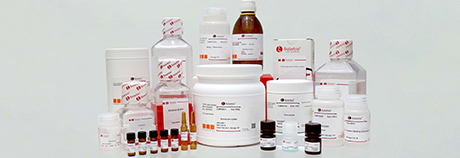
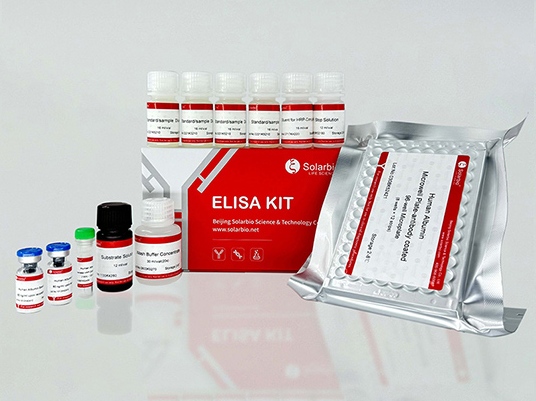
High-quality reagents determine ultimate assay stability. Critical materials such as TMB substrates require reliable stability and sensitive chromogenic reactivity; enzyme conjugates must maintain consistent biological activity. بيجين سولاربيو ساينس آند شركة التكنولوجيا المحدودة provides fully compatible matched auxiliary reagents, reducing performance mismatch risks during combined application.
Chromogenic and Termination Step Guidelines
TMB substrate must be stored away from light and added in a dark environment to avoid premature color development;
Strictly control chromogenic time (follow kit instructions), and add termination solution uniformly to all wells at the same time;
Read the plate within 10 minutes after adding termination solution to prevent color attenuation; avoid generating bubbles in the wells during termination, as bubbles will interfere with OD value reading.
How To Generate Reliable Standard Curves And Data?
The standard curve functions as the benchmark for all quantifications. An unreliable curve renders the full dataset suspect. Standards should undergo execution in duplicates or triplicates consistently. Such practice facilitates early outlier detection.
The curve must span the anticipated concentration span of samples. Readings from most samples falling beyond the curve invalidate results. Adjustments to dilution become necessary under those circumstances.
Fitting techniques like four-parameter logistic equations find common application. These approaches manage the curved characteristics of إليسا information more effectively than basic linear regressions.
Uniformity between production lots holds relevance as well. Dependable reagents generate comparable curves across periods, enabling inter-experiment comparisons. Producers adhering to stringent quality frameworks, including certified ISO methods, generally deliver superior lot reliability.
The standard curve serves as the core quantitative benchmark for all ELISA calculations; unreliable curve fitting invalidates the entire dataset. Standard samples should always be tested in duplicate or triplicate for timely identification of abnormal outlier values.
Standard Curve Setup Specifications
Set Blank well (no standard, no sample, only buffer) and Standard 0 well (no standard, only buffer and detection reagents) to eliminate background interference;
The standard curve must fully cover the expected sample concentration range. If most sample readings exceed the valid linear interval, results cannot be adopted, and re-dilution and re-testing are mandatory.
Professional fitting methods such as the four-parameter logistic (4PL) model are widely recommended, as they better adapt to the non-linear characteristics of ELISA data compared with basic linear regression.
Batch consistency is also essential for cross-experimental comparison. Stable high-quality reagents generate highly consistent standard curves across different production batches. Manufacturers complying with strict ISO quality management systems ensure superior batch-to-batch reproducibility.
How To Minimize Errors And Improve Reproducibility?
Assay reproducibility relies entirely on standardized unified operation. All procedural conditions—including reaction duration, temperature control and reagent handling—must remain consistent in every independent experiment.
Edge Effect Solution
Edge effects are a common inherent issue in microplate assays. Outer peripheral wells may show deviation due to evaporation and temperature fluctuation;
- Avoid placing critical experimental samples in edge wells;
- Fill edge wells with equal volume of blank buffer to maintain uniform humidity and temperature across the entire plate;
- Pre-incubate the microplate at room temperature for 30 minutes before adding reagents to balance temperature and reduce edge effect.
Cross-contamination is a hidden risk affecting accuracy. Trace residual contamination can severely skew final data. Replacing pipette tips for every single sample is a basic but essential preventive measure.
Regular equipment calibration is indispensable. Microplate readers and pipettes require periodic verification and maintenance (pipette calibration every 3–6 months, microplate reader calibration every 6–12 months); otherwise, well-designed experiments may produce misleading data.
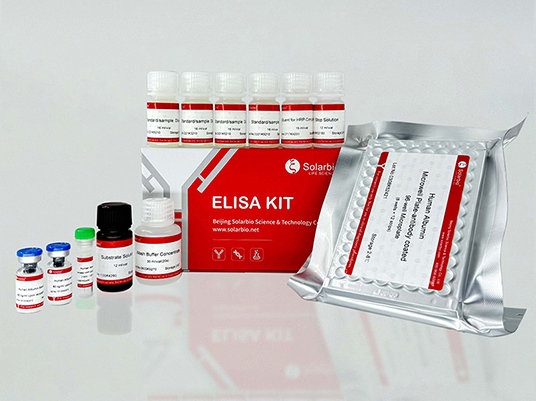
Professional reagent manufacturers implement strict internal quality control to minimize batch variation. Beijing Solarbio Science & Technology Co., Ltd. adopts unified production standards and systematic performance evaluation, ensuring stable batch consistency across its full ELISA product portfolio.
How Can High-Quality ELISA Kits Improve Laboratory Efficiency?
Time efficiency is essential for high-throughput laboratory research. Pre-configured ready-to-use kits reduce complex pre-experiment preparation and shorten overall assay cycles. Pre-optimized antibody combinations and stable buffer systems eliminate redundant exploratory testing steps.
Clear, detailed official protocols also simplify troubleshooting during operation. Comprehensive instructions reduce technical obstacles and lower the frequency of repeated trials.
Premium validated kits effectively decrease unnecessary replicate experiments, reducing reagent consumption and accelerating research progress, thereby improving overall laboratory workflow efficiency.
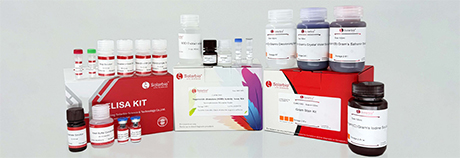
Beijing Solarbio Science & Technology Co., Ltd. offers a comprehensive selection of ELISA kits, matched auxiliary reagents, detailed operation manuals and professional after-sales support. These integrated resources ensure smooth experimental progress from sample loading to final data analysis, especially under urgent research schedules.
أسئلة متكررة
Q1: What Is the Most Common Reason for High Background in ELISA?
A: Insufficient washing cycles are the primary cause, as residual unbound antibodies, enzyme conjugates, or other reaction components remain in the microplate wells, leading to increased non-specific signal interference.
Q2: How Do You Know If Your Sample Dilution Is Correct?
A: All sample absorbance values should fall within the stable middle linear section of the standard curve. Values at either extreme indicate inappropriate dilution ratios.
Q3: Why Do Replicates Sometimes Show Large Differences?
A: Inconsistent pipetting volume, uneven incubation conditions or irregular microplate coating are the main contributing factors.
Q4: How Can You Improve ELISA Sensitivity?
A: Select validated high-sensitivity ELISA kits, maintain standardized incubation parameters, and avoid protein degradation during long-term sample handling and storage.
Q5: Is It Necessary To Use All Reagents from the Same Supplier?
A: Matched original reagents effectively eliminate compatibility risks and enhance overall assay stability, which is strongly recommended for formal critical research projects.
 استشارة
 واتساب
 اترك رسالة
 أعلى
أعلى