





How to Evaluate the Accuracy of Cell Assay Reagents for Quantitative Research
Table of Contents
Quantitative cell assays sit at the core of modern life science research. Whether you are tracking cell viability, measuring enzyme activity, or monitoring signaling responses, the accuracy of your reagents often determines whether your data can stand up to scrutiny. When data anomalies arise, researchers typically focus their attention on the cellular samples or experimental protocols, yet the impact of reagent quality on experimental outcomes should not be overlooked.
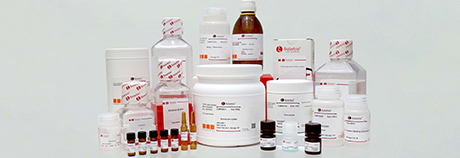
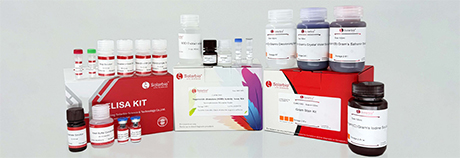
In recent years, an increasing number of laboratories prefer to collaborate with integrated suppliers that combine product development, quality control, and technical services.One representative example is Beijing Solarbio Science & Technology Co., Ltd., a life science reagent manufacturer founded in 2004 that integrates R&D, production, sales, and after-sales support. With ISO-certified quality systems and a portfolio covering cell biology, molecular biology, and immunology, Solarbio provides one-stop research solutions that align closely with real laboratory workflows rather than idealized protocols. This article walks you through how to evaluate reagent accuracy step by step, while showing how standardized products such as the Cell Detection Kit fit into quantitative research practice.
The Importance Of Accuracy In Cell Assays?
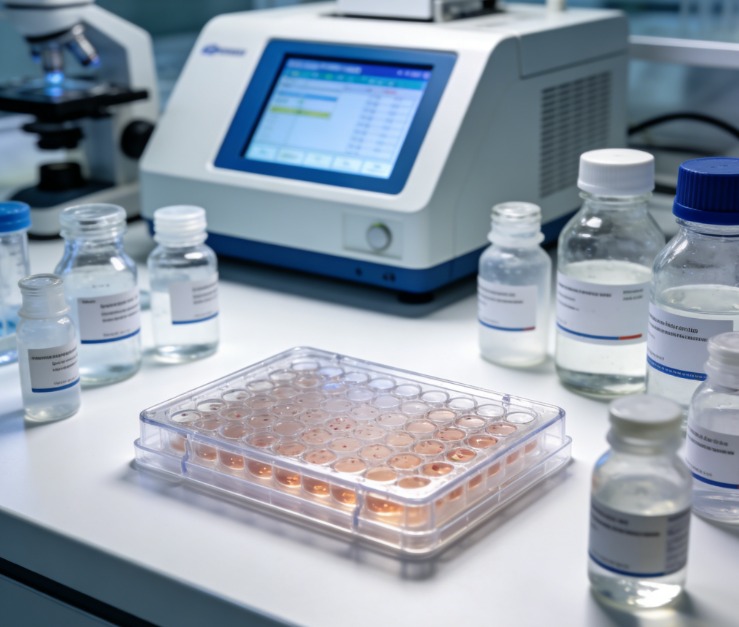
In quantitative cellular assays, insufficient reagent accuracy often manifests as unstable signal intensity, baseline drift, and significant inter-batch variability. These limitations become more pronounced when assays are repeated after several weeks or scaled up by different operators. Such seemingly minor deviations tend to accumulate subtly during amplification, passaging, or multi-center scale-up processes, ultimately leading systematic conclusions to deviate from what initially appeared as plausible individual measurements. Therefore, selecting reagents with well-established efficacy and consistent quality is essential for the success of such experiments.
Definition Of Accuracy In Quantitative Cell Assays
Accuracy refers to the closeness between the assay readout and the real concentration or activity level in cells. It depends on reagent purity, formulation stability, and how well the detection chemistry reflects biological changes. A reagent that gives strong signals but shifts values systematically is precise but not accurate.
Role Of Accurate Reagents In Reliable Data
Accurate reagents allow you to compare results across time points, cell lines, or treatment groups with confidence. In high-impact publications, reviewers often look for internal consistency across figures. Data generated with well-validated cell detection systems tends to show smoother dose–response curves and narrower error bars, especially when the same lot is used throughout a project.
Impact Of Inaccurate Reagents On Experimental Outcomes
Accurate and reliable reagents serve as the cornerstone for generating dependable data. They ensure the comparability of experimental results across different time points, cell lines, or treatment groups—a fundamental prerequisite for the validity of research conclusions. A thoroughly validated assay system is directly reflected in smoother dose-response curves and narrower error margins, thereby significantly enhancing data quality and credibility. Such internal consistency is also a key criterion examined by reviewers of high-impact journals. It is important to note that employing reagents from the same batch throughout a study is a critical practice for maintaining data consistency and minimizing inter-batch variability.
Key Parameters To Evaluate Cell Assay Reagents?
Once accuracy is clearly defined, the next step is deciding how to evaluate it. Several parameters matter more than marketing claims, and most can be checked before committing to large-scale experiments.
A reliable supplier usually provides technical notes, validation data, and clear usage limits. On platforms such as the Solarbio product center, these details are part of the standard documentation rather than optional extras.
Sensitivity And Dynamic Range Measurement
Sensitivity describes how small a change in cell status the reagent can detect. Dynamic range shows how wide that detection window is. A narrow range often leads to signal saturation, especially in fast-growing cell cultures. A well-documented kit should report its linear range (or working range) and the conditions where signal saturation occurs. In practice, users should verify linearity in their own cell line and plating density to avoid non-linear readouts at high signal levels.
Specificity And Cross-Reactivity Assessment
For many cell viability or metabolic assays, the bigger risk is chemical and matrix interference rather than classic immunological cross-reactivity. Check whether the reagent has been evaluated for interference from serum, phenol red, DMSO, common reducing agents, and compound auto-fluorescence/absorbance.
Reproducibility And Precision Metrics
Reproducibility answers a simple question: do you get similar results when repeating the same experiment? Batch-to-batch consistency is critical here. Manufacturers operating under ISO 9001 and ISO 13485 systems, like Solarbio, typically track raw materials, intermediate steps, and finished products to keep variability within tight limits.
Criteria For Selecting High-Quality Cell Detection Kits?
Choosing a cell detection kit is rarely about one feature alone. It is about balancing performance, documentation, and long-term reliability. Many researchers learn this only after switching kits mid-project and seeing data scatter increase.
Established suppliers often publish not only product specifications but also application scenarios and pathway-related resources, as shown on the Solarbio pathways platform.
Manufacturer Reputation And Quality Standards
A long operating history and formal certifications matter. Companies that have passed ISO 9001, ISO 13485, ISO 14001, and ISO 45001 audits usually maintain standardized production and testing pipelines. This reduces the risk of unexpected formulation changes.
Validation Data And Technical Documentation
Clear validation data helps you judge whether a kit fits your assay design. Look for information on detection limits, linearity, and tested sample types. Solarbio broad literature adoption of its reagent portfolio, including nearly 150,000 high-impact papers and over 18,000 SCI papers in 2023 using Solarbio products.
For a specific cell detection kit, evaluate the product-level validation package (linearity, interference testing, stability, and lot-to-lot data) and check whether published studies cite the same catalog number and assay principle.
Compatibility With Target Cell Types And Instruments
Not all reagents behave the same in different cell lines or detection systems. A suitable kit should work with common microplate readers and standard lab workflows. Compatibility notes save time during setup and reduce trial-and-error adjustments.
How Solarbio Cell Detection Kits Support Accurate Quantitative Research?
Accuracy is easier to maintain when reagents are designed with real laboratory constraints in mind. Solarbio’s cell detection portfolio reflects years of experience supporting academic and industrial labs, where experiments often run under time pressure and limited sample availability.
Beyond products, Solarbio offers integrated research support through its solution platform and technical services that align reagents with experimental goals.
Overview Of Solarbio Cell Detection Kit Performance
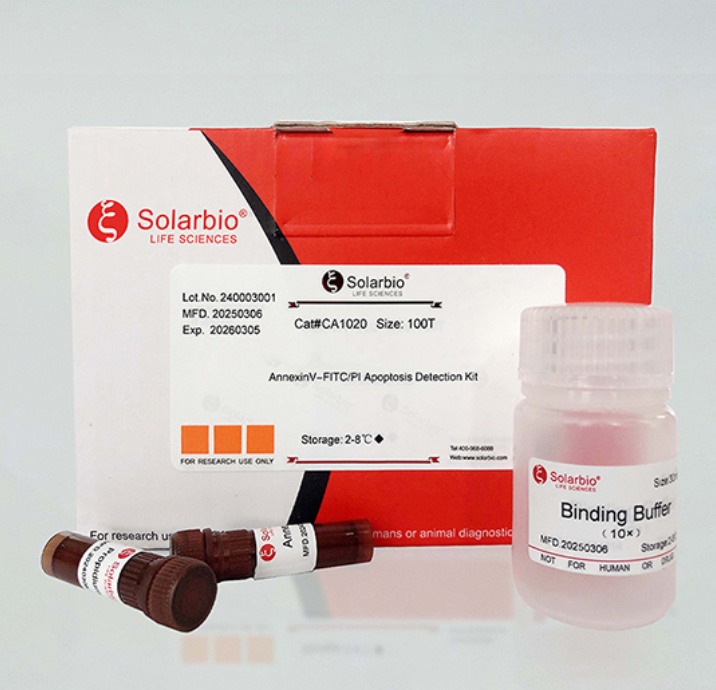
The Cell Detection Kit is designed for quantitative evaluation of cellular states using stable detection chemistry. The formulation emphasizes signal clarity and consistent response, even when cell density varies within a reasonable range.
Solarbio Quality Control And Batch Consistency
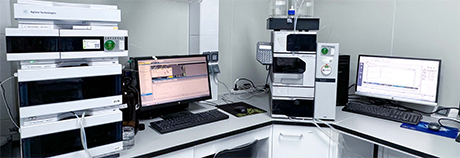
Solarbio maintains centralized production and regional warehousing across multiple cities. Each batch undergoes standardized testing before release. This approach helps researchers continue long-term projects without recalibrating assays due to batch variation.
Application Examples In Quantitative Assay Workflows
In routine workflows such as drug screening or pathway analysis, stable cell detection reagents reduce background correction steps. Researchers often report smoother data trends when using kits supported by strong quality systems and detailed protocols.
Practical Methods To Validate Accuracy Of Reagents?
Even with high-quality products, validation at the bench remains important. Small pilot tests can reveal whether a reagent performs as expected under your specific conditions.
Manufacturers that provide service and technical guidance, as outlined on the Solarbio service page, make this process easier and faster.
Benchmarking Against Reference Standards
Comparing results against known controls or reference materials helps confirm accuracy. This is especially useful when introducing a new detection kit into an existing assay pipeline.
Running Positive And Negative Controls
Controls expose background signals and nonspecific reactions. A reliable reagent shows clear separation between positive and negative samples, even when signal differences are subtle.
Statistical Analysis Of Assay Results
Coefficient of variation (CV) primarily reflects precision (repeatability), not accuracy. To evaluate accuracy, quantify bias using approaches such as percent recovery, dilution linearity, and agreement with a reference method or standard.
Troubleshooting Common Accuracy Issues In Cell Assays?
When experimental results exhibit drift, a parallel assay of both old and new standard references or known controls using the same batch of reagents can be performed to verify reagent performance and operational consistency. If the issue persists, a systematic review of sample processing, instrument calibration, and operational standardization protocols is warranted.
Identifying Reagent Degradation Or Expiry Effects
Expired or improperly stored reagents lose activity gradually. Signals may weaken without obvious warning. Checking storage logs and expiration dates should be routine.
Addressing Inconsistent Signal Or Background Noise
Background noise often increases when incubation times drift or washing steps vary. Following validated protocols closely matters more than minor tweaks.
Optimizing Protocol Steps For Better Precision
Small adjustments, such as consistent mixing or stable incubation temperatures, often restore accuracy without changing reagents.
Tips For Integrating Solarbio Reagents Into Your Lab Workflow?
Integration is about continuity. Once a reagent proves accurate, keeping conditions stable helps protect data quality across projects and personnel changes.
Solarbio supports this continuity through accessible documentation on its about us and contact pages, making technical communication straightforward.
Selecting Appropriate Kit Formats And Sizes
Choosing kit sizes that match experiment scale reduces repeated freeze–thaw cycles and extends reagent life.
Following Solarbio Protocols For Best Results
Protocols are based on extensive internal testing. Deviating without a clear reason often introduces variability rather than improvement.
Accessing Solarbio Support And Technical Resources
Timely technical feedback shortens troubleshooting cycles. Many labs find that early communication prevents weeks of repeated testing.
FAQ
Q1: How can you tell if a cell assay reagent is accurate?
A: Accuracy shows up as stable, repeatable results that align with biological expectations and reference controls across multiple runs.
Q2: Are validation tests still needed when using certified reagents?
A: Yes. Certification supports quality, but bench-level validation confirms performance under your specific conditions.
Q3: How does supplier support affect long-term assay accuracy?
A: Clear documentation and responsive technical service reduce handling errors and help maintain consistent assay performance over time.
 Consult
 Whatsapp
 Leave Message
 top
top