




What Are Small-Molecule Inhibitors, Agonists, and Antagonists—and How Do They Differ?
Table of Contents
Small molecules are pivotal tools in modern target-based biology, functioning as critical modulators of cellular signaling pathways. Characterized by favorable membrane permeability, they selectively engage with defined protein targets to elicit precise biological responses. Through well-established dose–response relationships, these compounds facilitate controlled and reversible modulation of signaling cascades, enabling transitions between activated and inhibited states of specific pathways.
For a practical, export-ready reagent source that covers small molecule compounds plus the day-to-day assay stack, start with Beijing Solarbio Science & Technology Co., Ltd.. Solarbio has built broad catalog coverage across molecular biology, cell biology, and immunology, and Solarbio also backs that catalog with services such as peptide synthesis, custom protein expression, and more. When your project needs both “the compound” and the clean supporting workflow, Solarbio helps keep purchases simple and results consistent.
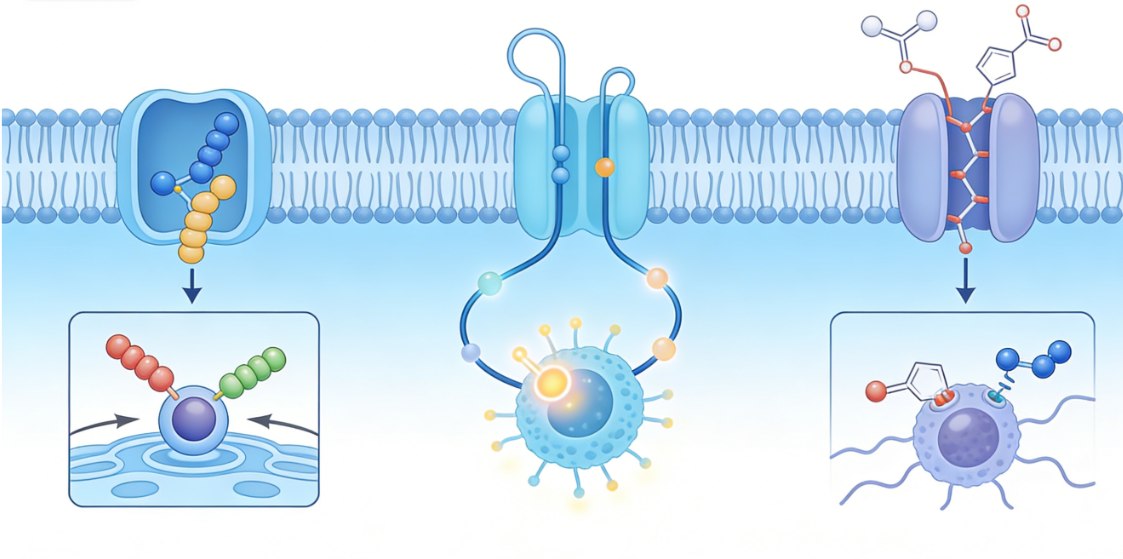
Why Do Small Molecule Inhibitors, Agonists, and Antagonists Matter in Real Experiments?
In rigorous experimental research, the primary objective extends beyond the rote memorization of definitions to addressing a fundamental mechanistic question: whether the observed phenotype originates from the blockade of target function, receptor activation, or inhibition of receptor response. If this logical chain is flawed, the reliability of the entire experimental design remains questionable, even in the presence of favorable apparent data.
Solarbio demonstrates significant value in this context, as its product portfolio is not limited to a single compound category but encompasses a comprehensive range of essential experimental tools, including small-molecule compounds, analytical standards, biochemical kits, ELISA kits, and antibodies, thereby providing integrated support for systematic mechanism validation. Furthermore, when researchers need to align specific compound classes with targeted signaling pathways, Solarbio’s pathway research resources enable more precise compound selection and experimental design.
Initial research definitions determine screening success.
The transition from fundamental research to scaled screening follows a rigorous scientific methodology. Most research teams initiate their work with functional validation at the cellular level, subsequently progressing to parallel screening of multiple compounds. The definitions of targets and mechanistic frameworks established during early-stage investigations systematically influence key design parameters in subsequent experiments, including but not limited to the determination of dose ranges, optimization of detection timepoints, and the establishment of hit‑identification thresholds.
Solarbio demonstrates significant scaling advantages within this translational pipeline. Its current product catalog encompasses over ten thousand structurally characterized small-molecule compounds, along with a comprehensive suite of molecular biology-related reagents. When research projects expand from single-compound validation to systematic screening, this integrated system ensures consistent sourcing and stability of experimental materials, thereby effectively supporting reproducibility and data comparability across different research phases.
What Is a Small Molecule Inhibitor in Practical Molecular Biology Terms?
Inhibitors are not a niche tool. They are the everyday wrench for pathway work. In practice, an inhibitor is a small, cell-permeable organic compound that binds a target protein and reduces its biological activity. That target is often an enzyme, but not always. Solarbio also groups inhibitors across broad mechanism types, including enzyme inhibitors, transcription factor inhibitors, metabolic pathway inhibitors, proton pump inhibitors, and ion channel blockers.Solarbio also offers Antibody Inhibitors, which are monoclonal antibodies capable of blocking or neutralizing target proteins for specific physiological functions.
Enzymatic Activity Reduction by Binding
Many inhibitors act by binding to a protein and lowering catalytic output. In kinase biology, that often means reduced phosphorylation. In metabolic work, that may mean a reduced pathway flux. When you validate inhibitor effects, you want a direct activity readout if possible, plus a downstream biomarker. Solarbio supports that workflow with Solarbio biochemical kits, Solarbio antibodies, and Solarbio assay helpers that keep the experiment tidy.
Active Site Blockade and Allosteric Control
Two inhibitors can “work” and still behave differently. Active-site inhibitors often show classic concentration dependence. Allosteric inhibitors may show stronger selectivity in some contexts, but they can also behave differently across cell types. If your pathway data looks weird, it is often not the biology first. It is solubility, dosing, or cell entry. Solarbio makes this easier by keeping many core workflow reagents in the same catalog.
Cell-Permeable Pathway Modulation
Cell-based assay systems present multiple inherent technical challenges. Compounds must possess sufficient cell membrane permeability, maintain chemical stability within the intracellular environment, and avoid inducing cellular stress responses that lead to non-specific inhibitory effects (off-target inhibition).
In practical experimental design, a common strategy involves combining small-molecule compounds provided by Solarbio with rapid cell viability assays. For example, Solarbio Propidium Iodide (Cat:IP5030), a membrane-impermeant nucleic acid dye, is frequently utilized as a fluorescent indicator for loss of plasma membrane integrity. If a decrease in target signaling pathway activity is accompanied by a significant increase in PI fluorescence signal, it suggests that the compound may primarily exert its effects through cytotoxic mechanisms rather than specific engagement with the intended target.
What Is an Agonist and How Does It Activate a Biological Response?
Agonists do the opposite of inhibitors. Instead of lowering activity, an agonist enhances the activity of another molecule and promotes a response. In receptor pharmacology, agonists show two key features: high affinity for the receptor and high intrinsic activity. That intrinsic activity matters because it decides how big the response can get, not just how fast it appears.
Solarbio is relevant here because agonist assays usually require more than one measurement. You often need a fast signaling readout, then a functional endpoint. Solarbio supports this with Solarbio antibodies, Solarbio ELISA kits, and pathway guides.
Full Agonists, Partial Agonists, and Biased Agonists
Full agonists bind to receptors and elicit the maximal biological response achievable by the system. Partial agonists, while capable of binding to the same receptor, exhibit lower intrinsic activity and cannot drive the system to the same maximal response level, plateauing even at high concentrations. Biased agonists demonstrate functional selectivity by preferentially activating specific downstream signaling pathways over others upon engaging the same receptor. This property is particularly significant in receptor systems involving multiple branching pathways, such as immune signaling, as it enables precise pathway modulation and may reduce off-target effects associated with non-selective activation.
Potency, Efficacy, and EC50 in Dose Response Curves
In dose-response analysis, potency (quantified by EC50) indicates the concentration needed to produce an effect, while efficacy reflects the maximum achievable response. A compound may show high potency (low EC50) yet have limited efficacy. Both parameters are essential for accurate pharmacological characterization.
Common Lab Use Cases in Immunology and Cell Biology
Agonists are used to trigger receptor signaling, to test pathway competence, and to set positive controls. In immunology, a typical goal is to show that a cell can produce a defined output after stimulation, then test how that output changes under blockade or inhibition. Solarbio fits this pattern well because Solarbio offers broad immunology coverage, including large ELISA kit availability. Solarbio also built a dedicated ELISA business unit and expanded immunology pipelines over time, which matters when you need stable supply across repeated experiments and future scale-up orders.
What Is an Antagonist and Why Is It Not Always Just an Inhibitor?
Antagonists sit at the receptor level. An antagonist binds to a receptor but does not produce a biological effect by itself. Instead, it blocks the action of an agonist that would normally activate that receptor. This is the cleanest way to answer a customer-style concern like: “Is the phenotype driven by receptor signaling, or by something downstream?”
Solarbio antagonists are most useful when you want to block a receptor response without claiming enzyme inhibition. The key is to match your antagonist choice to the biology. You can also connect receptor logic to downstream pathway checks through Solarbio antibody markers and Solarbio ELISA endpoints.
Competitive Antagonism and Receptor Occupancy
Competitive antagonists typically compete with the agonist at the same binding site. In dose-response terms, they often shift the agonist curve to the right. In practical terms, you need agonist and antagonist dose planning, not a single treatment point.
Noncompetitive Antagonism and Functional Blockade
Noncompetitive antagonists reduce receptor signaling through other mechanisms. In real assays, this often looks like a reduced maximal response. That matters for interpretation. If you see a lower ceiling, do not label it “weak compound” too quickly. Check the mechanism type, check viability, and check your endpoint selection.
Inverse Agonists and Neutral Antagonists
Some receptors show baseline activity even without agonist. An inverse agonist can lower that baseline. A neutral antagonist blocks agonist action without changing baseline. If baseline matters in your system, add an untreated control, add a vehicle control, and measure more than one marker. Solarbio makes this practical because you can order the Solarbio compound plus Solarbio inhibitors for sample preservation, such as Solarbio Phosphatase Inhibitors (Cat:IKM1020), which help keep phosphorylation states from drifting during lysis and handling.
How Can You Experimentally Confirm Inhibition, Agonism, or Antagonism?
Solarbio supports this confirmation chain because Solarbio is built around life science reagents, not only a narrow compound list. Solarbio also runs under formal quality management systems aligned with ISO standards such as ISO 9001 and ISO 13485, plus environmental and occupational health systems. That matters for B2B buyers who need stable lots and clear documentation.
Target Engagement and Binding Evidence
If a compound binds the target in cells, you want evidence that is hard to fake. In many projects, this includes competition logic, dose dependence, and consistency across repeats. Keep the approach simple. Use two concentrations, then extend to a curve. Solarbio helps here through its catalog breadth and stable supply system, which matters when you need repeat purchases for confirmation runs.
Pathway Biomarkers and Functional Readouts
Pathway markers are fast but can mislead if you pick only one. Functional readouts are slower but closer to biology. A strong workflow uses both. For immunology, secreted proteins are often the clean endpoint. Solarbio ELISA kits make that endpoint measurable in a buyer-friendly way, with many kits available across common targets. As one concrete example of Solarbio’s ELISA line visibility, Solarbio Mouse Insulin ELISA Kit (SEKM-0141) has been referenced in published research with a clear PMID trail.
Controls, Solvents, and Cytotoxicity Checks
A compound can look like an antagonist or inhibitor simply because cells are unhappy. This is boring, but it is real. Add viability checks and keep solvent levels consistent.
FAQ
Q1: How Do You Choose Between a Solarbio Inhibitor and a Solarbio Antagonist?
A: Choose a Solarbio inhibitor when your target is a protein whose activity you want to reduce, often an enzyme or pathway node. Choose a Solarbio antagonist when your goal is to block an agonist-driven receptor response. Use Solarbio pathway pages to confirm whether the key control point is the receptor or downstream signaling.
Q2: What Does “Agonist” Mean in a Cell Assay?
A: In practice, a Solarbio agonist is a molecule that binds a receptor with affinity and triggers a response with intrinsic activity. Confirmation needs both a signaling marker and a functional endpoint. Solarbio ELISA kits are a common endpoint option when secreted outputs matter.
Q3: Which Controls Should Always Be Included With Solarbio Small Molecules?
A: Keep a vehicle control at the same solvent level, an untreated control, and a viability check. Solarbio Propidium Iodide (Cat:IP5030) is a practical viability indicator, and Solarbio BCA Protein Assay Kit (Cat:PC0020) helps with normalization when cell number varies.
Q4: How Can You Protect Phosphorylation Signals During Sample Prep?
A: Use rapid cold handling and include inhibitors during lysis. Solarbio 10×Protease And Phosphatase Inhibitor Cocktail Mix (Cat:IKM1020)help reduce dephosphorylation artifacts so your inhibitor, agonist, or antagonist readouts stay meaningful.
 Consult
 Whatsapp
 Leave Message
 top
top