





What are the types of ELISA?
Table of Contents
The enzyme-linked immunosorbent assay (ELISA) serves as a fundamental tool for immunological research because it enables the detection and quantification of biological molecules within complex sample matrices. The method allows users to select different assay formats which enable them to meet their specific detection requirements. The selection of ELISA types depends on the specific requirements of the sample matrix and target analyte and desired level of sensitivity.
Beijing Solarbio Science & Technology Co., Ltd. operates as a major life science research solutions provider which delivers a wide range of ELISA products to meet different customer needs. The company provides high-performance kits for biomedical research through its platform which unites R&D innovation with validated products and worldwide technical assistance.
Overview of ELISA and Its Core Principles
The ELISA method depends on antigen-antibody binding specificity and enzyme labels (such as HRP or ALP) which produce enzymatic reactions that enhance detection sensitivity. The combination of antigen-antibody binding and enzymatic signal amplification allows for sensitive detection of target molecules in liquid samples.
Definition and Mechanism of ELISA Technology
The ELISA (Enzyme-Linked Immunosorbent Assay) technique uses plates to detect and measure soluble substances including peptides and proteins and antibodies and hormones. The assay process starts with surface immobilization of capture molecules followed by target-specific antibody or antigen addition and ends with enzyme-conjugated detection system amplification.
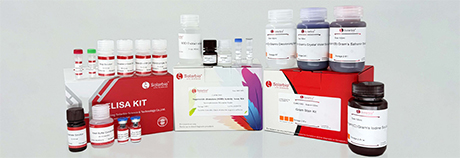
Solarbio ELISA kits function as validated immunoassay kits which enable protein target detection in various complex sample types. The kits follow strict quality control procedures to deliver dependable results in every experimental run.
Key Components Used in ELISA Kits
The optimization of all components leads to better signal-to-noise ratio and reduced background interference.
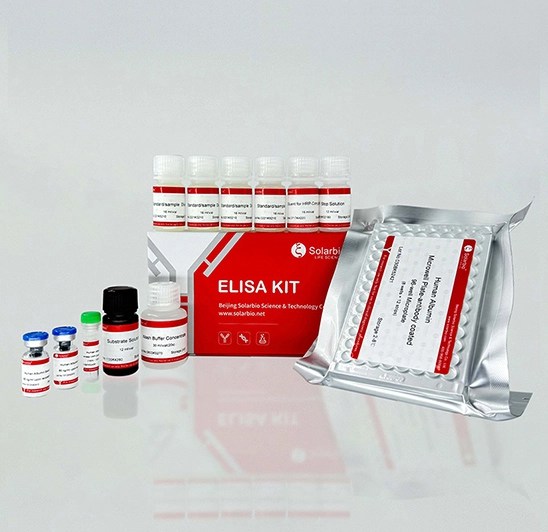
The ELISA kits from Solarbio include pre-optimized reagents which produce consistent results when testing different sample types. The optimization process plays a vital role in reducing experimental variations which leads to accurate quantification results.
Applications of ELISA in Biomedical Research
ELISA serves as a critical method to measure biomarkers which indicate inflammation, cancer, metabolic changes, neurodegenerative diseases, and infectious diseases. The technique is widely used in multiple areas, including cytokine measurement, hormone detection, infectious disease detection, and biomarker confirmation.
The ELISA kits from Solarbio enable researchers to study TNFSF pathways and growth factors and metabolic indicators which helps them solve problems in molecular biology and immunology and biomedical research.
Direct ELISA: Simplified Detection Strategy
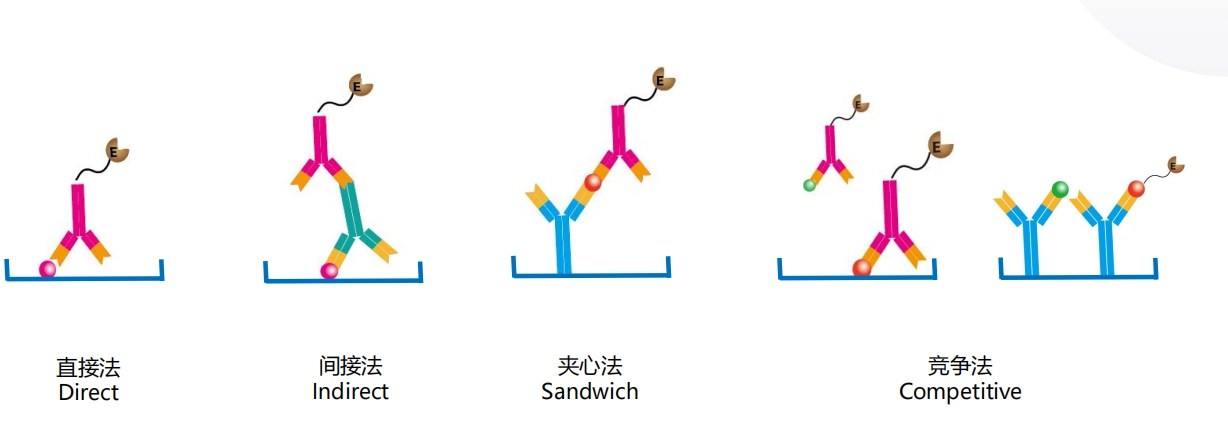
The Direct ELISA method enables antigen detection using a single enzyme-labeled primary antibody The method remains straightforward to perform but works best for purified targets that have low background interference. However, it has relatively lower sensitivity, making it less suitable for detecting low-concentration targets.
Single-Antibody Detection Format
The target antigen receives direct attachment to the microplate surface in this format. The enzyme-conjugated primary antibody binds to the antigen before substrate addition for signal production. The format requires fewer steps but produces weaker signals because it lacks signal amplification mechanisms.
Advantages in High-Purity Antigen Detection
The Direct ELISA method works best when researchers have access to pure antigens and non-specific binding does not affect their results. The method provides fast screening and quantification capabilities when researchers need to process many samples even if it reduces their ability to detect small changes.
Relevant Products from Solarbio’s Catalog
The Solarbio direct ELISA kits employ high-affinity antibodies together with optimized buffers to minimize nonspecific binding, making them appropriate for testing purified proteins and validating recombinant antigens. These kits undergo rigorous quality control to ensure reliable performance under various experimental conditions.
Indirect ELISA: Enhanced Signal Amplification
The format enables detection of various species and targets through its wide range of applications.
Two-Step Antibody Binding Process
The indirect ELISA method detects antigens through an unlabeled primary antibody which binds to antigens before an enzyme-conjugated secondary antibody detects the reaction. This method provides enhanced sensitivity as multiple secondary antibodies bind to each primary antibody, amplifying the signal. The detection method produces an amplified signal because multiple secondary antibodies can attach to each primary antibody which results in enhanced enzymatic reaction output.
Versatility Across Species and Targets
The format works best when researchers use unconjugated primary antibodies or when they need to detect antigens from different species. The application of universal secondary antibodies helps researchers overcome cross-reactivity problems when working with samples from different species.
Solarbio’s Indirect ELISA Kit Offerings
Solarbio offers species-specific secondary antibodies with high affinity that enable maximum signal production while preserving specific binding. These antibodies are compatible with various sample types, including serum, plasma, cell culture supernatants.
Sandwich ELISA: High Specificity Quantification Format
The dual-antibody recognition design of Sandwich ELISA makes it the gold standard for precise analyte quantification in complex biological samples, such as serum and tissue lysates, due to its high specificity and sensitivity.
Dual-Antibody Recognition System
The Sandwich ELISA method uses a capture antibody which binds to the plate surface and a detection antibody that targets a different epitope on the target analyte. The dual binding approach in this method produces high specificity while it blocks non-target components from generating background signals.
Preferred Format for Complex Samples
The method serves as a standard technique for cytokine profiling and growth factor quantification and hormone detection in serum and tissue lysate samples. The method provides excellent specificity and sensitivity for detecting low-concentration analytes in complex biological samples including serum and cell lysates.
Recommended Sandwich Kits from Solarbio
The ELISA kits from Solarbio use sandwich-based technology to detect IL-6 and TNF-alpha and VEGF and insulin and BDNF. The kits undergo extensive quality control assessments to verify their performance stability. The Mouse Insulin ELISA Kit (SEKM-0141) from Solarbio appeared in a CELL RESEARCH study which achieved an impact factor of 46.297.
Competitive ELISA: Quantification Based on Inhibition Principle
The competitive ELISA method becomes the preferred choice for detecting small or single-epitope molecules because their size and structural limitations make dual-antibody sandwich binding impossible.
Antigen-Antibody Competition Mechanism
The competitive ELISA format quantifies analytes based on competition for limited antibody-binding sites. Depending on the assay design, either labeled antigens compete with sample antigens for antibody binding (direct competitive format), or sample antigens compete with immobilized antigens for primary antibody binding (indirect competitive format). This approach is ideal for detecting small or single-epitope molecules—such as hormones and drug metabolites—that cannot be measured using dual-antibody sandwich formats. In competitive assays, signal intensity decreases as the analyte concentration increases.
Suitable for Small Molecule Detection
The technique works best for hormone assays that include cortisol measurements and drug/metabolite detection because it can detect small epitopes that sandwich formats cannot recognize. The technique finds its main application in pharmacological and toxicological research.
Competitive Assay Kits Available from Solarbio
Solarbio provides competitive ELISA kits that enable precise quantification of steroid hormones and small-molecule drugs with low cross-reactivity.
Multiplexed or Multi-Well Format Variants of ELISA
High-throughput research requires efficient solutions which can analyze multiple analytes at once while using limited resources.
Simultaneous Detection of Multiple Analytes
The multiplexed ELISA technique allows researchers to detect multiple biomarkers from one sample through either spatial separation or colorimetric coding methods. However, this method may face challenges such as background interference and cross-reactivity, which require careful sample preparation and antibody selection. The method decreases the amount of required reagents while minimizing experimental errors between different assays.
Efficiency in High Throughput Screening Applications
The method enables researchers to perform large-scale screening studies and clinical diagnostics research because it minimizes reagent usage and sample volume needs and shortens processing times.
Multi-Well Compatible Kits from Solarbio’s Portfolio
The 96-well plate-based kits from Solarbio operate with automation systems and have been validated for multiple cytokine panels to support immune research and cytokine profiling. The kit design maintains uniformity between samples while reducing edge-related issues.
Choosing the Right ELISA Kit from Solarbio Based on Application Needs
The selection of assay format depends on three main factors: experimental objectives, sample properties, and analytical requirements. Researchers should also consider the sensitivity, specificity, and reproducibility required for the experiment, as well as the target molecule’s concentration and sample matrix.
Criteria Based on Sample Type and Analyte Abundance
You need to determine if your matrix consists of serum or plasma or lysate because the analyte concentration level and matrix interference with signal generation also matter. The sandwich format works best for detecting low-abundance targets in complex sample matrices.
Importance of Sensitivity, Specificity, and Reproducibility
Your quantitative requirements need assay metrics to show detection range and intra/inter-assay coefficient of variation (CV) and linearity performance. The research objectives require assay performance metrics to show LOD (limit of detection) and intra/inter-assay variability.
Navigating Solarbio’s Product Selection Tools
The official Solarbio website enables researchers to search products through species reactivity and analyte type and pathway category and assay format filters. The service portal enables researchers to access expert technical support from Solarbio’s technical team for customized assistance. The News Center section provides recent publications for application insights while the Products Page enables users to find related products through its organized product categories.
FAQ
Q1: What are the main types of ELISA?
A: The main types of ELISA are Direct ELISA, Indirect ELISA, Sandwich ELISA, and Competitive ELISA. Each type is suited for different detection needs and sample complexities.
Q2: What is the advantage of Indirect ELISA over Direct ELISA?
A: Indirect ELISA enhances signal amplification by using a labeled secondary antibody that binds to an unlabeled primary antibody, providing stronger and more sensitive detection compared to Direct ELISA.
Q3: What types of analytes can Competitive ELISA detect?
A: Competitive ELISA is ideal for detecting small molecules, such as hormones and drug metabolites, by measuring competition between labeled and unlabeled antigens for binding sites.
 Consult
 Whatsapp
 Leave Message
 top
top