





What Is the Principle and Method Behind ELISA Testing
Table of Contents
What Is the Principle and Method Behind ELISA Testing
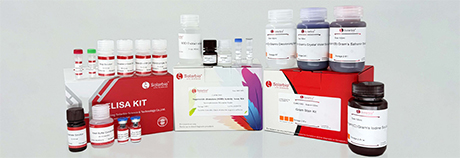
In laboratory research, it is challenging to obtain stable and reproducible quantitative results for low-abundance targets. Unstable signal intensity, elevated background interference, and obvious batch-to-batch variation frequently occur in immunoassays, where detection accuracy and sensitivity directly determine data reliability. ELISA has become a mainstream and reliable technique to solve such technical difficulties, combining high biological specificity with enzyme-amplified colorimetric signals. Standardized reagents and fully validated assay kits further ensure stable experimental performance. In practical applications, numerous laboratories prefer reputable manufacturers such as Beijing Solarbio Science & Technology Co., Ltd., benefiting from its continuous R&D investment, comprehensive product portfolio, and rigorous quality control system to support academic research and routine testing.
Solarbio ELISA Product Overview
• Total ELISA kits: 1,400+
• Species: Human, Mouse, Rat, Rabbit, Porcine, Chicken, etc.
• Key types: Sandwich, Competitive, One-Step, High-Sensitivity
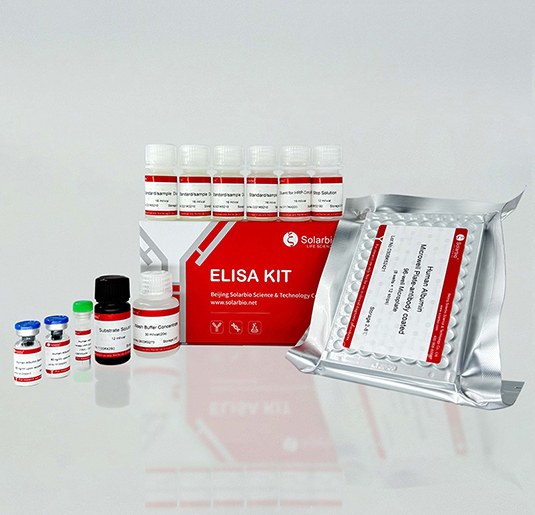
• Featured kit: SEKH-0081 Human Albumin ELISA Kit
SEKSM-0016 ST/5-HT ELISA Kit
SEKM-0007(OS) Mouse IL-6(One-Step) ELISA Kit
SEKR-0009(HS) Rat TNF-α(High Sensitivity) ELISA Kit
All Solarbio ELISA kits undergo rigorous validation with high sensitivity, low background, and excellent batch-to-batch consistency. Each kit provides stable, reliable, and repeatable data for publication-quality research results.
What Is the Basic Principle of ELISA Testing?
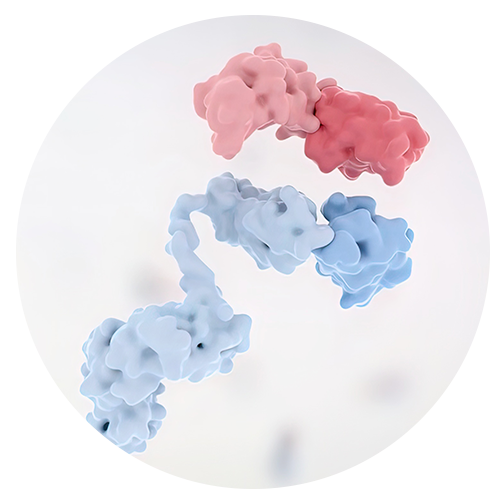
Before reagent selection and experimental operation, it is essential to master the core working mechanism of ELISA. The overall workflow appears simple, while every procedure relies on specific biochemical interactions.
Antigen–Antibody Specific Binding Mechanism
ELISA is based on the high-specificity binding reaction between antigens and antibodies. Antibodies can recognize and bind to specific epitopes of target analytes, enabling precise detection even in complex samples such as serum and cell extracts. This specific immune reaction lays the foundation for reliable immunoassays and avoids non-specific interference.
Enzyme-Labeled Signal Amplification System
After antigen–antibody binding, enzyme-conjugated antibodies are introduced to achieve signal amplification. Enzymes such as HRP retain stable catalytic activity after conjugation; each binding reaction can produce an amplified detectable signal. This characteristic enables the accurate detection of low-abundance analytes, which is critical for early disease screening and cytokine quantitative analysis.
Colorimetric Detection and Quantification Logic
The final reaction converts biochemical signals into measurable visual signals. After adding chromogenic substrate, the enzyme triggers a gradient color reaction, and color intensity is positively correlated with the concentration of target analytes. A microplate reader measures absorbance values and converts color changes into intuitive numerical data. This core principle is universally applicable to all mainstream ELISA formats.
Solarbio Elisa Pair Set Portfolio:
| Catalog No. | Product Name | Specification | Application |
|---|---|---|---|
| SEKLH-0001 | Human IgG ELISA Pair Set | 5 plates/15 plates | For sandwich ELISA quantitative detection of human immunoglobulin G (IgG), immunoassay experiments, accurate quantification of antibody levels, immune function evaluation, and scientific research-grade ELISA system construction |
| SEKLP-0005 | Porcine TNF-α ELISA Pair Set | 5 plates/15 plates | For sandwich ELISA quantitative detection of porcine tumor necrosis factor α (TNF-α), porcine inflammation and immunity related research, animal model experiments, veterinary scientific research, and cytokine level analysis |
| SEKLSM-0009 | GAPDH ELISA Pair Set | 5 plates/15 plates | For sandwich ELISA detection of glyceraldehyde-3-phosphate dehydrogenase (GAPDH), internal reference protein quantification, protein expression level analysis, cell metabolism related research, and internal reference calibration in scientific experiments |
What Are the Main Types of ELISA Methods?
Different experimental purposes require matched ELISA formats, which are selected according to sample type, target abundance, and expected detection sensitivity.
Direct and Indirect ELISA Formats
Direct ELISA uses primary antibodies directly labeled with enzymes, featuring a shorter workflow but relatively lower sensitivity. Indirect ELISA introduces secondary antibody amplification to enhance signal intensity, with one additional incubation step.
Sandwich ELISA High-Specificity Design
Sandwich ELISA adopts two antibodies that recognize different epitopes of the same antigen. This dual-recognition design significantly improves detection specificity and is widely applied to quantitative determination of macromolecular proteins in complex samples.
Competitive ELISA Quantitative Strategy
In competitive ELISA, the detection signal decreases with the increase of target concentration. This format is especially suitable for small-molecule substances and analytes with limited binding epitopes.
Commercially available standardized kits cover multiple formats, including competitive ELISA and one-step high-sensitivity ELISA, providing flexible solutions for diverse research scenarios.
Solarbio Representative ELISA Kits by Method
| Catalog No. | Product Name | Format | Core Advantages | Application |
|---|---|---|---|---|
| SEKH-0013 | Human IL-6 ELISA Kit (96T/48T) | Sandwich | High specificity, low background, validated for human samples | Immune response research, cytokine profiling, inflammation studies |
| SEKSM-0070 | Corticosterone ELISA Kit (96T/48T) | Competitive | Optimized for small molecules, high accuracy, wide linear range | Stress response research, HPA axis studies, hormone regulation |
| SEKM-0034(OS) | Mouse TNF-α (One-Step) ELISA Kit (96T/48T) | One-Step Sandwich | Shortened protocol (1-hour total time), fewer pipetting steps, stable results | Inflammation research, rapid cytokine detection, high-throughput screening |
| SEKR-0009(HS) | Rat TNF-α (High Sensitivity) ELISA Kit (96T/48T) | High Sensitivity Sandwich | Ultra-low detection limit, optimized for trace samples, high reproducibility | Immune response research, low-abundance cytokine detection, rat model studies |
Why Is ELISA Considered Highly Sensitive and Specific?
A variety of detection technologies are available for life science research, yet ELISA remains widely adopted due to its excellent balance of sensitivity, specificity and operability.
High-Affinity Antibody Selection
Antibody quality determines the overall assay performance. High-affinity and high-purity antibodies effectively reduce non-specific reactions and improve detection accuracy. Regular reagent manufacturers conduct multi-round performance verification to ensure stable binding activity of antibodies.
Enzyme Reaction Signal Amplification
Enzyme-catalyzed reactions realize efficient signal amplification, supporting accurate detection of trace targets. This advantage is indispensable in cytokine profiling, hormone detection and early biomarker research.
Standardized Kit Design and Quality Control
Experimental stability relies on standardized manufacturing and strict quality management. Professional manufacturers implement standardized production, performance verification and batch testing systems to minimize batch-to-batch variation and ensure consistent and repeatable results for long-term use.
What Are the Key Components Required for ELISA Testing?
A complete ELISA assay system consists of several core components; inferior or missing reagents will directly compromise overall detection performance.
Microplate and Coating Reagents
The microplate acts as a solid-phase reaction carrier, and its surface properties determine immobilization efficiency. Coating buffer and related formulations need to match target characteristics to maintain stable biological activity.
Antibodies and Enzyme Conjugates
Primary and secondary antibodies constitute the core recognition system. Enzyme conjugates must maintain both specific binding ability and stable catalytic activity, which is the key to reliable signal output.
Substrates and Detection Instruments
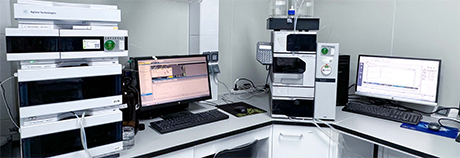
Chromogenic substrates such as TMB produce stable gradient color changes under enzymatic catalysis. Professional microplate readers convert optical signals into quantitative data. Complete supporting formulations including stop solution and HRP conjugates further optimize assay performance.
Supporting Reagents for ELISA Principle
| Component Type | Specific Compound | Functional Role | Solarbio Solution |
|---|---|---|---|
| Reagent | Coating Buffer | Immobilizes antibodies/antigens on microplate | SEKF103 Coating Buffer |
| Reagent | Blocking Buffer | Blocks unbound sites to reduce background | SEKF116 Blocking Buffer |
| Substrate | TMB Substrate | Chromogenic substrate for HRP color reaction | SEKF104 High Sensitivity TMB Substrate |
| Conjugate | HRP Conjugate | Enzyme-labeled secondary antibody for signal detection | SEKF121 HRP Conjugate |
| Reagent | Wash Buffer Concentrate | Eliminates unbound components to reduce interference | SEKF102 Wash Buffer Concentrate |
How to Choose the Right ELISA Kit for Your Experiment?
Selecting a suitable ELISA kit is as important as experimental operation, and multiple key factors need to be comprehensively considered.
Target Specificity and Species Compatibility
The kit must match the target analyte and sample species. Mismatched antibodies will lead to weak signals, false positives or invalid detection results.
Sensitivity and Detection Range Requirements
Different experiments have distinct limits of detection. High-sensitivity kits are suitable for low-abundance targets, while conventional kits meet the requirements of routine quantitative analysis.
Supplier Reliability and Technical Support
Reliable suppliers provide complete product validation data, stable inventory supply and professional technical support. Solarbio maintains abundant inventory of over 100,000 life science products and one-stop technical consulting services, effectively solving technical difficulties in experimental design and operation.
Recommended ELISA Kits by Application
| Research Area | Recommended Kit | Catalog No. | Core Advantages |
|---|---|---|---|
| Human Immune & Inflammation Research | Human IL-6 ELISA Kit (96T/48T) | SEKH-0013 | High specificity for human IL-6, low background, validated for serum/plasma samples |
| Human Immune & Inflammation Research | Human VEGF ELISA Kit (96T/48T) | SEKH-0052 | Wide linear range, high sensitivity, ideal for angiogenesis and tumor microenvironment studies |
| Cytokine Profiling & Immune Function Analysis | Mouse IL-1β ELISA Kit (96T/48T) | SEKM-0002 | High affinity antibody pair, stable batch-to-batch performance, suitable for inflammatory model analysis |
| Inflammation & Immune Response | Mouse TNF-α ELISA Kit (96T/48T) | SEKM-0034 | High reproducibility, optimized for mouse inflammation research |
| Rat Immune & Endocrine Research | Rat IFN-γ ELISA Kit (96T/48T) | SEKR-0008 | Specific for rat IFN-γ, validated for cell culture supernatant and tissue homogenate |
| Rat Immune & Endocrine Research | Rat Insulin ELISA Kit (96T/48T) | SEKR-0033 | High accuracy, suitable for metabolic research |
| Stress Response & Neuroendocrine Research | Corticosterone ELISA Kit (96T/48T) | SEKSM-0070 | Competitive ELISA design, wide detection range, ideal for HPA axis and stress model studies |
| Stress Response & Neuroendocrine Research | NA/NE ELISA Kit (96T/48T) | SEKSM-0019 | Sensitive detection of norepinephrine, suitable for neuroendocrine and stress-related research |
FAQ
Q1: What does ELISA measure in a sample?
A: ELISA quantifies specific antigens or antibodies based on enzyme-catalyzed colorimetric reactions, enabling accurate numerical analysis of target analytes.
Q2: Which ELISA method is most suitable for protein detection?
A: Sandwich ELISA is the preferred format for protein detection due to its high specificity and dual-antibody recognition mechanism.
Q3: Why do ELISA results sometimes vary between experiments?
A: Result variation may be caused by non-standard washing, inconsistent incubation time or unstable reagent quality. Adopting standardized commercial ELISA kits can effectively reduce such deviations.
Q4: Can ELISA detect low-abundance targets?
A: Yes. Enzyme-mediated signal amplification enables ELISA to detect trace analytes, especially when using high-sensitivity assay kits.
Q5: What samples can be tested using ELISA?
A: ELISA is applicable to serum, plasma, cell culture supernatant, tissue homogenate, and other biological samples, depending on kit design.
Q6: How long does a typical ELISA experiment take?
A: The total assay time of conventional ELISA depends on incubation procedures and protocol settings, usually taking 3.5 hours.
Q7: What determines the accuracy of ELISA results?
A: Antibody purity and affinity, reagent stability, and standardized experimental operation jointly determine the detection accuracy.
Q8: Is it necessary to use a complete ELISA kit?
A: A complete matched ELISA kit standardizes the whole operation process and improves result stability, especially for high-throughput and repeated testing.
Publications Citing Solarbio ELISA Kits
-
Ma Y , Cao Y , Zu M ,et al.Flying‐Saucer‐Shaped Nanoheterojunctions with Enhanced Colorectal Tumor Accumulation for Increased Oxidative Stress and Immunometabolic Regulation[J].Advanced Functional Materials, 2024, 34(41).DOI:10.1002/adfm.202402164.
-
Shi Y , Gu J , Zhang C ,et al.A Janus Microsphere Delivery System Orchestrates Immunomodulation and Osteoinduction by Fine‐tuning Release Profiles[J].Small, 2024, 20(46).DOI:10.1002/smll.202403835.
-
Yan Y , Huang X , Yuan L ,et al.Dictating the spatial-temporal delivery of molecular adjuvant and antigen for the enhanced vaccination[J].Biomaterials, 311:122697[2025-07-08].DOI:10.1016/j.biomaterials.2024.122697.
-
Li J , Yang J , Jiang S ,et al.Targeted reprogramming of tumor-associated macrophages for overcoming glioblastoma resistance to chemotherapy and immunotherapy[J].Biomaterials, 2024:311.
 Consult
 Whatsapp
 Leave Message
 top
top