




Related news
Protein Extraction Kit Guide: How to Choose the Right Solution for Different Research Applications
Table of Contents
Protein Extraction Is More Than Just Breaking Cells Open
Protein extraction – a relatively simple technique, which can have a huge impact on the results obtained in the lab.
Even with the best experiment, the best antibody and the best target protein, sample preparation is a major challenge. Many problems that seem to arise in the following steps – very weak signals in Western lot, very variable quantification of proteins in solutions, very unexpected results from proteomics analysis – can be traced back to problems with sample preparation.
Different samples also bring different challenges. A cultured cell sample is very different from an animal tissue sample. Plant tissues contain many different types of compounds that can interfere with protein solubilization. Additionally, proteins that are localized to the nucleus, mitochondria, etc. typically require specific extraction approaches to solubilize.
Because of this, laboratories usually do not choose a Protein Extraction Kit only based on protein amount. They also consider where the protein is located, what type of sample is being processed, and which experiment will be performed afterward.
As a supplier of high-quality protein research products, Solarbio serves customers from fields of protein analysis, molecular biology and cell biology. Our portfolio of products for protein research covers the needs of daily lab work as well as special applications such as protein extraction.
How Protein Extraction Kits Support Different Laboratory Workflows
Total Protein Extraction for Everyday Protein Analysis
For many research projects, total protein extraction is the starting point.
Researchers often need a complete protein sample to compare expression differences between control and experimental groups. This approach is commonly used in Western lot, enzyme activity studies, and other protein detection experiments.
The challenge is that biological samples contain many components besides the target protein. Lipids, nucleic acids, salts, and other cellular substances may affect the quality of the extracted sample.
A suitable extraction method helps researchers obtain a cleaner protein preparation while keeping the workflow practical for routine laboratory use.
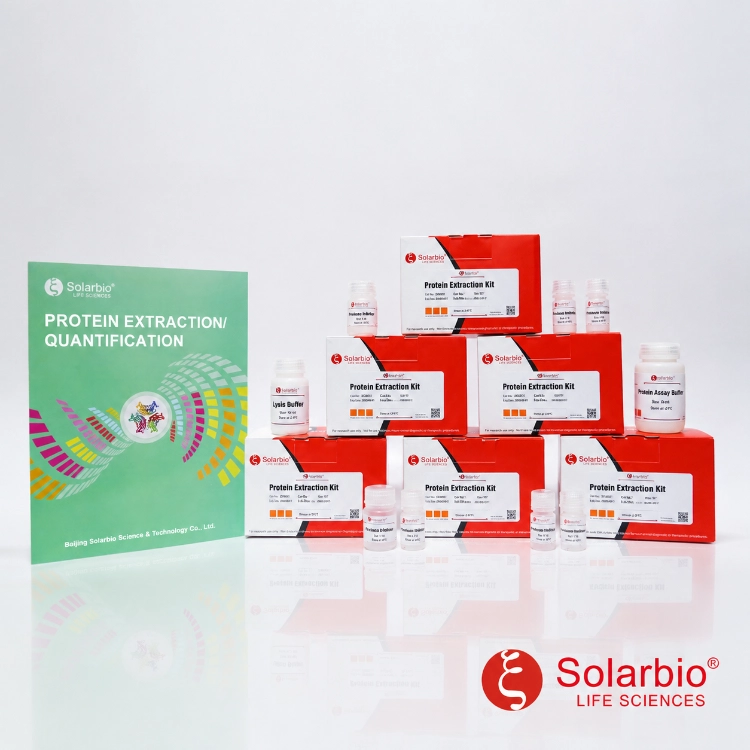
Ultra Series Protein Extraction Kits are designed for different sample types, including cells, tissues, plants, microorganisms, and other biological materials. The product series focuses on different extraction requirements rather than using one solution for every application.
Researchers can explore more protein extraction products from Solarbio when selecting suitable reagents for their experiments.
Why Sample Type Matters When Choosing Protein Extraction Reagents
One common mistake in protein research is choosing extraction reagents without considering the sample itself.
For example, animal tissues often require stronger disruption methods because of their complex structure. Cultured cells may need gentler conditions to reduce protein degradation. Plant samples can contain polysaccharides and phenolic compounds that interfere with protein analysis.
This means the same extraction method may not perform equally well across different sample types.
Before selecting Protein Extraction Reagents, researchers usually check several factors:
The source of the sample
The location of the target protein
The required protein concentration
The downstream experiment
A clear understanding of these points can reduce repeated optimization and save time during experimental preparation.
Organelle Protein Extraction for Cellular Mechanism Research
Studying Proteins Inside Specific Cellular Structures
Total protein extraction provides an overall view of protein expression, but sometimes researchers need to understand where proteins are located inside cells.
This is especially important in cell biology research. Many proteins perform their functions only in specific cellular compartments.
For example, mitochondrial proteins are involved in energy metabolism, while lysosomal proteins participate in degradation and recycling processes. Researchers studying mitochondrial function can use Mitochondrial Protein Extraction approaches to analyze proteins involved in cellular energy regulation. Nuclear proteins are closely related to gene regulation and DNA-related functions. Researchers can further investigate chromatin structure and histone-related mechanisms by using specialized Histone Protein Extraction solutions.
For lysosome-focused studies, Lysosomal Protein Extraction becomes a usefulapproach.
By separating proteins from specific cellular structures, researchers can study protein distribution, organelle function, and cellular responses in more detail.
Protein extraction from tissue samples provides researchers with reliable samples for studying cellular mechanisms and protein localization.
Solarbio’s organelle protein extraction solutions are developed for researchers working on cellular mechanism studies, including mitochondria, lysosomes, and other subcellular structures.
Researchers studying related biological mechanisms can also review Solarbio’s pathway research resources to understand different experimental applications.
Nuclear Protein Extraction and Cytoplasmic Protein Extraction
Why Separate Nuclear and Cytoplasmic Proteins?
Cells are highly organized systems. Proteins constantly move between different areas of the cell depending on biological conditions. For studies focusing on membrane-associated proteins, Membrane Protein Extraction provides a targeted approach to isolate proteins located in cellular membranes.
A protein located in the nucleus may regulate gene expression, while the same protein family in the cytoplasm may participate in signaling pathways or metabolism.
When researchers study transcription factors, DNA-binding proteins, or signal activation, analyzing total protein alone may not provide enough information.
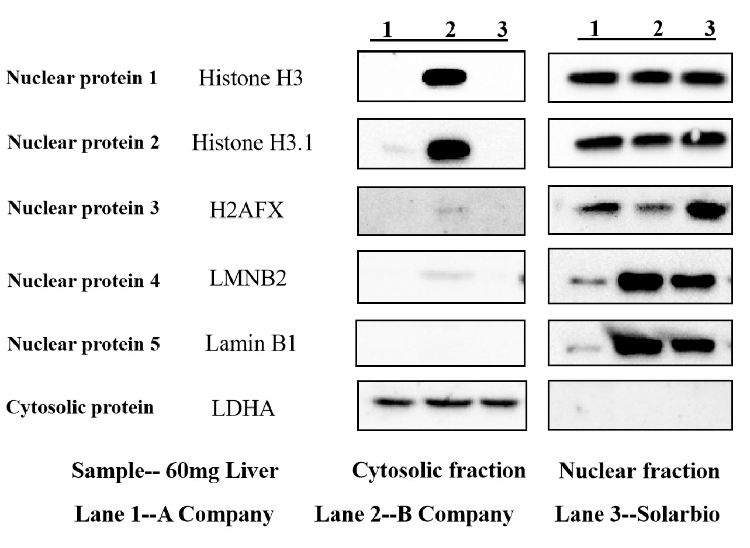
This is why Nuclear Protein Extraction and Cytoplasmic Protein Extraction are widely used in cell biology studies.
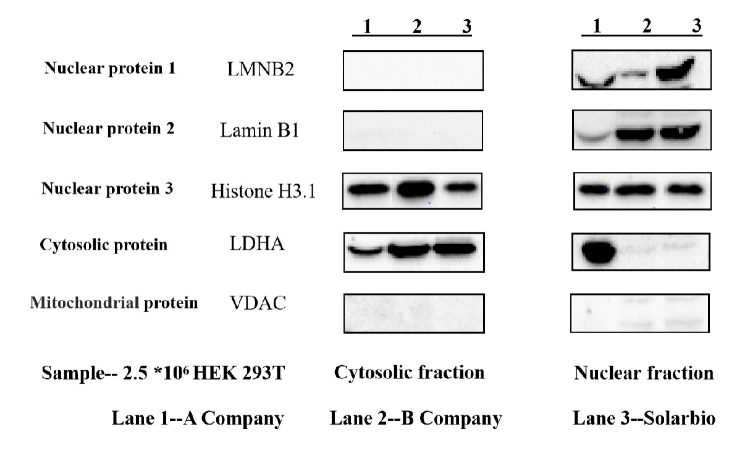
Western lot validation confirms the successful separation of nuclear and cytoplasmic protein fractions for further cellular analysis.
Nuclear protein preparation is commonly applied in research involving:
Transcription regulation
Chromatin studies
DNA-binding proteins
Nuclear signaling pathways
Cytoplasmic protein extraction is often used for:
Signal transduction research
Metabolic pathway studies
Protein localization analysis
Cell response experiments
The Ultra Series Cytoplasmic/Nuclear Protein Extraction Kits helps researchers separate different cellular fractions for experiments that require protein localization information.
Protein Extraction Kits for Western lot and Proteomics Applications
Preparing Samples for Western lot Analysis
Western lot is one of the most common methods used to detect specific proteins. However, the quality of the result depends heavily on the quality of the starting sample.
If extraction is incomplete, the target protein may not be fully released. If degradation occurs, the detected result may not represent the actual biological condition.
A suitable Protein Extraction Kit provides a more consistent starting point for Western lot experiments.
For researchers who regularly perform protein detection, choosing a stable extraction workflow can reduce unnecessary troubleshooting.
Supporting Protein Interaction and Proteomics Studies
Protein extraction is also important in more complex experiments.
In protein interaction studies, researchers need extraction conditions that preserve relationships between proteins. In proteomics research, sample preparation quality can influence the accuracy of large-scale protein identification.
The Ultra Series Protein Extraction Kits support different laboratory applications, including protein interaction research and proteomics-related workflows.
Solarbio continues to provide research support and technical services for laboratories with different experimental requirements.
How to Improve Protein Extraction Results in Daily Laboratory Work
Keep Sample Processing Consistent
Even with the same Protein Extraction Kit, the final result can vary if sample handling is inconsistent.
Sample freshness, storage conditions, temperature during extraction, and processing time can all affect protein stability. This is especially true for proteins that are sensitive to degradation or changes in their natural structure.
Many researchers pay attention to the extraction reagent itself but overlook sample preparation details. In practice, keeping the entire workflow consistent is often just as important as choosing the right kit.
For example, when comparing protein expression between different treatment groups, using the same sample amount and the same extraction conditions helps make the final data easier to interpret.
Select Extraction Methods Based on Research Goals
There is no universal extraction method that works best for every experiment.
A laboratory studying general protein expression may only need total protein extraction. A group researching cell signaling may need Cytoplasmic Protein Extraction. A team studying transcription regulation may require Nuclear Protein Extraction.
The choice should follow the research question.
If the experiment focuses on cellular location, a specialized extraction method usually provides more useful information than a standard whole-cell lysate. If the experiment focuses on protein quantity, a total protein extraction workflow may be more suitable.
This is also why many laboratories keep different extraction solutions available for different projects instead of relying on one general reagent.
Protein Extraction Solutions for Different Research Fields
Applications in Cell Biology Research
Cell biology research often depends on understanding how proteins behave inside cells.
Changes in protein location, movement between cellular compartments, and interactions with other molecules can provide important information about cellular functions.
For example, researchers may analyze nuclear proteins to understand gene regulation or examine organelle proteins to study cellular stress responses.
Specialized protein extraction workflows make it possible to study these changes more accurately.
Solarbio provides research tools covering areas such as cell biology, molecular biology, immunology, and biochemistry. More information about the company’s research platform and capabilities can be found through the Solarbio company information page.
Applications in Disease Mechanism and Drug Research
Protein analysis plays an important role in disease research.
Changes in protein expression, protein localization, and protein interactions may reveal how cells respond to disease conditions or external treatments.
For example, mitochondrial protein studies can help researchers investigate energy metabolism changes, while nuclear protein analysis can support research into gene regulation mechanisms.
In drug development studies, researchers often use protein extraction workflows to evaluate how compounds affect cellular pathways.
A suitable extraction method helps create a clearer connection between experimental treatment and observed biological changes.
Why Researchers Choose Specialized Protein Extraction Kits
Laboratories often move from general extraction methods to specialized kits as their research becomes more detailed.
A simple experiment may only require total protein extraction. However, once researchers begin studying protein localization, protein interactions, or specific cellular mechanisms, more targeted extraction methods become necessary.
The Ultra Series Protein Extraction Kits cover different experimental needs, including:
Total protein preparation
Organelle protein extraction
Cytoplasmic and nuclear protein separation
Special sample preparation
This allows researchers to select products based on their actual workflow instead of adjusting one extraction method repeatedly.
For laboratories looking for related research articles and technical updates, Solarbio also shares product information and application knowledge through its research news platform.
About Solarbio Protein Research Products
Solarbio is a life science company focusing on research tools for laboratories worldwide.
The company provides products related to protein research, molecular biology, cell biology, biochemical analysis, and other areas of life science research.
Its product portfolio includes reagents, kits, and research solutions designed for different experimental scenarios. Through continuous product development and technical support, Solarbio helps researchers handle different laboratory requirements from basic experiments to more specialized studies.
Researchers can learn more about Solarbio’s background, product development, and research focus through the Solarbio about us page.
For laboratories that need help selecting suitable products or discussing specific experimental requirements, the Solarbio technical team is available through the contact page.
Conclusion
Choosing the right Protein Extraction Kit is an important part of building a stable research workflow.
Different experiments require different approaches. Total protein extraction is suitable for many routine protein analysis applications, while Organelle Protein Extraction, Nuclear Protein Extraction, and Cytoplasmic Protein Extraction provide more detailed information for cell biology and mechanism studies.
Before selecting a product, researchers should consider their sample type, target protein location, and downstream application. A suitable extraction method can reduce repeated optimization and make experimental results easier to analyze.
With different solutions for different research scenarios, Solarbio provides protein extraction products that support laboratories working on Western lot, proteomics, protein interaction studies, and cellular mechanism research.
FAQ
Q1: What should I consider when choosing a Protein Extraction Kit?
A1: Researchers should consider the sample type, target protein location, and downstream experiment. Different applications may require total protein extraction, Organelle Protein Extraction, or Nuclear Protein Extraction.
Q2: Can a Protein Extraction Kit be used for Western lot?
A2: Yes. Protein Extraction Kits are commonly used before Western lot experiments to prepare protein samples for target detection. The suitable kit depends on the sample type and experimental purpose.
Q3: What is Organelle Protein Extraction used for?
A3: Organelle Protein Extraction is used to isolate proteins from specific cellular structures, such as mitochondria and lysosomes. It is commonly applied in studies related to cellular function, protein localization, and mechanism research.
Q4: Why do researchers separate nuclear and cytoplasmic proteins?
A4: Nuclear and cytoplasmic proteins often have different biological roles. Separating these fractions helps researchers study protein distribution, transcription regulation, and cellular signaling processes.
Q5: Are Protein Extraction Reagents suitable for proteomics research?
A5: Yes. Properly prepared protein samples can be used for proteomics workflows. Researchers usually pay attention to protein purity, stability, and compatibility with downstream analysis methods.
 Consult
 Whatsapp
 Leave Message
 top
top