




Applications of Chromatographic Reference Standards in Pharmaceutical and Biomedical Research
Table of Contents
Chromatographic analysis often operates behind the scenes in many decision-making processes during drug development and biomedical research. When research results are stable and data from different testing methods corroborate each other, it typically indicates that the Analytical Standards supporting the methodology are reliable. Conversely, when experimental results fluctuate, the chromatographic peak areas of the Analytical Standards under identical conditions change, or data from the same method vary significantly across different laboratories, the issue can often be traced back to the Analytical Standards themselves or their suitability.
This article explores the role of Analytical Standards in practical experimentation, the problems they genuinely address, and how to correctly select and use these standards to avoid issues in subsequent research. Additionally, the article introduces Beijing Solarbio Science & Technology Co., Ltd., which has established an extensive and traceable library of Analytical Standards, integrated with its overall life science solutions. This integration helps maintain the accuracy of testing processes from preliminary to final research stages.
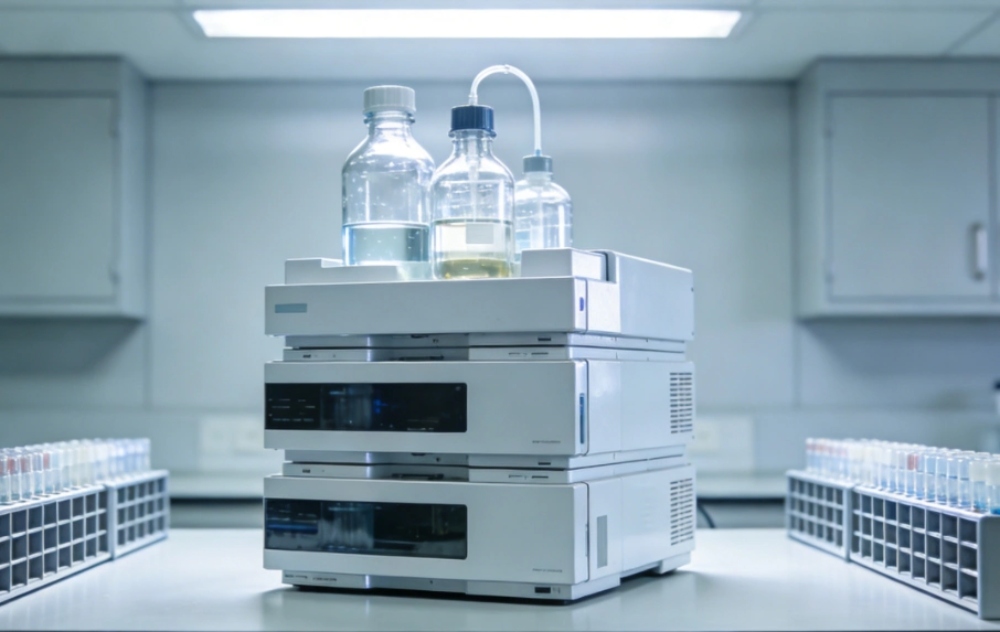
Why Are Analytical Standards Crucial for Modern Research?
Chromatographic systems themselves can provide highly precise analytical results, but they do not interpret the data. Every retention time, chromatographic peak area, and calculated value relies on an accepted reference point. This is precisely where Analytical Standards come into play. They are not optional add-ons but fixed references for understanding and interpreting analytical results.
Analytical Accuracy in Quantitative Analysis
When determining active ingredients, by-products, or contaminants, researchers rely on a calibration curve, which assumes the reference material accurately reflects the actual sample content. Beijing Solarbio Science & Technology Co., Ltd. provides high-purity Analytical Standards, typically verified by HPLC with purity levels above 98%, which can be used to accurately convert detector response signals into precise content values.
Even a minor deviation of 1–2% in the purity of an analytical reference standard may seem insignificant but can be sufficient to alter the final reported value, thereby affecting batch release decisions or the interpretation of biological system data. Laboratories testing small molecule compounds or metabolic intermediates often only realize there is an issue with result deviations after repeating experiments. Reliable Analytical Standards can mitigate such risks from the source.
Method Validation and System Suitability Testing
Before a chromatographic analytical method can be used to support formal research or regulatory-related work, its repeatability, linearity, resolution, and sensitivity must be validated. Analytical Standards are the core tools used to confirm whether system performance meets requirements under defined conditions.
Traceable content standards that comply with pharmacopeial requirements are particularly commonly used in system suitability testing to help confirm whether key parameters such as retention time, theoretical plate number, and response factors are within specified acceptable limits.
Data Reproducibility Across Laboratories
In multi-center research projects, a fundamental truth is often verified: even if instruments and operators differ, the Analytical Standards used must remain consistent. When all participating laboratories use the same lot of traceable Analytical Standards with clearly documented purity and content, the variability of results between laboratories is significantly reduced. For this reason, many research teams prefer to choose suppliers capable of providing batch traceability and long-term, stable supply. For example, Solarbio’s product system meets this stringent requirement for data consistency and reproducibility by ensuring continuous and stable supply of Analytical Standards and providing comprehensive lifecycle documentation.
How Are Analytical Standards Used in Pharmaceutical Research?
In pharmaceutical research, Analytical Standards are integral throughout the project lifecycle. They come into play as early as the substance identification phase and continue to be applied in formulation development, stability studies, and the regulatory submission process.
Identification and Purity Control of Active Pharmaceutical Ingredients (API)
During API development, Analytical Standards serve as key references for substance identification. Whether it’s retention time comparison, UV spectrum matching, or mass spectrometry confirmation, all rely on well-characterized Analytical Standards.
Purity control similarly depends on these standards. Using high-purity API Analytical Standards helps detect trace co-eluting impurities that might otherwise be easily overlooked. This is particularly important when scaling up synthesis or changing raw material suppliers.
Impurity Analysis and Stability Studies
Compared to API Analytical Standards, impurity Analytical Standards are often harder to obtain but are equally crucial in quality control. For example, in forced degradation studies, well-defined reference materials are essential for identifying oxidation, thermal degradation, or photodegradation products.
Long-term stability studies also heavily depend on the stability of the reference materials. If the reference substance changes during the study, data interpretation becomes more complex. Therefore, suppliers supporting long-term projects often stock multiple batches of samples and provide complete traceability documentation to minimize research disruptions caused by such changes. The analytical reference standard system of Solarbio and the integrated solution it relies on are built precisely on this philosophy.
Pharmacopeial Compliance and Regulatory Submission
In regulatory submissions, traceability is a clear requirement. Using standards that align with pharmacopeial requirements and have traceable content assignments is the foundation for ensuring the compliance of method verification and result reporting.
When chromatographic data are included in submission documents, reviewers often first focus on how the Analytical Standards were established. Clear certificates of analysis, traceable content data, and well-defined uncertainty ranges help reduce supplementary inquiries and repetitive work during the review process.
What Roles Do Analytical Standards Play in Biomedical Research?
Beyond the pharmaceutical field, Analytical Standards are equally indispensable in biomedical research, where research objectives are often more diverse and frequently lack clear definition in the early stages.
Biomarker Identification and Quantification
In biomarker research, especially involving small molecules or metabolites, chromatographic analysis can provide accurate quantitative results. Analytical Standards help differentiate between compounds with similar structures, molecular weights, or UV absorption characteristics.
This situation is particularly common in fields such as clinical chemistry, metabolic disease research, and food science, where accurate quantification is often more important than relative changes.
Metabolomics and Small Molecule Pathway Analysis
Untargeted metabolomics can generate vast amounts of data, but subsequent targeted validation Analytical Standards. To confirm metabolic pathway intermediates, it is necessary to compare retention times and fragmentation patterns against known Analytical Standards.
Therefore, suppliers with extensive small molecule and analytical reference standard reserves, such as Solarbio’s related product system, can effectively help bridge the technical gap between “signal discovery” and “pathway confirmation”.
Translational Research and Drug Mechanism of Action Studies
When research progresses from cellular models to animal models or preclinical application stages, data consistency becomes particularly critical. Analytical Standards effectively support reliable comparisons across models and stages by providing a unified chemical benchmark for measurement results from different experimental systems.
What Are the Commonly Used Types of Analytical Standards?
Not all Analytical Standards serve the same purpose. Selection should be based on the intended testing objective, not merely on availability.
High-Purity Analytical Standards
This type of reference standard is widely used for routine quality control and quantitative analysis. Its HPLC purity is typically not less than 98%, making it suitable for calibration, substance identification, and impurity monitoring in the laboratory.
Traceable Standards
This type of reference standard provides accurately assigned content data and is traceable to authoritative reference sources. It is suitable for high-precision quantification, method validation, and system suitability testing, especially when regulatory requirements are stringent.
Ready-to-Use Standard Solutions
Standard solutions save preparation time and reduce errors introduced by manual handling. In high-throughput or shared laboratories, ready-to-use standards help maintain consistency between different operators and experimental batches.
How Does Solarbio Support the Chromatographic Analysis Workflow?
Analytical Standards do not exist in isolation; they are part of an overall testing system that encompasses sample preparation, detection, and data analysis.
Comprehensive Reference Standard Product System
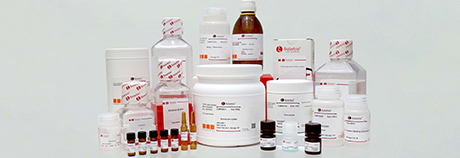
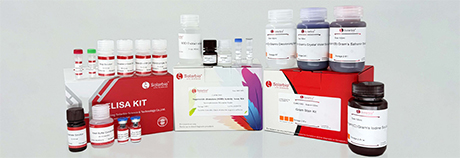
Solarbio offers an extensive series of Analytical Standards, including high-purity compounds, Traceable Standards, and ready-to-use standard solutions. This integrated product system supports users in obtaining multiple compatible Analytical Standards from a single supplier, thereby reducing matching discrepancies between experiments. Details on specific product series and supply information can be found on Solarbio’s product pages.
Integrated Solutions for Drug Discovery and Life Science Research
Analytical Standards are often combined with biochemical detection, small molecule screening, and pathway research. Solarbio’s integrated solutions facilitate smoother transitions between analytical validation and functional studies.
Why Choose Solarbio as a Supplier of Analytical Standards?
Rigorous Quality Control and Batch Traceability
Solarbio operates under multiple quality management systems, with established clear processes for purity testing, content assignment, and documentation. The batch traceability system ensures researchers can reproduce experimental conditions even months or years later.
Broad Application Coverage Across Multiple Research Fields
From basic biochemical analysis to drug discovery and clinical research, Solarbio’s Analytical Standards have been applied in numerous fields. This wide applicability reflects that its product system originates from real experimental needs rather than being designed for a single scenario.
How to Select the Appropriate Analytical Standards for Your Research?
The selection of Analytical Standards is not just part of the procurement process; it is a crucial component of experimental design.
Matching Analytical Standards with Analytical Techniques
Different detectors and separation methods have varying requirements for Analytical Standards. For instance, a compound suitable for UV detection may exhibit different response characteristics under mass spectrometry conditions. Therefore, early assessment of compatibility can avoid rework later.
Aligning Purity Requirements with Research Objectives
Not all research requires chromatographic-grade Analytical Standards. For example, UV spectrophotometers can use corresponding grades of UV standards. However, in research following regulations or when approaching critical decision points, opting for higher-purity standards helps reduce data uncertainty and ensures reliable results.
Frequently Asked Questions (FAQ)
Q1: Why do Analytical Standards so significantly impact result reliability?
A: Because calibration, substance identification, and system performance evaluation all rely on Analytical Standards. Any uncertainty is directly transferred to the final data.
Q2: Is high-purity reference standard always necessary for quantitative analysis?
A: Not always, but when results are near decision limits or require cross-study data comparison, using high-purity Analytical Standards can reduce uncertainty and avoid unnecessary repetitive experimentation.
Q3: How do traceable Analytical Standards differ from ordinary Analytical Standards?
A: The former can provide accurately quantified content data with a defined traceability chain, making them more suitable for method validation and research with stringent requirements.
Q4: What problems do ready-to-use standard solutions primarily solve?
A: They reduce preparation errors, save time, and can significantly improve experimental consistency, especially in shared laboratory or high-throughput testing environments.
Q5: How does supplier selection affect long-term research outcomes?
A: Choosing a supplier with stable batches, clear documentation, and a comprehensive product range helps ensure data continuity and reproducibility, thereby supporting smoother and more reliable project progression.
 Consult
 Whatsapp
 Leave Message
 top
top