



Solarbio Buffers and Reagents: Ensuring Reliable Results in Life Science Research
Table of Contents
In life science research, getting steady and repeatable outcomes presents a major hurdle. Researchers often face troubles with variations in experiments. The same test run several times can produce varying findings. Such unevenness arises from several sources. These include surrounding conditions, test arrangements, and the selection of solutions and materials. A frequent difficulty involves low reliability in tests such as ELISA and Western Blot. This unreliability can undermine data reliability and slow down advancement. Wrong choice of solutions or unsuitable makeup of those solutions frequently worsens the matter. It results in noise from the background, faint signals, or complete test failures. Therefore, it becomes essential to pick the proper solutions. These should provide ideal steadiness and uniformity for dependable test results.
Low test repeatability stands as a frequent challenge that plenty of researchers run into during work with biochemical reagents.In life sciences experiments, achieving consistent, reproducible results often hinges on the proper use of reagents, catalysts, and buffers. Beijing Solarbio Science & Technology Co., Ltd. recognizes the vital importance of dependable reagents that yield trustworthy data. Solarbio’s ISO certified biochemical reagents undergo careful examination to guarantee uniformity from one batch to the next, which lowers the risk of surprising outcomes. For tasks involving ATP detection reagents or enzyme assay kits, Solarbio delivers superior options to meet requirements. Solarbio’s reagents, which cover solutions like PBS, TBS, PBST, and TBST, aim to tackle these typical problems. They offer steadiness in tests and dependable findings.
|
Key Point |
Function |
|
Selecting the appropriate buffer |
– Maintains the effectiveness of reagents and catalysts.- Ensures repeatable results in experiments. |
|
Applicable Experimental Methods |
– ELISA- Western Blotting- Immunohistochemistry |
|
Buffer Functions |
– Supports steady signal identification.- Maintains reagent and catalyst stability.- Reduces variability in test results. |
Plenty of researchers face uneven outcomes in their tests, from fluctuating ELISA measurements to fuzzy Western Blot indicators. Opting for an incorrect buffer might generate background interference, weaken signal sharpness, and result in non-repeatable outcomes. This highlights the interconnectedness of reagents, catalysts, and buffers in ensuring that experimental conditions remain consistent and reproducible.
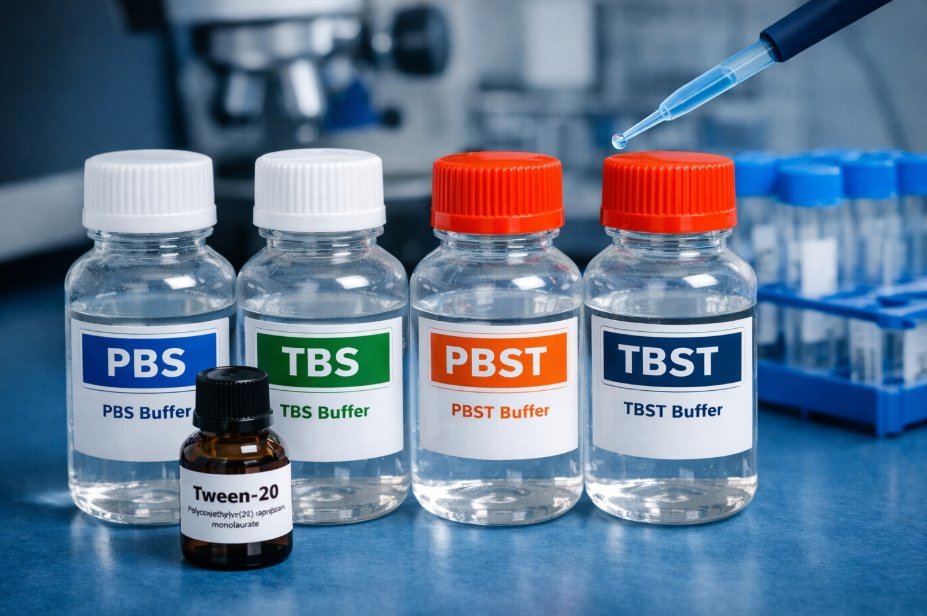
What Are the Differences Between PBS, TBS, PBST, and TBST?
PBS — Phosphate Buffered Saline
PBS acts as a phosphate-based buffer made up of sodium chloride, potassium chloride, and phosphate salts. It holds a natural pH, usually from 7.2 to 7.4.
This buffer stays balanced in salt and safe for cells. Therefore, it works well for rinsing cells, readying samples, and managing tissues. It keeps cell shapes intact and cuts down on structural damage.
Solarbio understand how important buffer consistency is for reproducible research. Solarbio’s PBS and PBST formulations undergo strict ISO-certified quality control to ensure stable pH and consistent performance across all batches, so you can trust your results to be reliable, experiment after experiment.Such consistency is essential for experiments requiring reproducibility .
PBST — PBS with Tween-20
PBST includes PBS along with Tween-20, which serves as a non-ionic surfactant. Adding Tween-20 eases surface pull and curbs unwanted protein ties.
This buffer finds common use in ELISA and immunoassays for rinse phases. It clears loose antibodies well. As such, it lowers noise signals and boosts detection keenness.
In immunological tasks, Solarbio company provides ELISA-related reagents with high specificity and stability. These characteristics are closely associated with optimized buffer systems that support accurate antigen–antibody interactions .
TBS — Tris Buffered Saline
TBS relies on Tris for its buffering role rather than phosphate. It sustains a close pH level. Yet, it skips phosphate ions that could bother some tests.
This buffer fits best for studies with phosphorylation. In those, buffers holding phosphate might break antibody links or spotting precision.
Beijing Solarbio Science & Technology Co., Ltd. has accumulated extensive experience in protein and immunology research, with products applied in numerous high-impact studies. These applications highlight the importance of selecting compatible buffer systems such as TBS in sensitive assays.
TBST — TBS with Tween-20
TBST mixes Tris buffering and Tween-20. It sees wide use in Western blotting, mainly for membrane rinse stages.
Having Tween-20 lessens unwanted protein cling to membranes. This leads to sharper signal spotting and less noise in the background.
Routine test plans often suggest TBST for spotting proteins. This method matches the focus on steadiness and uniformity in Solarbio’s reagent development and application strategies.
Buffer Comparison Guide for Common Applications
|
Buffer Type |
Best For |
pH Stability |
Common Use Cases |
Notes |
|
PBS |
General cell washing |
Stable (7.2-7.4) |
Cell rinsing, sample preparation |
Ideal for cell handling; avoid in phosphorylation studies |
|
PBST |
ELISA and immunoassays |
Stable (7.2-7.4) |
ELISA washing, reducing background |
Contains Tween-20 for better signal clarity |
|
TBS |
Phosphorylation studies |
Stable (~7.6) |
Western Blot, protein assays |
No phosphate, avoids interference in phosphorylation |
|
TBST |
Western Blot washing |
Stable (~7.6) |
Western Blot, membrane washing |
Contains Tween-20 for sharper protein bands |
How Buffer Choice Affects Experiment Outcomes
In a recent study on protein phosphorylation, switching from PBS to TBS resulted in clearer Western Blot bands. Researchers initially used PBS, which contains phosphate, and found that it interfered with the phospho-specific antibodies, leading to weak and inconsistent results. After switching to TBS, which is phosphate-free, the results were significantly sharper, demonstrating how buffer composition can directly impact experimental success.
-scaled.jpg)
How Do You Choose the Right Buffer for Your Experiment?
Picking a buffer needs to follow test goals. Every use calls for particular buffer traits to reach solid results.
Cell Handling and Tissue Preparation
PBS ranks as the top option for rinsing cells and readying tissues. Its salt balance and no-detergent setup explain why. It upholds cell soundness and stops needless upset.
Solarbio company offers a wide range of cell biology reagents, exceeding 3,000 related products, which support consistent experimental conditions and reduce variability in sample preparation.Solarbio’s reagents, such as TMB Substrate and Propidium Iodide, have been referenced in over 150,000 SCI publications. These high-quality reagents have been integral to many pivotal studies, including those published in journals like Nature Medicine (IF 82.9) and Cell (IF 66.85), demonstrating their role in reproducible experimental outcomes.
ELISA Washing Steps
PBST or TBST gets advised for ELISA rinse processes. Solarbio’s ELISA product line includes more than 1,400 assay targets and demonstrates high sensitivity and specificity across multiple species. These characteristics depend on well-designed buffer systems that support accurate detection.
Western Blot Washing
TBST usually stands as the favored buffer for Western blot rinse phases. It cuts unwanted links and betters protein band clearness.
Beijing Solarbio Science & Technology Co., Ltd. provides integrated solutions for protein analysis, including antibodies and detection reagents. These solutions are designed to function effectively with optimized buffer systems, enhancing experimental reliability.
Phosphorylation Studies
Use TBS or TBST in tests tied to phosphorylation. Avoid PBS since phosphate ions might clash with phospho-specific antibodies.
This factor proves key in exact protein work. Solarbio’s protein and immunology products have been widely applied in advanced research, demonstrating the necessity of appropriate buffer selection.
High Background Issues
PBST and TBST work as good fixes for cutting strong background signals. Tween-20 addition lowers unwanted contacts and lifts signal sharpness.
Solarbio company emphasizes standardized experimental procedures and consistent reagent performance, which contribute to reducing variability and improving data quality.
Antibody Dilution
PBST or TBST, joined with fitting blockers, gets suggested for thinning antibodies. This way raises accuracy and lessens unwanted links.
Solarbio product line offers extensive antibody development platforms with rigorous validation processes, ensuring high specificity and stable performance in various applications.
Why Does Buffer Quality Matter More Than You Think?
Just selecting a buffer falls short if reagent standard lacks firmness. Changes in pH, salt force, or impurities can notably shift test outcomes.
Solarbio company has established a comprehensive quality management system, including ISO 9001, ISO 13485, ISO 14001, and ISO 45001 certifications. These systems ensure standardized production, strict quality control, and continuous improvement throughout the product lifecycle.
Besides, the company keeps stock over 100,000 items and runs several area storage spots. This setup aids quick shipping and steady stock, which matter greatly for lasting research efforts.
Conclusion
Choosing the right buffer is critical for consistent, reproducible results in your experiments, just as the selection of high-quality reagents and catalysts is. Solarbio’s buffers, including PBS, PBST, TBS, and TBST, are carefully crafted and undergo rigorous quality control procedures to ensure that each batch is stable and reliable. By combining the right reagents, catalysts, and buffers, Solarbio ensures the consistency and quality you need for your next experiment. Each buffer fills a clear role. Its choice ought to rest on the test setting.
|
Buffer Type |
Primary Use |
Key Advantage |
|
PBS |
General cell washing |
Ideal for soft management and cell handling. |
|
PBST |
ELISA and immunoassays |
Effective at reducing background noise by cutting unwanted binding (via Tween-20). |
|
TBST |
Western Blot washing |
Useful for removing unwanted protein binding with added Tween-20. |
|
TBS |
Phosphorylation studies |
Avoids phosphate interference, making it ideal for phosphorylation tests. |
PBS works for soft management, PBST and TBST handle cutting unwanted binding, and TBS setups get favored in phosphate-wary tests. These ideas offer a handy outline for buffer picking.
Trusty reagents add to test firmness. Through its broad item set, tight quality checks, and firm use aid, Solarbio company provides a solid base for life science studies.
Get the Most Consistent Results with Solarbio’s Buffers
Choosing the right buffer is crucial for ensuring the reliability of your experiments. At Solarbio, our buffers are designed for optimal performance in a variety of assays. Whether you’re working with ELISA, Western Blot, or phosphorylation studies, we provide high-quality PBS, PBST, TBS, and TBST solutions, all rigorously tested to ensure batch-to-batch consistency.
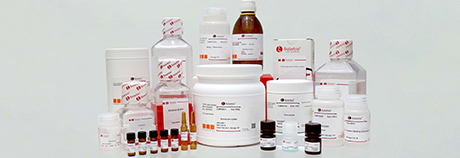
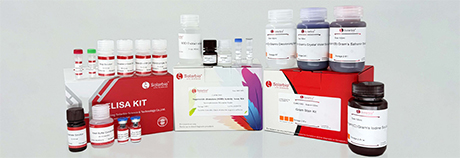
Explore Solarbio’s buffers and reagents here. Solarbio’s team is available to assist with any product inquiries or technical support you may need.
FAQ
Q1: What is the difference between PBS and TBS?
A: PBS uses phosphate as its key buffering element, which makes it ideal for everyday cell handling work. Yet, TBS provides a better choice for research focused on phosphorylation. This works because TBS contains no phosphate, so it prevents any issues with phospho-specific antibodies.
Q2: Why is Tween-20 added to buffers like PBST and TBST?
A: Tween-20 functions as a non-ionic surfactant that helps reduce unwanted binding in different tests. Also, adding it offers clear benefits in methods like ELISA and Western Blotting. As a result, it enhances signal precision and reduces background noise.
Q3: Why should PBS be avoided in phosphorylation studies?
A: The phosphate ions in PBS may interfere with phospho-specific antibody binding and affect detection accuracy.
Q4: How does Solarbio control batch-to-batch differences in reagents?
A: At Solarbio, batch-to-batch consistency is kept through thorough checks on materials across multiple production phases. Besides, each biochemical reagent goes through strict quality control (QC) measures. These measures include in-process quality control (IPQC), statistical process control (SPC), and acceptance quality level (AQL) evaluations. Thus, every batch follows the same high standards, which limits variations that could impact test outcomes.
Q5: How does repeated freeze-thawing affect enzyme catalysts?
A: Repeated freeze-thaw cycles have the potential to impair enzyme activity via mechanisms including denaturation, aggregation, or erosion of structural wholeness. Consequently, such impairment leads to lowered catalytic output or total enzyme deactivation. To lessen these consequences, portioning enzyme stocks into aliquots becomes advisable, along with steering clear of multiple freeze-thaw exposures.
Q6: Does Solarbio’s product line have supporting literature and references?
A: Solarbio’s products find broad employment in significant scientific endeavors, where countless published articles acknowledge the reagents and kits. As an illustration, Solarbio’s TMB substrate appears referenced in journals like Nature Medicine (IF 82.9) and Cell (IF 66.85). Comprehensive references accompany all products, and a large number of these items support exceeding 150,000 scientific papers in print. Access to the newest publications and citations occurs via the individual product page, or supplementary details can be sought from the technical support team.
 Consult
 Whatsapp
 Leave Message
 top
top