




Biochemical Reagents 101: Understanding Reactants, Reagents & Catalysts for Robust Experimental Design
Table of Contents
A Technical Guide for Global Life Science Researchers | Featuring Solarbio’s ISO-Certified Product Ecosystem
-scaled.jpg)
About Solarbio (Beijing Solarbio Science & Technology Co., Ltd.)
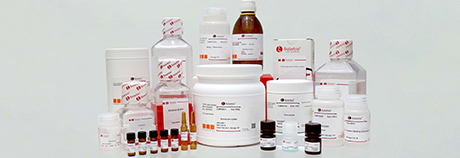
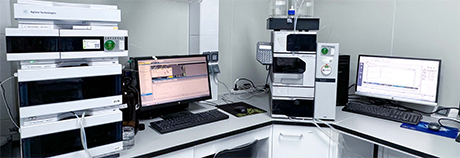
Established in 2004, Solarbio operates an 8,600m² R&D and manufacturing facility with ISO 9001, ISO 13485, ISO 14001, and ISO 45001 certifications. With 43% of revenue from international markets (strong presence in Middle East and North America) and 17 years as Alibaba Gold Supplier, we provide 6,000+ biochemical reagents with batch-to-batch CV<5% consistency. Our products are cited in 10,000+ SCI papers with highest impact factor 82.9.
1. Functional Classification: Beyond Dictionary Definitions
1.1 Reactants: The Transformative Substrates
Definition: Reactants are stoichiometrically consumed substances that undergo chemical conversion to products. In biochemical contexts, these include metabolites, signaling molecules, or macromolecular substrates.
Critical Quality Attributes:
- Purity grade: ACS/USP-NF grade for analytical applications; RUO (Research Use Only) grade for preliminary studies
- Stability profile: Oxidation-sensitive reactants (e.g., NADH) require single-use aliquoting
- Bioactivity preservation: Temperature-controlled logistics (-20°C to -80°C) for thermolabile compounds
Solarbio Product Portfolio:
|
Application |
Featured Product |
Specifications |
Catalog No. |
|
Glycolysis pathway |
D-Glucose (anhydrous) |
≥99.5% purity, 250g/1kg/5kg |
G8150 |
|
Energy metabolism |
ATP Disodium Salt |
≥98%, cell culture tested |
A8270 |
|
Redox studies |
NADH (reduced form) |
≥95%, pre-weighed vials |
Custom |
|
Lipid metabolism |
Fatty acid standards |
GC-MS purity, C8-C22 range |
Custom synthesis |
1.2 Reagents: The Enabling Infrastructure
Definition: Reagents are exogenous additives that facilitate reaction initiation, environmental maintenance, or signal detection without being incorporated into the final product stoichiometry.
Solarbio Reagent Categories by Function:
- Buffer Systems & pH Control
- Tris Buffer Systems: T8060 Tris Base (CAS 77-86-1, ≥99.9%) and T8230 Tris-HCl (CAS 1185-53-1) for protein electrophoresis and enzyme assays
- Phosphate Buffers: P1003 PBS Powder (pH 7.2-7.4, 0.01M) and P1004 DPBS (Ca²⁺/Mg²⁺-free for cell washing)
- Detection Chemistry
- Chromogenic Substrates: DNS reagents for reducing sugar quantification, pre-formulated or customizable
- Fluorescent Probes: B8030 Hoechst 33258 (Ex/Em=352/461nm) for apoptosis detection and nuclear counterstaining
- Reaction Modulators
- Inducers: I8070 IPTG (CAS 367-93-1, 1g-100g scales) for recombinant protein expression
- Protease Inhibitors: P8340 PMSF (CAS 329-98-6, 99% purity) to prevent protein degradation during extraction
- Cell & Molecular Manipulation
- Detergents: T8200 Triton X-100 and S8010 SDS (CAS 151-21-3, molecular biology grade) for membrane solubilization
- Selection Antibiotics: K8020 Kanamycin Sulfate (5μg/ml working concentration, sterile filtered)
Quality Assurance for International Clients:
Every reagent batch is accompanied by a Certificate of Analysis (CoA) detailing HPLC/GC purity, endotoxin levels (for cell culture), and heavy metal content. Our ISO 9001:2015-certified quality management system implements triple-stage inspection: raw material verification, in-process monitoring, and finished product validation.
1.3 Catalysts: Kinetic Accelerators Without Consumption
Definition: Catalysts reduce reaction activation energy without net consumption. In biological systems, enzymes dominate this category, offering 10⁶-10¹²-fold rate acceleration under mild conditions (ambient temperature, physiological pH).
Solarbio Enzyme Portfolio: Technical Specifications
|
Catalog No. |
Enzyme |
Activity Unit |
Optimal Conditions |
Application |
|
P9460 |
Proteinase K |
≥30 U/mg |
pH 7.5-8.0, 37-56°C |
DNA/RNA extraction, protein digestion |
|
D8071 |
DNase I |
≥2,000 Kunitz U/mg |
pH 7.0, Mg²⁺/Mn²⁺ required |
Remove DNA contamination from RNA preps |
|
T8150 |
Trypsin 1:250 |
1:250 activity |
pH 7.8-8.7, 37°C |
Cell dissociation, tissue digestion |
|
L8120 |
Lysozyme |
≥20,000 U/mg |
pH 6.0-9.0, 25°C |
Gram-positive bacterial lysis |
|
G8030 |
Glucose Oxidase |
≥100 U/mg |
pH 5.5-7.5, 30-40°C |
Glucose detection, biosensors |
2. System Integration: A Case Study in Glucose Detection
Method: Glucose Oxidase-Peroxidase (GOD-POD) Colorimetric Assay
|
Component Type |
Specific Compound |
Functional Role |
Solarbio Solution |
|
Reactant |
D-Glucose |
Analyte substrate; oxidized to gluconic acid + H₂O₂ |
G8150 D-Glucose Standard (≥99.5%) for calibration curves |
|
Catalyst |
Glucose Oxidase (GOD) |
Catalyzes glucose + O₂ → gluconic acid + H₂O₂ |
G8030 GOD (≥100 U/mg, high specificity) |
|
Catalyst |
Peroxidase (POD) |
Catalyzes H₂O₂ + chromogen → colored product |
P8020 POD (10mg-1g scales) |
|
Reagent |
4-Aminoantipyrine (chromogen) |
Couples with phenol to generate red quinoneimine |
Colorimetric reagent sets |
|
Reagent |
PBS Buffer |
Maintains pH 7.0 reaction environment |
P1020 1×PBS (500ml/10×500ml) |
Common Configuration Errors:
- Misclassification of GOD as reactant: Leads to incorrect enzyme/substrate ratio calculations, narrowing linear detection range
- pH mismatch: GOD optimum pH 5.5-7.5; POD optimum pH 7.0. pH >8.0 causes >50% activity loss for both enzymes
- Buffer incompatibility: Phosphate buffers inhibit POD activity; Tris-based systems recommended for coupled assays
3. Addressing International Customer Pain Points
3.1 Batch-to-Batch Consistency for Multi-Site Studies
Challenge: Reagent variability compromises data comparability across international collaborative projects.
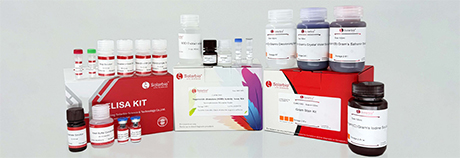
Solarbio Solution: ISO 9001:2015 QMS with documented change control procedures; inter-batch CV control <5% for biochemical reagents, <3% for ELISA kits; CoA documentation including HPLC/GC purity, endotoxin (LAL test), and stability data; long-term stability programs with accelerated aging studies.
3.2 Regulatory Compliance for Translational Research
Challenge: Transition from RUO to GMP-grade materials for clinical trial applications requires extensive revalidation.
Solarbio Solution: Grade stratification (ACS/Reagent/USP-NF) with clear labeling; IVD raw materials with ISO 13485-certified production lines; regulatory documentation including DMFs (Drug Master Files) for key products; custom GMP manufacturing services for late-stage preclinical candidates.
3.3 Supply Chain Reliability & Technical Support
Challenge: International shipping delays and lack of local technical support hinder project timelines.
Solarbio Solution: 43% revenue from international markets with established logistics to Middle East (30% of exports), North America, and Europe; ≤6 hours average inquiry response time with PhD-level product specialists; free 10μl antibody samples and 16T ELISA kit trials; MSDS, CoA, stability data, and customs clearance support in English/Chinese.
 4. Product Selection Framework
 4. Product Selection Framework
4.1 Decision Tree for Component Classification
Step 1: Is the substance stoichiometrically consumed and transformed?
├─ YES → Reactant (e.g., glucose, ATP, fatty acids)
└─ NO → Proceed to Step 2
Step 2: Does the substance accelerate reaction without net consumption?
├─ YES → Catalyst (e.g., enzymes, catalytic antibodies)
└─ NO → Proceed to Step 3
Step 3: Is the substance required for environmental control or detection?
├─ YES → Reagent (e.g., buffers, indicators, antibiotics)
└─ NO → Potential interference/contaminant; exclude from system
4.2 Solarbio Product Finder by Research Application
|
Research Area |
Recommended Categories |
Key Products |
|
Metabolomics & Pathway Analysis |
Carbohydrate metabolites, Amino acids, Nucleotides |
G8150 D-Glucose, custom synthesis services |
|
Enzymology & Signal Transduction |
Enzymes, Coenzymes, Chromogenic substrates |
P9460 Proteinase K, G8030 GOD |
|
Cell Viability & Function |
Tetrazolium salts (MTT/CCK-8), Fluorescent probes |
C8020 CCK-8 Kit, B8030 Hoechst 33258 |
|
Protein Expression & Purification |
Inducers, Proteases, Chromatography media |
I8070 IPTG, Proteinase K |
5. Frequently Asked Questions (International Clients)
Q1: How does Solarbio ensure batch consistency for international orders?
A: Our ISO 9001:2015 system implements triple-stage QC: raw material inspection (HPLC/GC verification), in-process monitoring (pH, conductivity, sterility), and finished product testing (activity, purity, stability). Each batch ships with a CoA; historical batch data retained for 5 years for trend analysis.
Q2: What documentation supports regulatory submissions (FDA, EMA, NMPA)?
A: We provide CoA, MSDS, stability studies, and manufacturing flowcharts. For IVD manufacturers, ISO 13485 certification and bioburden/endotoxin test reports are available. Custom DMF filing support offered for strategic partners.
Q3: Can you accommodate custom formulations or private labeling?
A: Yes. Our 40-person R&D team supports ODM services including formulation optimization, custom packaging, and documentation adaptation. Sample lead time: 3 days; bulk production: 2-4 weeks depending on complexity.
Q4: How do I transition from RUO to GMP-grade reagents?
A: We recommend parallel testing of GMP candidates during late preclinical phases to identify formulation sensitivities early. Our technical team provides side-by-side validation protocols to demonstrate equivalency or optimize process parameters.
Q5: What is the recommended storage for enzyme shipments to tropical climates?
A: Enzymes ship on dry ice (-78°C) with temperature loggers. For ambient-stable formulations (e.g., lyophilized enzymes), we provide 25°C stability data. Customs clearance support includes cold-chain documentation and IATA-compliant packaging.
Q6: Do you offer technical validation for new applications?
A: Yes. Our product specialists provide protocol optimization, troubleshooting, and literature-based application guidance. Free samples (10μl antibodies, 16T ELISA trials) enable in-house validation before bulk commitment.
6. Conclusion & Next Steps
Accurate classification of reactants, reagents, and catalysts is foundational to experimental reproducibility. Solarbio’s integrated quality systems—from ISO-certified manufacturing to comprehensive CoA documentation—address the critical pain points of international life science researchers: consistency, compliance, and technical support.
Immediate Actions:
- Browse Catalog: Visit www.solarbio-global.com to search 6,000+ products by CAS number, application, or catalog code
- Request Documentation: Contact sales@solarbio-global.com for CoA samples, stability data, or regulatory support files
- Validate Performance: Apply for free trial samples (antibodies, ELISA kits) to verify compatibility with your protocols
- Custom Inquiry: Submit ODM requirements for custom formulations, bulk manufacturing, or private labeling
Contact Information
- Global Website: https://solarbio.com/
- Technical Support: +86-400-968-6088 (24/7 hotline)
About Beijing Solarbio Science & Technology Co., Ltd.
Founded in 2004, Solarbio is a national high-tech enterprise specializing in life science reagents, molecular biology tools, cell culture media, and IVD raw materials. With 8,600m² manufacturing space, 6,000+ biochemical reagents, and 15,000+ antibody products, we serve 10,000+ research institutions and biopharma companies across 50+ countries. Our products are cited in 10,000+ SCI papers, with highest impact factor 82.9.
 Consult
 Whatsapp
 Leave Message
 top
top