





Noticias relacionadas
De la imitación hormonal al silenciamiento génico: cómo la semaglutida y el ARO-INHBE regulan el metabolismo.
Tabla de Contenidos
La pérdida de peso solía ser el dato principal en el tratamiento metabólico. Eso está cambiando. Un número menor en la báscula es una buena noticia, pero ¿qué fue exactamente lo que desapareció? ¿Fue la grasa visceral, la grasa subcutánea, el agua o incluso la masa muscular magra? ¿Y mejoró el control de la glucosa en sangre a la par que la pérdida de peso? ¿Y qué hay de los cambios en el hígado?
La semaglutida y el ARO-INHBE resultan interesantes precisamente por este motivo. Actúan en puntos muy diferentes del metabolismo.
La semaglutida es un agonista del receptor GLP-1 de acción prolongada. Actúa a través de este receptor para disminuir el apetito, alterar la respuesta del organismo a la insulina, modificar el vaciamiento gástrico e influir en diversos procesos metabólicos. ARO-INHBE sigue una vía diferente. Utiliza la interferencia de ARN para reducir la expresión de INHBE en el hígado, lo que disminuye la producción de Activina E.
Una funciona principalmente a través de la señalización de receptores. La otra comienza con la expresión genética.
La información de prescripción de semaglutida oral se actualizó en China en julio de 2026, basándose en los datos del ensayo clínico SOUL sobre resultados cardiovasculares en adultos con diabetes tipo 2 y enfermedad cardiovascular y/o enfermedad renal crónica. El ensayo demostró una reducción del 14 % en los eventos cardiovasculares adversos mayores en pacientes con diabetes tipo 2.
ARO-INHBE también acaparó la atención en 2026. Los resultados provisionales de la fase 1/2a situaron la vía Activina E/ALK7 en el centro del debate sobre la distribución de la grasa y el tejido magro. Se trata aún de un programa de investigación, por lo que queda mucho por descubrir, pero el mecanismo en sí merece la pena seguirlo de cerca.
¿Cómo actúa la semaglutida a través del receptor GLP-1R?
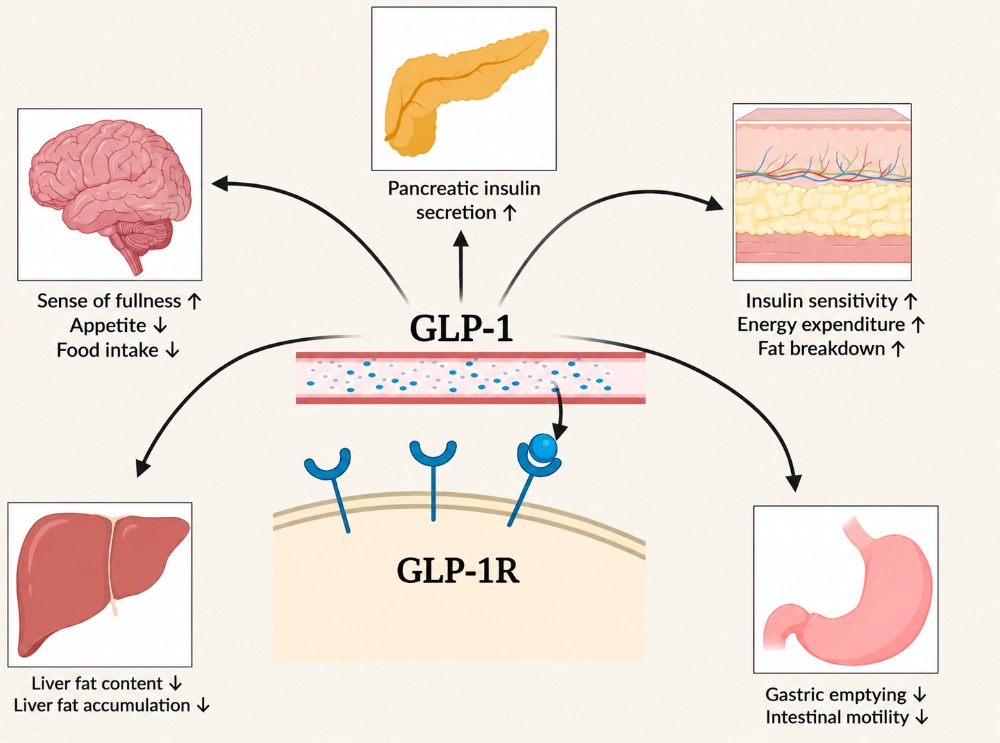
La semaglutida es un análogo del GLP-1. La biología que sustenta la investigación de los análogos del GLP-1 abarca varios órganos; por lo tanto, la investigación sobre los efectos de estos análogos rara vez se limita a un único diagrama de vías metabólicas.
Para los equipos que analizan la activación de receptores y las señales metabólicas posteriores, el Recursos de la vía Solarbio Puede resultar útil al desarrollar la parte experimental de un proyecto GLP-1R.
¿Por qué el GLP-1 nativo necesita un análogo de acción más prolongada?
El GLP-1 natural proviene de las células L intestinales tras la ingesta de alimentos. Es una de las señales incretinas normales del organismo, pero su presencia es breve. La DPP4 lo degrada rápidamente, lo que le confiere al GLP-1 nativo una vida media de tan solo uno o dos minutos.
Eso está bien para la fisiología normal. No es muy conveniente cuando el objetivo es una actividad sostenida del receptor.
La semaglutida conserva gran parte del comportamiento biológico del GLP-1, pero con una duración mucho mayor. Presenta una homología de secuencia del 94 % con el GLP-1 humano. Las modificaciones estructurales mejoran la resistencia a la DPP-4, y una cadena lateral de ácido graso favorece la unión a la albúmina. Su vida media es de aproximadamente 165 horas.
A diferencia de una señal que aparece durante unos minutos después de una comida, un científico o un médico se enfrenta a la estimulación prolongada del receptor GLP-1.
¿Qué cambios se producen una vez que se activa el receptor GLP-1?
El efecto más visible suele ser una menor ingesta de alimentos.
La señalización del receptor GLP-1 en el sistema nervioso central afecta el hambre y la saciedad. En las células beta pancreáticas, su activación favorece la secreción de insulina dependiente de la glucosa. La liberación de glucagón también se ve afectada. En el tracto gastrointestinal, el vaciamiento gástrico se ralentiza, lo que puede atenuar algunos de los cambios bruscos de glucosa tras la ingesta de alimentos.
Eso ya proporciona varias lecturas posibles incluso antes de considerar el peso corporal.
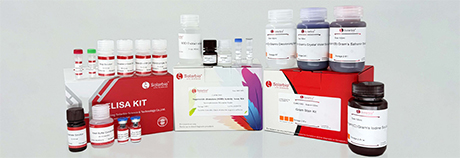
En los estudios metabólicos prácticos, la glucosa, la actividad enzimática, los marcadores relacionados con los lípidos y los indicadores glucémicos a largo plazo suelen ir acompañados de datos sobre el peso corporal. Soluciones de investigación metabólica de Solarbio Incluyen ensayos bioquímicos que pueden utilizarse cuando es necesario medir estos cambios en lugar de simplemente observarlos.
¿Por qué el peso corporal es solo una parte de la historia de la semaglutida?
Los estudios STEP con semaglutida subcutánea de 2,4 mg una vez por semana reportaron una reducción de peso sustancial durante 68 semanas. Los estudios con dosis más altas han impulsado aún más este debate.
Al mismo tiempo, la investigación sobre la semaglutida se ha ampliado para incluir efectos cardiovasculares, renales, hepáticos y glucémicos. Esto es importante porque dos personas pueden perder la misma cantidad de peso y aun así experimentar cambios metabólicos muy diferentes.
Una persona puede perder principalmente grasa. Otra puede perder también una cantidad considerable de masa muscular magra.
Esa diferencia no se aprecia en una escala ordinaria.
¿En qué aspectos sigue siendo insuficiente la semaglutida?
Los agonistas del receptor GLP-1 pueden producir grandes cambios en el peso corporal, pero hay un inconveniente que se repite en los estudios de composición corporal: no todo el peso perdido es grasa.
Este no es un detalle menor. Una vez que un tratamiento pasa de la reducción de peso a corto plazo al control metabólico a largo plazo, la masa muscular magra se vuelve mucho más difícil de ignorar.
¿Por qué puede disminuir la masa muscular magra durante la pérdida de peso?
El peso corporal es un valor compuesto por diversos factores. La grasa, los músculos, el glucógeno, el agua y otros tejidos contribuyen a su composición.
Cuando la ingesta de alimentos disminuye drásticamente, el cuerpo no obtiene energía únicamente del tejido adiposo. También se puede perder masa muscular. Los estudios sobre agonistas del receptor GLP-1 han reportado diferentes proporciones de reducción de masa muscular según el paciente, el período de tratamiento, la dieta, el método de medición y otras condiciones.
Eso dificulta las comparaciones sencillas.
Una disminución de diez kilogramos no le indica a un investigador si ocho kilogramos provenían de grasa o si una proporción mucho mayor provenía de tejido magro.
¿Por qué les interesa a los investigadores preservar la masa muscular?
El músculo esquelético no solo sirve para el movimiento. Es un importante centro de eliminación de glucosa y desempeña un papel en el consumo de energía en reposo.
Perder demasiado peso puede alterar el panorama metabólico, incluso cuando el peso total está disminuyendo.
Por eso, los programas más recientes sobre obesidad y metabolismo se centran cada vez más en la composición corporal en lugar de considerar que cada kilogramo perdido sea igualmente útil.
¿Cómo modifica ARO-INHBE la señal metabólica a nivel genético?
La ARO-INHBE comienza su acción en el hígado.
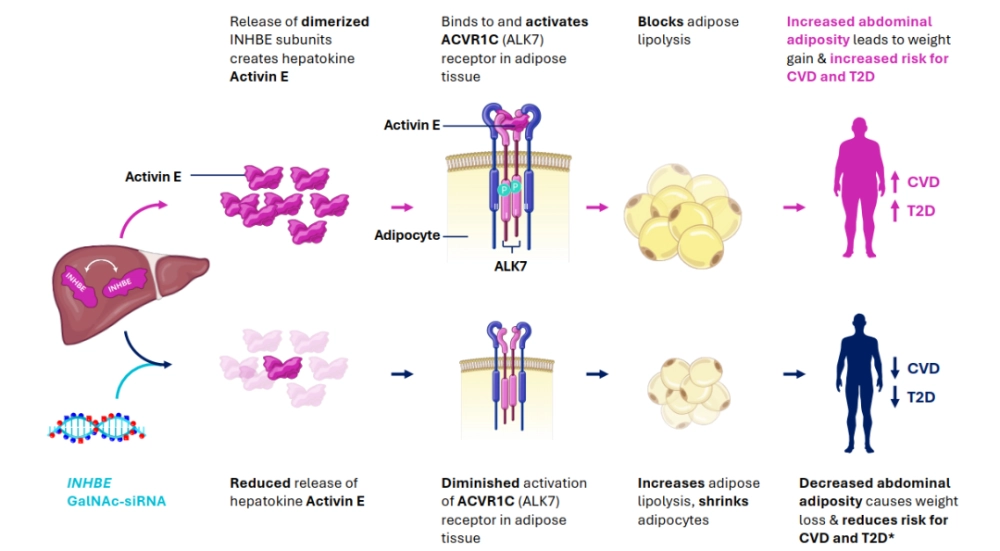
Su objetivo es INHBE, el gen que codifica la activina E. INHBE se expresa principalmente en el tejido hepático, y los estudios genéticos en humanos han hecho que este gen sea especialmente interesante. Las personas portadoras de variantes con pérdida de función han mostrado rasgos metabólicos asociados con menor grasa corporal, menor grasa hepática y mejores parámetros relacionados con la insulina.
Eso no significa automáticamente que silenciar el gen reproducirá todas las observaciones genéticas. Sin embargo, sí proporciona a los desarrolladores de fármacos un objetivo bastante claro para realizar pruebas.
¿Qué hace que la activina E y la ALK7 sean interesantes?
La activina E pertenece a la superfamilia TGF-β.
Esta vía se ha relacionado con la señalización del receptor de activina y la actividad posterior de SMAD2/3. Los estudios sobre el eje INHBE/Activina E sugieren que la reducción de esta señal podría afectar el metabolismo del tejido adiposo y la forma en que se almacena la energía.
Esto es bastante diferente del enfoque con semaglutida.
La semaglutida puede ayudar a reducir la ingesta de energía. La inhibición de INHBE se está estudiando más a fondo desde la perspectiva de qué sucede con la energía a partir de ese momento, especialmente si el almacenamiento en el tejido adiposo puede modificarse sin la misma pérdida de masa muscular.
¿Cómo llega el GalNAc-siRNA al hígado?
ARO-INHBE utiliza la tecnología GalNAc-siRNA.
La GalNAc se une al ASGPR, un receptor que se expresa en gran medida en los hepatocitos. Esto facilita el ingreso del siRNA a las células hepáticas mediante la captación mediada por receptores.
Una vez dentro, la hebra antisentido pasa a formar parte del complejo de silenciamiento inducido por ARN. Guía al complejo hacia el ARNm de INHBE con una secuencia coincidente. El ARNm se corta y se degrada, lo que reduce la producción de Activina E.
La lógica es bastante directa. En lugar de esperar a que se produzca la Activina E y luego intentar bloquear su acción, el tratamiento reduce la producción de la proteína en una etapa temprana del proceso.
¿Qué han demostrado los primeros resultados del estudio ARO-INHBE?
Los resultados clínicos preliminares obtenidos con una dosis única de 400 mg mostraron una reducción promedio de la Activina E sérica de alrededor del 85%, con reducciones máximas que alcanzaron el 94%.
Las observaciones realizadas durante dieciséis semanas también mostraron una disminución de la grasa visceral y de la grasa hepática, mientras que el tejido magro total aumentó.
Estos hallazgos sobre la composición corporal son una de las principales razones por las que el programa ha llamado la atención. La pérdida de peso en sí no es lo más inusual. Lo más interesante es la posibilidad de modificar la grasa y la masa muscular en diferentes direcciones.
Los datos aún son preliminares, por lo que sería prematuro considerar esto como una estrategia metabólica definitiva. Es más apropiado verlo como una nueva vía que actualmente se está probando en humanos.
¿La semaglutida y el ARO-INHBE solucionan el mismo problema?
No exactamente.
Se sitúan en el mismo campo metabólico general, pero actúan sobre diferentes aspectos del mismo. Analizarlos en paralelo resulta útil porque muestra la gran cantidad de puntos de intervención que existen en el metabolismo.
La semaglutida modifica principalmente la ingesta de energía.
El apetito y la saciedad son aspectos fundamentales del efecto de la semaglutida. Se ingiere menos comida, mejora la regulación de la glucosa, se modifica el vaciamiento gástrico y, a menudo, se produce una pérdida de peso.
Esta es una forma eficaz de cambiar el balance energético total.
No garantiza directamente cómo se distribuirá cada kilogramo perdido entre grasa y masa muscular. Para esa segunda cuestión se necesitan mediciones por separado.
ARO-INHBE profundiza en el almacenamiento de energía.
ARO-INHBE no está diseñado para controlar el apetito.
Su objetivo se encuentra en una vía de señalización derivada del hígado, relacionada con el metabolismo del tejido adiposo y la composición corporal. Al reducir la producción de ARNm de INHBE y Activina E, se está estudiando este tratamiento como una forma de modificar el almacenamiento de energía.
Por eso, la frase "pérdida de grasa con preservación de la masa muscular magra" aparece con mucha más frecuencia en relación con este programa que en una conversación básica sobre el control del apetito.
¿Podrían ambos mecanismos volverse complementarios?
Desde el punto de vista biológico, la idea tiene sentido. Un mecanismo reduce la ingesta de energía, mientras que otro puede cambiar hacia dónde tiende a ir esa energía.
Pero un mecanismo plausible no es lo mismo que una combinación probada.
El tratamiento combinado requeriría sus propios datos experimentales y clínicos. No debería basarse en dos programas separados.
Lo que demuestran estos programas es que el tratamiento metabólico futuro puede implicar varios mecanismos diferentes: el apetito, el metabolismo de la glucosa, la señalización hepática, la biología del tejido adiposo y la preservación de la masa muscular magra.
¿Qué deberían medir los investigadores en los estudios metabólicos?
El estudio de las vías metabólicas solo resulta útil si se pueden medir los cambios posteriores.
Un ratón puede perder peso. Un modelo celular puede mostrar una expresión génica alterada. Ninguno de estos resultados por sí solo explica completamente el fenómeno. La glucosa, la actividad enzimática, el metabolismo de los lípidos y otros marcadores bioquímicos suelen ayudar a explicar qué fue lo que realmente cambió.
¿Qué indicadores de glucosa conviene monitorizar?
La glucemia es un punto de partida obvio, pero no es la única opción.
Dependiendo del modelo, los investigadores también pueden analizar el contenido de glucosa, la proteína sérica glicosilada, la hemoglobina glicosilada u otros indicadores que reflejen diferentes periodos de tiempo de control glucémico.
El Kit de análisis de glucosa en sangre BC2490 Puede utilizarse en trabajos bioquímicos centrados en la glucosa, donde se requiere una medición cuantitativa directa.
Para experimentos basados en la medición enzimática de glucosa, el kit de ensayo de contenido de glucosa BC2500 (método GOD-POD) utiliza el método de glucosa oxidasa-peroxidasa.
Estas mediciones son mucho más útiles cuando se eligen por una razón específica, en lugar de añadirlas simplemente porque son análisis metabólicos comunes.
¿Dónde encajan los ensayos de DPP4 y otros ensayos enzimáticos?
La DPP4 es particularmente relevante para la biología del GLP-1 porque degrada el GLP-1 endógeno.
El kit de ensayo fluorométrico de actividad de DPP4 BC665F se puede utilizar cuando la actividad de DPP4 forma parte de la investigación. El kit de ensayo fluorométrico de detección/actividad de inhibidores de DPP4 BC666F está diseñado para trabajos relacionados con inhibidores.
En distintos proyectos, pueden ser relevantes otras enzimas. Los ensayos de lipasa tienen más sentido cuando interviene la digestión o el metabolismo de los lípidos. Los ensayos de amilasa pueden ser pertinentes en estudios relacionados con la digestión de carbohidratos.
¿Cuántas lecturas son suficientes?
No existe un número fijo que resulte útil.
Un experimento con GLP-1R puede requerir mediciones de glucosa, actividad de DPP4, peso corporal y tejido. Un proyecto con INHBE puede requerir ARNm de INHBE, proteína Activina E, grasa hepática, grasa visceral y marcadores bioquímicos metabólicos.
La clave está en que cada medición responda como parte del mecanismo.
Cuando un kit estándar no es suficiente, Servicios técnicos de Solarbio Puede brindar soporte para la selección de ensayos y el trabajo experimental en proyectos que requieren una configuración más específica.
Conclusión
La semaglutida y el ARO-INHBE actúan sobre el metabolismo desde vías muy diferentes.
La semaglutida actúa a través del receptor GLP-1. Puede reducir el apetito, modificar el metabolismo de la glucosa y afectar a varios órganos simultáneamente. ARO-INHBE utiliza interferencia de ARN dirigida al hígado para reducir la expresión de INHBE y la producción de Activina E. Sus primeros ensayos clínicos están más estrechamente relacionados con la distribución de la grasa y el tejido magro.
Esa diferencia resulta útil. El metabolismo no es un interruptor único, por lo que es improbable que todos los problemas metabólicos se resuelvan al mismo nivel biológico.
Para los investigadores, la parte difícil viene después de que se dibuja el mecanismo de la vía metabólica. El cambio metabólico aún debe medirse. La glucosa, la actividad enzimática, los marcadores relacionados con los lípidos, los objetivos moleculares y la composición corporal deben coincidir con la pregunta que se plantea. Los investigadores que construyen este tipo de flujo de trabajo pueden Contacta con Solarbio para el análisis y el soporte del producto.
Preguntas frecuentes
¿Cuál es la principal diferencia entre la semaglutida y el ARO-INHBE?
La semaglutida es un análogo del GLP-1 que actúa principalmente a través de la señalización del receptor GLP-1. ARO-INHBE es una terapia de ARN de interferencia diseñada para disminuir el ARNm de INHBE en los hepatocitos y reducir la producción de Activina E.
¿Es ARO-INHBE un fármaco GLP-1?
No. No imita al GLP-1 ni utiliza el receptor GLP-1 como su principal diana. Su mecanismo se basa en la inactivación génica dirigida al hígado.
¿Por qué resulta interesante el INHBE en la investigación metabólica?
Los hallazgos genéticos en humanos han relacionado la reducción de la función de INHBE con rasgos metabólicos favorables, como menor grasa corporal y hepática. Esto convirtió a la vía INHBE/Activina E en un objetivo atractivo para futuras investigaciones.
¿La semaglutida reduce únicamente la masa grasa?
No. La pérdida de peso total puede incluir tanto grasa como masa muscular. La proporción exacta varía entre estudios y pacientes, por lo que las mediciones de la composición corporal son útiles junto con el peso corporal.
¿Por qué es importante la masa muscular magra durante la pérdida de peso?
El músculo esquelético contribuye a la eliminación de glucosa, el movimiento y el uso de energía en reposo. Por lo tanto, preservarlo puede ser importante incluso cuando el objetivo principal del tratamiento es la reducción de grasa o peso.
 Consultar
 Aplicación Whatsapp
 Dejar mensaje
 arriba