




Noticias relacionadas

Western blot HRP Substrate: How to Choose the Right ECL Substrate for Protein Detection
Tabla de Contenidos
Western blot assays can fail at the final detection stage. Even if protein transfer and antibody incubation proceed perfectly, you may end up with a faint over-saturated band, or signals obscured by high background.
The HRP substrate is often an overlooked critical factor. Cyanagen supplies five distinct WESTAR HRP substrates with graded sensitivity levels. Rather than defaulting to the highest-sensitivity option, select your substrate according to the target protein abundance in your sample. Abundant targets easily become saturated, while low-abundance proteins may not produce detectable signals on low-sensitivity substrates.
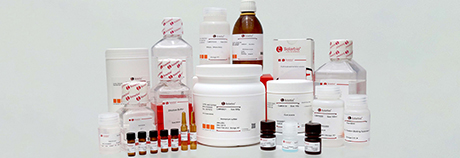
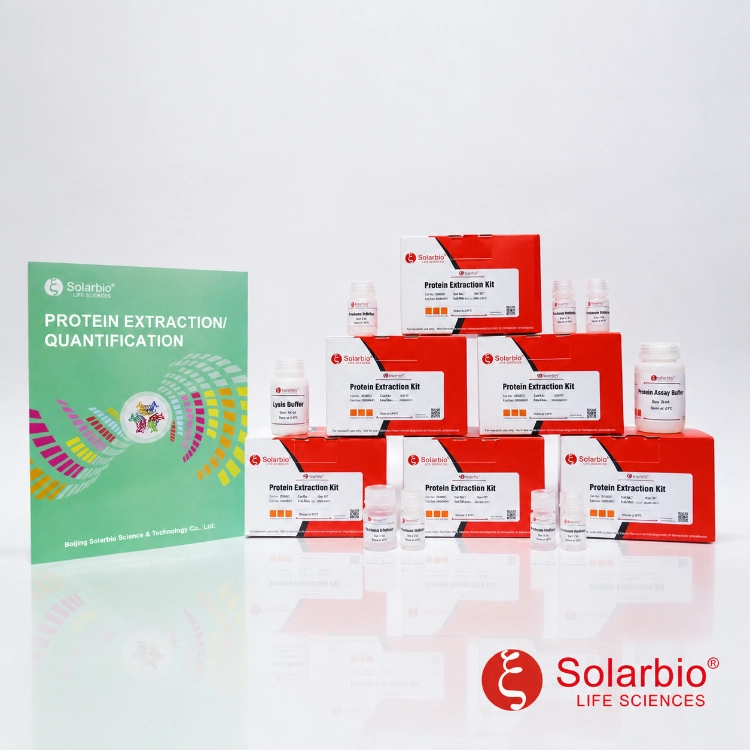
Solarbio provides a comprehensive portfolio of protein detection products and biochemical reagents to support every stage of protein analysis for research laboratories.
Why Does the HRP Substrate Matter in Western blot?
How HRP Detection Works
In typical western blots, primary antibodies bind to detect the protein, followed by an HRP-conjugated secondary antibody for signal generation. Upon incubation with an ECL substrate, the HRP moiety on the secondary antibody catalyzes a chemiluminescent reaction. The emitted light is recorded by an imaging system to yield visible bands.
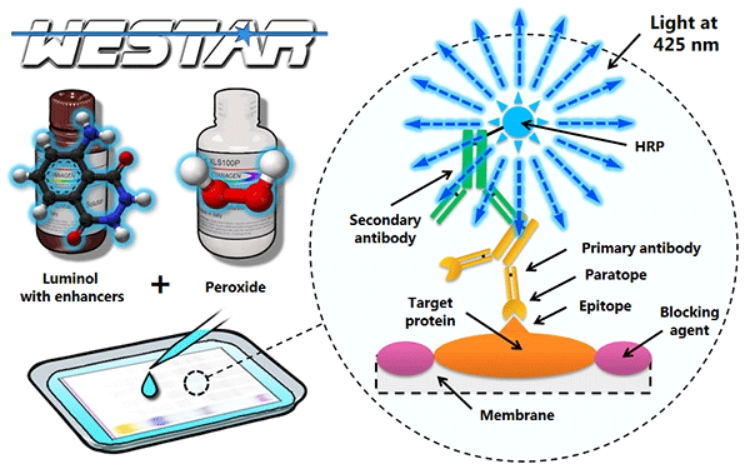
The substrate impacts multiple signal characteristics, including signal strength, background noise, required exposure time, and inter-sample image comparability. Thus, “more sensitive” is not always “better”.
Matching Substrate Sensitivity to Protein Abundance
Highly overexpressed proteins readily produce robust signals using standard or medium-sensitivity substrates. Ultra-sensitive substrates carry the risk of rapid signal saturation, which compromises reliable comparison between distinct signals.
Moderately expressed proteins benefit from higher sensitivity. This enables the use of reduced antibody concentrations and shorter exposure durations.
In contrast, low-abundance proteins sit close to the assay’s limit. For these targets, improved substrate sensitivity matters more than extra signal amplification. A high-performance ECL substrate can resolve these faint bands from background signal.
What Are the Five WESTAR HRP Substrates?
WESTAR SUN and WESTAR NOVA 2.0
For targets in the mid-picogram range, WESTAR SUN is a reliable detection option , while WESTAR NOVA 2.0. is optimal for low-picogram targets. Both substrates work well for experiments where targets are moderately abundant and maximum sensitivity is not needed.
WESTAR ANTARES
With mid-femtogram sensitivity, the new WESTAR ANTARES is the preferred choice for low concentration targets. Its extended signal lifetime allows ample time for image acquisition.
WESTAR ETA C ULTRA 2.0
WESTAR ETA C ULTRA 2.0 is a chemiluminescent reagent designed for detection in the mid- to low-femtogram range. High signal intensity, combinend with prolonged signal lifetime, makes it an excellent choice for faint, hard-to-detect western blot signals and assays requiring flexible imaging.
WESTAR SUPERNOVA
The highly sensitive WESTAR SUPERNOVA is designed for low-femtogram detection of extremely low-abundance proteins. Five distinct detection protocols are available for different substrate setups.
How Should You Match ECL Sensitivity to Your Sample?
Start With the Expected Protein Abundance
Before adjusting antibody concentrations, assess your sample first. Is the target natively abundant, or a low-expression signaling protein? Are you working with limited total protein input?
It is recommended to begin with low‑ to medium‑sensitivity substrates for abundant targets and high‑sensitivity substrates for low-abundance targets. This straightforward strategy saves considerable time and minimizes assay optimization trials.
Watch Signal and Background Together
A bright band does not guarantee reliable results. If the entire membrane exhibits high background luminescence, signal quantification becomes unreliable. A clean background with modestly lower signal intensity for your target is preferable to an overexposed image with poor contrast.
Background signal arises from multiple factors: antibody dilution, blocking conditions, wash protocols, membrane selection and exposure duration. Substrate selection is just one contributing factor.
For guidance on buffer selection for western blotting, visit the Solarbio webpage on buffers and related reagents for Western Blotting.
A Simple Way to Optimize Your Western Blot
Change One Variable at a Time
When a blot shows faint bands, there is a strong temptation to raise primary antibody concentration, secondary antibody concentration, switch to a higher-sensitivity substrate, or extend exposure time all at once. This makes later troubleshooting far harder.
Perform your blot with fixed sample and transfer conditions. Test 2–3 antibody dilutions or two different substrates to get a signal within the usable dynamic range. Adjust exposure duration as needed afterward.
Do Not Ignore the Imaging System
Camera sensitivity, dynamic range, and exposure settings all affect the final image.
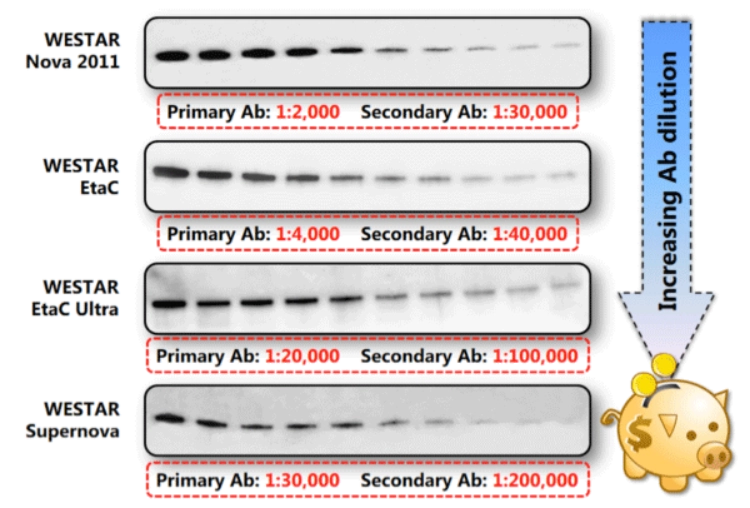
Shown here is a comparison of a 5 ng and 0.5 ng human transferrin (hTF) samples. Following separation via SDS-PAGE and transfer to PVDF membranes, the blots were incubated with matching secondary antibodies and visualized using with different Cyanagen WESTAR substrates. Imaging was performed on a GEHC ImageQuant LAS 4000 system.
With all other workflow parameters held constant, we can isolate the impact of substrate selection.
Por qué Are Two-Component ECL Substrates Useful?
The A and B Solutions
WESTAR Substrate Solution A and Solution B are combined to prepare the working substrate. The two-component system is formulated shortly before use.
This flexibility is especially beneficial for laboratories assaying a wide range of protein targets, as it enables adjustable detection conditions.
Where Does Solarbio Fit Into the Western Blot Workflow?
Supporting Reagents and Protein Research
Beijing Solarbio Science & Technology Co., Ltd. is a high-tech enterprise focused on manufacturing research products and delivering services for molecular biology, cell biology, immunology and biomedical research. Beyond research-grade biochemical reagents, the company supplies a comprehensive portfolio of life science consumables and associated technical services.
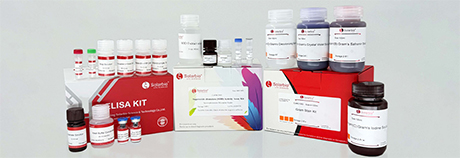
Solarbio supplies the PE0010 ECL Western blotting substrate, alongside a broad selection of complementary products for protein research.
We support laboratories by outlining suitable product workflows and linking our offerings to relevant research applications. For technical questions, users may be directed to Solarbio’s technical support team.
Keep the Whole Workflow Consistent
Switching your switch ECL substrate alone will not resolve every western blot issue. Uneven sample loading, inefficient protein transfer, or antibody-derived high background cannot be corrected simply by swapping ECL substrate.
Optimum results are achieved when the full workflow remains consistent, with the substrate treated as one component of the complete detection system. Additional resources covering western blot and related laboratory topics are available in Solarbio’s research news section
Conclusión
When selecting an HRP substrate for western blot detection of your target protein, the primary criterion is the signal strength required for detection.
High-abundance proteins can be visualized using standard or medium-sensitivity substrates. However, low-abundance proteins may require higher-performance ECL substrates to generate signals above the limit of detection.
Cyanagen Biotechnology provides the WESTAR substrate series — WESTAR SUN, WESTAR NOVA 2.0, WESTAR ANTARES, WESTAR ETA C ULTRA 2.0 and WESTAR SUPERNOVA — covering a broad spectrum of sensitivities for western blotting. The best selection balances robust signal, acceptable background and an appropriate dynamic range.
Beijing Solarbio Science & Technology Co., Ltd. delivers integrated solutions for life science research,alongside a full portfolio of products and associated services. Additional company information is available on Solarbio‘s company profile page.
Whether you are sourcing reagents to set up a new western blot workflow or have application-specific questions, please contact us with details about your target protein, sample type, antibodies and imaging system.
Preguntas frecuentes
Q1: What is an HRP substrate in Western blot?
A1: The HRP substrate reacts with HRP conjugated to detection antibody to generate a chemiluminescent signal that can be recorded by an imaging system.
Q2: Is the most sensitive Western blot substrate always the best choice?
A2: No. High-sensitive substrates are unnecessary for highly abundant proteins. Overly sensitive substrates complicate signal saturation and background management. Substrate sensitivity should be matched to the abundance of your target protein.
P3: Which WESTAR substrate is suitable for low-abundance proteins?
A3: Low-abundance proteins can be detected using WESTAR ANTARES, WESTAR ETA C ULTRA 2.0 or WESTAR SUPERNOVA. Selection of a lower-sensitivity substrate must be validated with your specific sample and antibodies.
Q4: Why is my Western blot background excessively high?
A4: High background may stem from excessive antibody concentration, insufficient washing, improper blocking, defective membrane, or overexposure. ECL substrate choice also affects signal intensity. Accordingly, substrate selection should be optimized alongside other assay conditions.
Q5: Is it possible to use a stronger ECL substrate and thereby use lower antibody concentrations?
A5: Yes. With a more sensitive detection system it may be possible to use more diluted primary or secondary antibodies and still get a signal. However, this needs to be tested for each antibody and cannot be assumed.
Q6: What does A and B solution format mean for WESTAR?
A6: The two-component WESTAR chemiluminescent substrate system consists of Solution A and Solution B. Mixing the two solutions generates the working substrate for western blot applications.
Q7: How do I avoid overexposure on Western blot images?
A7. Initial exposure time should be set so that the strongest bands fall within the usable dynamic range of the imaging device. For highly abundant targets, use lower-sensitivity substrates or shorter exposure times. For faint targets, improve detection sensitivity first instead of relying on longer exposure times.
Q8: What should I check before changing my HRP substrate?
A8. Check protein loading, transfer efficiency, antibody specificity, antibody dilution, blocking, washes, membrane quality and image acquisition settings. Most of these factors are controllable; confirming them simplifies validation of whether a higher‑sensitivity substrate works for your target protein.
 Consultar
 Aplicación Whatsapp
 Dejar mensaje
 arriba