





Exploring Peptide Synthesis: Essential for Cutting-Edge Research
Table of Contents
Peptide synthesis has steadily evolved from a niche laboratory technique into a fundamental instrument in contemporary life sciences. In areas like drug discovery, immunology, or molecular biology, natural biomolecules sometimes prove insufficient. Specific sequences, altered structures, or uniform batches with steady quality become necessary. Peptide synthesis proves vital in such cases.
Current progress in biotechnology enables the creation of peptides, proteins, and antibody-linked compounds according to exact research demands, rather than random findings. Meanwhile, enhancements in synthesis and purification have greatly boosted product cleanliness and lot uniformity. Consequently, these substances satisfy both research-level and clinical criteria.
Beijing Solarbio Science & Technology Co., Ltd. stands as a clear instance of how unified systems aid current investigations. Founded in 2004, it functions as a national high-tech firm with emphasis on original development, quality oversight, and expert assistance. Products extend across molecular biology, cell biology, immunology, and biomedicine, with stock surpassing 100,000 items. This setup delivers a dependable and effective supply chain for investigators. Moreover, its ISO-certified management frameworks reinforce trustworthy manufacturing and uniform procedures, on which many facilities depend during urgent schedules.
What Drives The Rapid Growth Of Peptide Synthesis?
The swift development of peptide synthesis connects directly to the growing need for accuracy in biological studies. Earlier methods frequently relied on naturally available molecules, which restricted adaptability. Today, peptides can feature precise amino acid arrangements, specified alterations, and expected performance.
Quality enhancement serves as another element. Contemporary synthesis setups can yield peptides reaching purity above 98 percent, backed by evaluation details like HPLC and mass spectrometry. This degree of confirmation cuts down on study inconsistencies. Repeated assays due to varying reagents highlight the worth of such reliability.
Quickness contributes as well. Certain peptide synthesis processes finish in merely three working days. For efforts in screening or repeated planning, this brief completion time creates a substantial impact. In broad research environments, high-volume synthesis permits the generation of peptide collections or epitope groups, facilitating organized analyses.
Solarbio’s offerings mirror this pattern. It handles not just basic linear peptides but also intricate forms like extended peptides, ring-shaped peptides, dye-marked peptides, and linked antigen peptides. These choices provide adaptability for demanding study layouts.
What Is Peptide Synthesis And Why Does It Matter?
In biological systems, peptides form via ribosomal translation. Although effective, this natural mechanism struggles with unnatural sequences or exact chemical changes. Such constraints emerge clearly when a peptide absent in nature or needing particular structural traits is required.
Chemical peptide synthesis fills this void. It constructs amino acids progressively, permitting sequences free from genetic instructions. Thus, peptides can gain stronger binding strength, better durability, or lower immune response.
Practically, this function proves crucial in various study contexts. For instance, antibody creation commonly uses synthetic antigen peptides. These represent exact epitopes, promoting focused immune reactions and enhancing antibody precision. Data indicates that peptide items serve broadly as blocking peptides in antibody checks, aiding target confirmation in studies.
Solarbio presently supplies over 8000 peptide items, plus personalized synthesis options. This mix of ready items and custom approaches assists investigators in weighing quickness and adaptability based on project demands.
What Are The Main Techniques Used In Peptide Synthesis?
Peptide synthesis encompasses various strategies rather than one uniform process. Selecting the appropriate method hinges on elements like peptide size, form complexity, and cleanliness needs. Grasping these distinctions aids in preventing avoidable setbacks or issues. The most widely used method for peptide synthesis currently is Solid-phase synthesis (SPPS).
What Is Solid-Phase Peptide Synthesis (SPPS)?
Solid-phase peptide synthesis ranks as the leading technique in use presently. Here, the peptide assembles on a solid resin, with amino acids incorporated one after another via cycles of protection removal and linking.
Efficiency stands as the primary benefit. Since the expanding peptide stays fixed to the resin, cleaning phases simplify and accelerate. Automation boosts this further, enabling parallel synthesis of several peptides.
SPPS suits intricate peptides especially well. It manages water-repelling or water-attracting sequences, extended chains beyond 50 amino acids, and diverse chemical adjustments. Often, it serves as the standard for tailored synthesis tasks.
Solarbio applies sophisticated SPPS methods to generate diverse peptides, ranging from straightforward linear types to elaborate builds. Every item arrives with assessment confirmation details, guaranteeing a thoroughly examined substance over a doubtful blend.
What Role Does Classical Solid-Phase Synthesis Play?
Prior to automation, peptide synthesis depended largely on hand-operated steps. Classical solid-phase synthesis demanded close supervision per phase, rendering the procedure lengthy and effort-heavy.
Even with its drawbacks, this technique retains usefulness. In specific focused uses, manual oversight permits subtle tweaks that machine systems might not handle readily. For example, rare chemical changes or delicate sequences may gain from a tighter method.
In the past, classical synthesis formed the basis for today’s SPPS. Numerous core ideas in current use originated from these initial techniques, which still shape ongoing methods.
Why Is Peptide Purification Critical?
Following synthesis, peptides frequently include contaminants like shortened sequences or leftover agents. These contaminants can disrupt study outcomes, at times in understated manners hard to pinpoint.
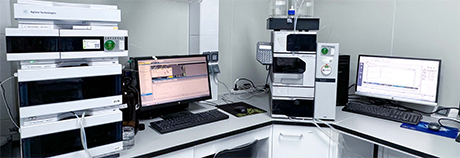
Thus, purification emerges as an essential phase. Reverse-phase high-performance liquid chromatography (RP-HPLC) typically separates the desired peptide from undesired parts. This technique exploits variations in water-repelling properties for accurate extraction.
Superior purification influences repeatability directly. Uneven peptide standard can cause untrustworthy information, notably in delicate tests. Therefore, many investigators favor providers offering full evaluation summaries, encompassing HPLC graphs and Mass spectrometry results.
Solarbio stresses rigorous quality monitoring across its manufacturing flow. Its quality framework adheres to an ongoing loop of preparation, oversight, guarantee, and refinement, confirming that items align with research and rule-based benchmarks.
Where Is Peptide Synthesis Applied In Research And Medicine?
Peptide synthesis integrates profoundly into both investigative and medical uses. Its adaptability supports numerous domains, from foundational science to treatment creation.
How Does Peptide Synthesis Support Antibody Production?
Antibody advancement typically starts with antigen planning. Synthetic peptides offer an exact means to depict particular epitopes, which aids in boosting antibody accuracy and curbing unwanted reactions.
Such peptides can link to carrier proteins like KLH or BSA to increase immune stimulation. This method finds broad application in antibody creation processes, particularly for small or low-stimulus protein areas.
Solarbio delivers full antibody tailoring services, spanning from antigen planning and peptide synthesis to hybridoma evaluation and confirmation. With over 15 years in antibody modification, it backs various types, such as polyclonal, monoclonal, and recombined antibodies. This unified process cuts variability and raises achievement levels.
How Are Peptides Used In Protein Engineering?
Peptides form basic components of proteins, yet their function surpasses mere combination. Synthetic peptides aid in examining protein form, spotting active areas, and crafting new protein arrangements.
Paired with gene synthesis and recombined expression tools, peptide planning allows the making of proteins not found in nature. This skill holds special value in enzyme modification, treatment advancement, and synthetic biology.
Furthermore, peptides can operate as functional entities. They might serve as enzyme blockers, receptor binders, or signal adjusters. These traits render them helpful in drug evaluation and drug action research.
Solarbio’s skill in recombined protein generation supplements its peptide synthesis offerings. Capable of yielding over 1000 fresh proteins yearly, it supplies complete aid for involved study efforts.
What Makes Modern Peptide Synthesis Reliable?
Dependability in peptide synthesis rests on multiple aspects. Quality oversight ranks highly among them. ISO-certified setups confirm that each stage, from initial material choice to end testing, complies with firm guidelines.
Extent and supply steadiness count too. A solid distribution setup permits fast shipping and lowers delay chances. Solarbio has established several storage and sending hubs, facilitating smooth product access in varied areas.
Expert aid forms another vital part. Peptide synthesis may present hurdles like sequence planning, dissolution problems, or unforeseen study results. Availability of skilled advice speeds up resolution of these matters.
Solarbio merges these advantages via its combined setup, providing not just items but also technical advice and post-service aid. This method echoes a wider pattern in the field, where aid excellence matches item excellence.
FAQ
Q1: What peptide length can typically be synthesized?
A: Most synthesis platforms can produce peptides ranging from a few amino acids to over 50 residues. Longer sequences are possible but may require specialized strategies.
Q2: How pure should a peptide be for experiments?
A: The required purity depends on the application. Routine assays may accept 70 to 90 percent purity, while clinical or structural studies usually require above 98 percent.
Q3: How long does custom peptide synthesis take?
A: Standard peptides can often be delivered within about five business days. More complex designs may take longer.
Q4: Why are HPLC and MS results important?
A: HPLC can confirm the purity of peptide segments to ensure no obvious impurities, while MS can ensure that the molecular weight is the same as expected.
Q5: Can peptides be modified for specific research needs?
A: Yes. Common modifications include Biotin labeling, Fluorescent labeling, Special amino acids, Phosphorylation, Cyclization, and Conjugation to carrier proteins, depending on the experimental goal.
 Consult
 Whatsapp
 Leave Message
 top
top