



High-Fat Cell Additives for Cell Models | Solarbio
Table of Contents
Making a high-fat cell model sounds easy on paper. Then you get to the fatty acid prep, and things get messy. Palmitic acid is difficult to dissolve completely and often precipitates. Sodium oleate?-It’s concentration must be monitored closely, as the effective concentration is prone to drift. Nudge the fatty acid ratio even slightly, and the cells react in ways you didn’t plan for.
Working on lipotoxicity, fatty liver disease, insulin resistance, or lipid metabolism? Then you’ve lived this. Honestly, the prep sometimes eats more hours than the experiment does.
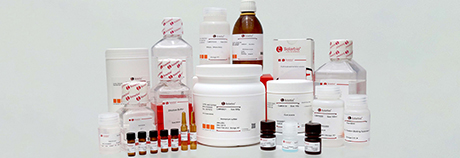
That’s where Solarbio High-Fat Cell Additives come in. Some people call them High Lipid Cell Supplements. Same thing. In short: ready-to-use fatty acid solutions, built for cell culture work. Saturated, unsaturated, different chain lengths, plus mixed formulations — the lineup runs wide. You pick the product based on the high-fat environment you want to study. That’s it. No more, no less.
Why Pick Ready-to-Use High-Fat Cell Additives at All?
Spend Less Time on Fatty Acid Prep
Starting from powder means heating, dissolving, re-checking concentrations. Every single time. Over and over. And some fatty acids just won’t dissolve in water. Precipitation shows up again no matter what you try.
Particles left sitting in the medium are a real problem too. Cells end up with uneven fatty acid exposure. Then your experiments stop comparing well with each other, and you can’t figure out why.
If dissolving issues keep bothering you, Solarbio has an article on hydrotropic agents and solubilizers in laboratory work. Worth a read.
Solarbio High-Fat Cell Additives skip all that hassle. Sterile solutions, defined stock concentrations. Dilute straight into a suitable cell culture medium. No powder, no dissolving steps.
One more detail worth knowing. Here’s a detail people miss: no NaOH, no ethanol, no organic solvents in the prep. You also get matching solvent controls, so vehicle effects don’t get tangled up with fatty acid effects.
Choosing the Right Solarbio High-Fat Cell Additive
What you pick matters as much as how much you use. Really. Saturated ones? They usually drive the harshest lipotoxic responses. Unsaturated ones behave differently. They touch more on lipid storage and cell survival.
Palmitic Acid and Sodium Palmitate: The Lipotoxicity Workhorses
Palmitic acid — a long-chain saturated fatty acid, and a fixture in lipotoxicity papers. It shows up everywhere in cellular lipotoxicity research.
For sodium palmitate, Solarbio offers High Lipid Cell Supplement (Sodium Palmitate), C3450 at 6 mM. C3451 is the same thing at 10 mM. Prefer a palmitic acid formulation? C3452 comes at 6 mM, C3453 at 10 mM.
What do people use these for? Lipid-induced cellular injury. Oxidative stress. Stress in the endoplasmic reticulum. Mitochondria taking a hit. Apoptosis. Inflammatory responses. The whole lipotoxicity list, basically.
Most teams reach for hepatocytes, cardiomyocytes, or endothelial cells here. But remember — the response swings with cell type, dose, and how long you expose them.
Sodium Oleate and Palmitoleic Acid for Lipid Metabolism Studies
Not all high-fat experiments are designed to induce severe cellular damage.
Sodium oleate carries a single double bond — monounsaturated, in other words. It’s a go-to for studying how cells stash lipids and adapt metabolically.
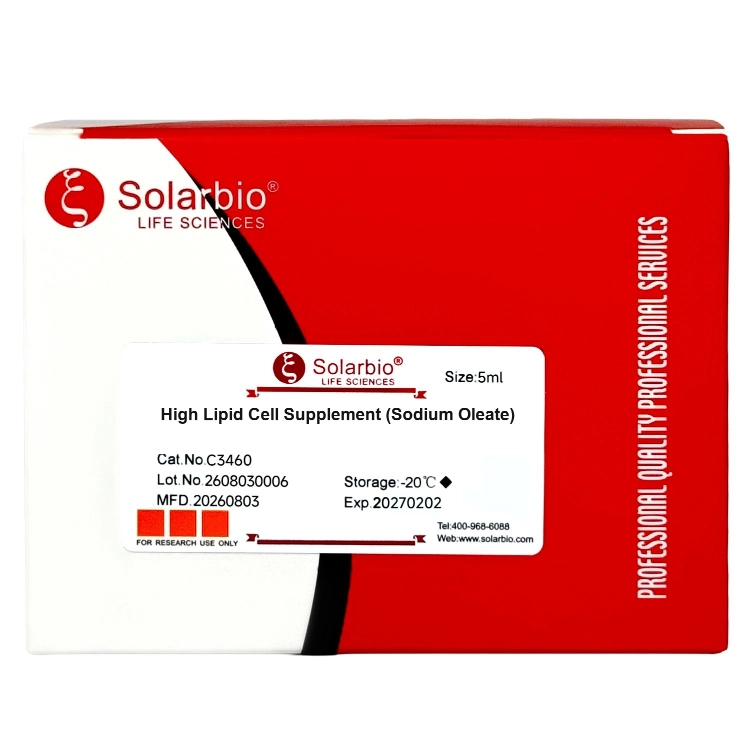
Solarbio High Lipid Cell Supplement (Sodium Oleate), C3460 is a 12 mM stock solution. Good for building fatty liver cell models, or for watching how cells store and process excess fatty acids.
There’s also C3500, which contains 6 mM palmitoleic acid. Also handy for inflammation, insulin resistance, and lipid metabolism angles.
Compared with palmitate under similar conditions, these fatty acids usually hit cells less hard. Which is exactly what you want when lipid accumulation is the point and you don’t need piles of cell death on top of it.
Mixed Fatty Acids for More Complex High-Fat Models
Cells in the body never see one fatty acid at a time. They see mixtures.
That’s the whole idea behind Solarbio High Lipid Cell Supplement (Sodium Oleate + Sodium Palmitate), C3461. Inside: one 12 mM sodium oleate solution, one 6 mM sodium palmitate solution, and a solvent control to match.
That means saturated and unsaturated fatty acids in a single, controlled setup.
Good fit for hepatic steatosis, lipid deposition, metabolic stress — or any question about what mixtures do to cell viability.
Other Fatty Acids for Specific Research Questions
A few more options sit in the range. C3470 sodium stearate. C3480 lauric acid. C3510 myristic acid. Each at 6 mM.
All saturated, all different chain lengths. Useful if chain-length comparisons — metabolism or lipotoxicity — are on your list.
Need something polyunsaturated instead? C3490 linoleic acid, C3520 alpha-linolenic acid, C3530 gamma-linolenic acid, C3540 arachidonic acid — all stocked, 6 mM apiece.
They back work on inflammation, oxidative stress, lipid signaling — the usual fatty acid metabolism questions. Their biological effects vary with the specific fatty acid and the cellular conditions, as always.
How to Build a High-Fat Cell Model
Select a Suitable Working Concentration
One thing to get straight first. The stock concentration is not what your cells should receive.
Take a 6 mM palmitate stock. Dilute a 6 mM stock to 100-500 μM final, and you’re looking at roughly 1:60 to 1:12 against the final culture volume.
Take it as a reference point. Nothing more. Different stock concentration? Do your own dilution math.
Run a concentration gradient before the main experiment. Duration needs testing too. For some cell models, an initial screening period of about 20-48 hours is a reasonable place to start.
Fresh culture medium with serum, commonly around 10%, can be used where it fits your protocol.
Keep Solvent Controls Consistent
C3462 High-Fat Cell Additive Control is a 5 mL solvent control with no fatty acids in it.
The control group gets the same vehicle volume the treated group gets. Running mixed fatty acids? Then count the combined volume of both additive solutions.
Skip this and your cell survival, lipid accumulation or metabolic data get much harder to interpret.
Before treatment, look at your cells. Morphology. Confluence. Viability. And use the same medium formulation and serum conditions across the groups you plan to compare.
Measuring Lipid Accumulation and Cellular Injury
Check your model with readouts that actually answer the question you asked.
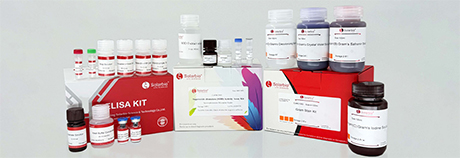
Lipid droplets inside the cell? The CA5090 Lipid Droplet Green Fluorescence Detection Kit (BODIPY 493/503) puts the accumulation right in front of you.
Tracking ROS as well? CA1410 DCFH-DA Reactive Oxygen Species Detection Kit does that. And when mitochondria are the target, the M8650 JC-1 kit reads out the membrane potential shifts.
Cell death on the agenda? CA1020 ANNEXIN V-FITC/PI Apoptosis Detection Kit covers the apoptosis analysis. And if iron-related cellular changes are part of your story, CA1530 Cellular Ferrous Ion (Fe2+) Fluorescence Detection Kit is there too.
One caution: lipid accumulation by itself isn’t lipotoxic injury. Cells will tuck fatty acids into droplets and carry on just fine.
If mitochondrial lipid processing matters to you, Solarbio’s piece on fatty acid oxidation and cellular energy metabolism is worth a look before you pick assays. Insulin resistance? ER stress? Their pathway resources lay those processes out, step by step.
Supporting Reagents for Cell Culture
The culture conditions around the treatment matter as well.
On the culture side: S9020 Premium Fetal Bovine Serum, 90023 RPMI Medium 1640 (no Phenol Red), 12100 DMEM(H) with antibiotics and no sodium pyruvate, plus P1400 Penicillin-Streptomycin Solution (100×).
More culture reagents and cell detection kits can be found through the Solarbio product catalog.
Storage and Handling: What to Watch
Ready-to-use solutions slash the prep time, sure. Storage still needs some care though.
Most palmitate formulations sit at -20°C; a short stint at 2-8°C is fine. Storage windows vary product to product, so read the label.
Skip freeze-thaw cycles whenever you can. Give the solution a once-over before it goes anywhere near your cells. Label says clear, yours looks cloudy? Don’t use it. Simple as that.
And keep treatment conditions consistent between experiments. Working concentration, exposure time, cell density. All of it.
Conclusion
Solarbio High-Fat Cell Additives save you from dissolving fatty acids over and over. Short version, anyway.
From C3450 sodium palmitate up to the C3461 oleate-palmitate mix, the lineup backs lipotoxicity, fatty liver, insulin resistance, lipid metabolism and cellular stress research.
Right fatty acid. Matched controls. The right cellular readouts. Those three still make or break the model.
And for product picks, technical questions, or international orders — just reach out to Solarbio and walk them through your experiment.
FAQ
Q1: What do high-fat cell additives actually do?
A1: Simple — they put cultured cells at defined fatty acid concentrations. That’s how you end up with models of lipotoxicity, hepatic steatosis, insulin resistance, lipid accumulation and cellular stress.
Q2: Sodium palmitate vs. sodium oleate — what sets them apart?
A2: Palmitate is the saturated one, and it tends to hit cells harder. Oleate, with its single double bond, leans toward lipid storage and metabolic adaptation work. How they behave still depends on your treatment conditions.
Q3: Can Solarbio High-Fat Cell Additives be added directly to cell culture medium?
A3: Yes. They ship as ready-to-use stocks — dilute them straight into your medium. Dilution factor? That’s just your stock concentration versus the working concentration you’re after.
Q4: Is a solvent control really necessary for high-fat cell experiments?
A4: Yes. A matched solvent control tells you whether the changes you see come from the fatty acid or from the vehicle itself. Solarbio C3462 is made for exactly this.
 Consult
 Whatsapp
 Leave Message
 top