




Related news
What Is a Hydrotropic Agent? A Practical Guide to Solubilizers in Lab Work
Table of Contents
Hydrotropic agents play an indispensable role in reagent formulation and laboratory experimental preparation. A wide range of test substances—including bioactive compounds, dyes, lipids, membrane proteins, plant extracts and pharmaceutical compounds—feature low aqueous solubility; some are even fully water-insoluble. Others may turn aqueous solutions turbid, adhere to test tube walls, or precipitate tiny particles. These subtle issues appear harmless at first glance, yet they will inevitably skew experimental data and produce unreliable results.
This is exactly where hydrotropic solubilizers deliver core experimental value.
A hydrotropic agent refers to a third auxiliary component added into solvent systems to boost the aqueous solubility of poorly soluble bioactive substances. It can interact with target compounds to form soluble inclusion complexes, molecular aggregates or pseudo-salt adducts. Critically, hydrotropic agents will not alter the chemical structure or biological activity of target substances—their core function is only to enable uniform dispersion and stable existence of target analytes in aqueous working solutions.
Solarbio provides full-spectrum lab supplies for life science research, covering research-grade reagents, detection assay kits, lab solvents, biological buffers and general experimental consumables. If you are looking for matching solubilizers/solvents for protein, nucleic acid, cell, lipid or in vivo animal studies, our official product platform is your one-stop selection hub.
Why Solubilizers Matter in Life Science Experiments
Poor solubility can quietly ruin data
Most experimental failures stem not from flawed research design, but from incomplete dissolution of test samples.
For example, pharmaceutical stock solutions may appear homogeneous visually, yet micro-precipitates of target compounds have already formed unseen. Lipid reagents tend to separate and float atop aqueous buffers. Improper detergent selection will lead to irreversible activity loss of membrane proteins, while incompatible solvent systems will cause uneven staining of biological dyes.
Compound solubility directly determines core experimental indicators in daily lab workflows: pipetting concentration accuracy, experimental repeatability, in vitro bioavailability of test substances, and biocompatibility with cultured cells, proteins and biomacromolecules. For this reason, solvent & solubilizer selection requires rigorous screening and cannot be overlooked as a trivial experimental detail.
If you carry out diverse types of life science assays, the Solarbio Technical Solution Center offers customized reagent matching suggestions tailored to your unique experimental requirements.
A good solubilizer should not disturb the system
A high-quality hydrotropic solubilizer can boost compound solubility without disrupting your experimental system: it will not denature protein structures when native protein activity needs preservation, will not impair intact cell membranes for live-cell assays, and will not produce signal interference in subsequent downstream detection workflows.
The dosage also matters. More solubilizer is not always better. A high surfactant concentration may dissolve lipids well, but it may also damage cell membranes or denature proteins.
Main Types of Hydrotropic Agents and Solubilizers
PEG series
PEG300 and PEG400 are widely adopted solubilizers in pharmaceutical research and life science studies. Polyethylene glycol (PEG) dramatically improves the aqueous solubility of highly lipophilic, poorly water-soluble compounds. It also sees extensive applications in drug delivery carrier construction, enzyme immobilization, and surface modification of biomedical polymer materials.
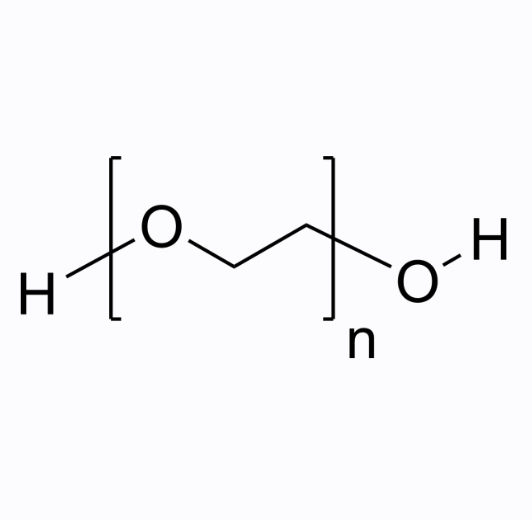
PEG400 serves as a classic injection/oral administration vehicle for lipophilic pharmaceutical compounds (paclitaxel as a typical example) during in vivo animal studies. For compounds with extremely low water solubility, it stabilizes homogeneous dosing stock solutions and avoids precipitation during animal administration.
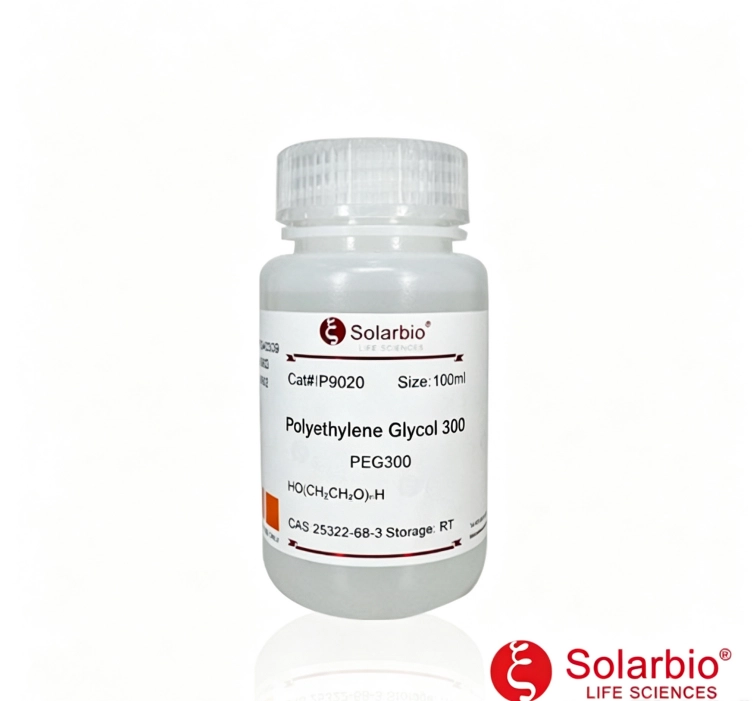
Solarbio provides matching PEG products: Cat.No. IP9020 PEG300 and Cat.No. IP9000 PEG400. Both act as reliable solvents and co-solvents for preparing compound stock solutions in diverse research pipelines. You can view full specifications, purity parameters and storage requirements on our official product listing page.
Cyclodextrin series
Cyclodextrins exert solubilizing effects by forming host-guest inclusion complexes with lipophilic organic molecules, which greatly elevates the aqueous solubility and chemical stability of target substances. In pharmaceutical and bioactive compound research, cyclodextrin solubilizers are the preferred mild alternative to harsh organic solvents for poorly water-soluble analytes that require incubation in biological systems.
Our Cat.No. IH9000 (2-Hydroxypropyl)-β-cyclodextrin (HP-β-CD) is our flagship cyclodextrin solubilizer. It efficiently solubilizes low-solubility compounds and serves as a gentler replacement for toxic organic solvents in cell and biochemical experiments.
Surfactants
Tween-20, Tween 80, Triton X-100 and SDS are four mainstream surfactants widely used in labs, yet they cannot be randomly interchanged for different experimental purposes.
Tween 80 and Triton X-100 self-assemble into micellar structures to encapsulate lipids and membrane proteins for downstream analysis. Among them, Triton X-100 is the most widely used nonionic detergent for membrane protein extraction. Solarbio supplies multiple grades of Tween and Triton X-100 matched to standard global research protocols. For buffer washing and mild sample dispersion procedures that avoid severe membrane lysis, our Cat.No. IT9010 Tween-20 acts as a mild nonionic surfactant with minimal biomolecular damage.
SDS is a strong ionic denaturing detergent. It effectively solubilizes membrane proteins and hydrophobic peptides, yet researchers must exercise extreme caution in native protein activity assays—it fully disrupts natural protein tertiary & quaternary structures and abolishes biological activity.
If you want to keep up with updated experimental protocols and product technical bulletins, browse the Solarbio News Center for more professional lab guidance.
Oils and other solvent systems
Corn oil and olive oil are ideal oil-phase vehicles for highly lipophilic test compounds, particularly for in vivo animal administration. They serve as safe carriers for fully water-insoluble pharmaceutical substances. Solarbio’s Cat.No. IC9000 Corn Oil and Cat.No. IO9000 Olive Oil are premium-grade oil vehicles tailored for animal study use.
Glycerol is another versatile lab reagent. Our Cat.No. IG0910 Glycerol functions as biomacromolecule stabilizer, cell cryoprotectant or co-solvent, with its application determined by working concentration and experimental protocols. We recommend selecting reagents strictly based on assay requirements rather than habitual usage.
How to Choose Solvents for Protein Experiments
Protein activity needs a stable environment
Protein functional assays are highly sensitive to environmental factors including pH value, ionic strength, temperature and detergent concentration. If your experimental objective is to retain native protein bioactivity, matching biological buffer systems should always be your first pick.
PBS buffer is widely adopted for its physiological pH value that simulates in vivo biological environments. Tris-HCl buffer is a multi-scenario buffer for protein sample manipulation, cell rinsing, immunofluorescence staining, nucleic acid electrophoresis and protein chromatographic purification.
For denaturation-sensitive proteins, harsh solubilization conditions should be excluded unless explicitly specified in your standard operating procedure (SOP). The core criterion for solvent selection is protecting native protein activity, rather than merely forcing complete dissolution of samples.
Protein purification may need mild detergents
Multiple mild nonionic detergents are ideal for protein purification, as they solubilize lipid bilayers and elute target membrane proteins from their native lipid microenvironment. Triton X-100 is a representative option: it dissolves membrane lipid components to extract integral membrane proteins, yet partial loss of protein bioactivity may occur during the process.
Even mild detergents require concentration optimization: insufficient dosage cannot fully extract target membrane proteins, while excessive dosage will compromise protein activity and interfere with subsequent detection assays.
If you are working with complex multi-step purification workflows, our Solarbio technical support team can provide customized reagent matching and experimental method optimization suggestions.
How to Choose Solvents for Nucleic Acid Experiments
Extraction depends on phase separation
Cellular nucleic acid extraction routinely relies on phenol-chloroform mixed extractant. Phenol denatures and solubilizes total cellular proteins, while chloroform accelerates liquid-liquid phase separation. After centrifugation, denatured proteins partition into the organic phase or accumulate at the two-phase interface, and nucleic acids remain stably dissolved within the upper aqueous phase.
Most nucleic acid purification workflows consist of serial steps including mixing, phase separation and chemical reactions. Every step must be precisely executed to maximize nucleic acid recovery and purity. Insufficient vortex mixing, mismatched reagent volume ratios and incomplete phase separation will all result in low extraction yield and poor nucleic acid purity.
PCR and hybridization need stable buffers
PCR reactions adopt Tris-HCl buffered systems, as stable pH environments are essential to maintain thermostable DNA polymerase activity. Nucleic acid hybridization experiments commonly utilize SSC series buffers to regulate system ionic strength and guarantee accurate complementary base pairing between target and probe sequences.
In nucleic acid assays, buffers are far more than simple liquid carriers—they construct and stabilize the optimal chemical microenvironment required for target molecular reactions.
If you want to explore the correlation between solvent selection and molecular biological mechanisms, you can also check the pathway analysis resource library on Solarbio’s official website.
How to Choose Solvents for Cell Experiments
Cell culture needs compatibility first
DMEM is the most widely used aqueous basal medium for mammalian cell culture, supplemented with amino acids, vitamins, inorganic salts, glucose and other essential nutrients to sustain cell proliferation. For all cell culture assays, the solvent/carrier system must maintain high biocompatibility with viable cells.
DMSO is the standard solvent for preparing stock solutions of low-solubility small-molecule compounds for cell treatment. Strict control of the final DMSO concentration in culture medium is mandatory: most cell lines tolerate low-volume DMSO supplementation, yet elevated concentrations will reduce cell viability and introduce experimental bias.
Cell freezing needs cryoprotection
DMSO also serves as the core cryoprotective additive in cell cryopreservation medium. It inhibits the formation of sharp intracellular ice crystals under ultra-low temperature conditions. The classic cryopreservation formula contains 10% DMSO diluted in fetal bovine serum (FBS) or other specialized cell freezing basal media.
While DMSO shields cells from cryodamage during freezing, prolonged room-temperature incubation with DMSO will cause severe cytotoxicity. We recommend completing the cooling and cryopreservation procedure immediately after mixing DMSO into cell suspensions.
How to Choose Solvents for Lipid Experiments
Lipid extraction needs organic solvents
Lipids are nonpolar biomolecules with negligible aqueous solubility. Organic extractants are required to isolate total lipids from animal and plant tissue samples. Among all lipid extraction solvents, chloroform-methanol mixed solution is the gold standard: it efficiently recovers diverse lipid subtypes while simultaneously removing contaminating proteins and water-soluble biomolecules from crude lipid extracts.
Chloroform and methanol are also universal solvents for liposome fabrication: they fully dissolve lipid raw materials prior to lipid film evaporation and subsequent hydration steps.
Fatty acid analysis often uses hexane
N-Hexane is the preferred extractant for fatty acid profiling assays. It efficiently extracts free fatty acids and generates minimal background interference in gas chromatography (GC) detection. The core screening principle for extraction solvents is full target solubilization and complete compatibility with downstream analytical instruments.
How to Choose Solvents for Animal Experiments
Vehicle selection must match compound, species, and route
In vivo animal studies demand stricter solvent screening, as all delivery vehicles will directly interact with intact living organisms. Compound physicochemical properties are the primary screening factor. For highly lipophilic test compounds, PEG400, corn oil or olive oil are common eligible administration vehicles.
Animal species differences also determine vehicle tolerance: mice generally withstand low-dose DMSO exposure better than other laboratory animal models. Administration route is another decisive factor—oral gavage, intramuscular injection, intravenous injection and other delivery routes have distinct vehicle safety standards and formulation limits.
Sodium carboxymethyl cellulose (CMC-Na) aqueous solution is the standard suspending vehicle for oral gavage of low-solubility compounds. For injectable administration, vehicles must comply with strict safety thresholds matching each injection mode. If you need professional technical consultation prior to reagent procurement, you can contact our technical team via the official Solarbio contact page.
Related Solubilizer Products from Solarbio
Solarbio offers a full portfolio of solubilizing reagents covering hydrotropic agents, nonionic/anionic surfactants, oil-phase administration vehicles and biomolecular stabilizers for all mainstream life science research applications. Our core solubilizer product catalog includes: Cat.No.: IP9020 PEG300, IT9010 Tween-20, IC9000 Corn Oil, IT9100 Triton X-100, IT9000 Tween 80, IH9000 (2-Hydroxypropyl) -β-cyclodextrin, IG0910 Glycerol, IO9000 Olive Oil and IP9000 PEG400.
PEG300 and PEG400 are universal co-solvents for low-aqueous-solubility compounds; Tween-20, Tween 80 and Triton X-100 belong to lab-grade surfactants; corn oil and olive oil serve as lipophilic delivery vehicles for animal assays; glycerol acts as a multi-purpose biomacromolecule stabilizer and cryoprotective additive.
Founded in 2004, Solarbio specializes in developing and manufacturing full-line research reagent systems covering immunology, cell biology, molecular biology and biochemistry. You can browse our corporate profile for more brand and production details via the “About Us” page on our official website.
Conclusion
Hydrotropic solubilizers are often overlooked minor components in experimental formulations, yet they exert a decisive impact on overall experimental success. They solubilize poorly water-soluble test substances, simplify pharmaceutical compound formulation, facilitate protein & lipid sample processing, and standardize sample preparation workflows for cell and in vivo animal research.
Solubilizer selection should never rely solely on habitual lab usage. Multiple factors must be comprehensively evaluated: compound physicochemical properties, sample matrix type, experimental biological system, downstream detection platforms and maximum biocompatibility safety thresholds. Each reagent including PEG300, PEG400, Tween-20, Tween 80, Triton X-100, SDS, HP-β-CD, glycerol, corn oil and olive oil has its exclusive optimal application scenarios.
Matching the optimal solubilizer to your experimental needs delivers cleaner assay backgrounds, superior experimental repeatability and avoids unnecessary experimental failure caused by incomplete sample dissolution.
FAQ
Q1: What exactly is a hydrotropic agent?
A1: A hydrotropic agent is an auxiliary reagent added into solvent systems to boost the aqueous solubility of poorly soluble analytes. It interacts with target molecules to form soluble inclusion complexes, molecular aggregates or pseudo-salt adducts.
Q2: Are hydrotropic agents equivalent to surfactants?
A2: They are not interchangeable concepts. Certain surfactants can function as solubilizers, yet hydrotropic agents and surfactants differ fundamentally in solubilization mechanisms and applicable working concentration ranges.
Q3: What experimental scenarios require PEG400?
A3: PEG400 is a preferred co-solvent for highly lipophilic, low-water-solubility compounds, widely applied in pharmaceutical compound formulation and in vivo animal administration. Its final application depends on compound properties and delivery route.
Q4: What are the main applications of Tween 80?
A4: Tween 80 is a mild nonionic surfactant and solubilizer that disperses lipophilic small molecules evenly within aqueous buffer systems.
Q5: What is Triton X-100 suitable for?
A5: Triton X-100 is the mainstream detergent for solubilizing lipid membrane components and extracting integral membrane proteins. Strict concentration control is required, as excessive dosage will impair native protein bioactivity.
Q6: Why is SDS classified as a harsh detergent?
A6: SDS is a potent ionic denaturing surfactant. While it efficiently solubilizes membrane proteins and hydrophobic peptides, it completely disrupts native protein tertiary and quaternary structures and eliminates biological activity.
Q7: Is DMSO applicable for cell culture experiments?
A7: Yes. DMSO serves two core lab purposes: preparing stock solutions of low-solubility compounds and formulating cell cryopreservation media. For live-cell functional assays, maintain a low, consistent final DMSO concentration across all sample and control groups.
Q8: Why do we select corn oil and olive oil for in vivo animal studies?
A8: Corn oil and olive oil are biocompatible oil-phase delivery vehicles for highly lipophilic compounds that cannot be fully dissolved in aqueous buffer systems.
Q9: How to screen suitable solubilizers for protein-related experiments?
A9: Prioritize buffers and mild detergents that maintain native protein stability and bioactivity. PBS, Tris-HCl and low-concentration nonionic detergents are optional choices matched to your experimental endpoints.
Q10: How to eliminate solvent-induced experimental interference?
A10: Three key measures: strictly control solubilizer working concentration, pre-verify reagent compatibility with samples and downstream detection platforms, and maintain identical vehicle concentration in all blank control groups.
 Consult
 Whatsapp
 Leave Message
 top
top