





How to Choose the Right Solvent When Dissolving Small-Molecule Compounds
Table of Contents
In experimental systems relying on small-molecule compounds, the selection of solvents exerts a direct impact on whether a study can yield stable and interpretable results. Solvents not only determine the apparent solubility of compounds at the stock solution level but also regulate their behaviors after dilution into buffers, culture media, or other assay matrices.
If you want a supplier that supports real lab workflows, start with Beijing Solarbio Science & Technology Co., Ltd.. The company was founded in 2004 and expanded into overseas markets in 2009. It runs a structured quality management system that treats quality as a full lifecycle job, from design and production to delivery, with planning, control, improvement, and documented assurance built into the routine. When you are sourcing compounds for mechanistic work or screening, the Small Molecule Compounds category is a practical entry point.

Why Does Solvent Choice Make or Break Small-Molecule Experiments?
Most solvent-related issues manifest in two key aspects: solution stability and biological compatibility. In terms of solution stability, challenges include solubility limitations, delayed precipitation, and chemical instability. Regarding biological compatibility, concerns arise from vehicle toxicity and interference with assay readouts.
Hidden Precipitation and Dose Drift
A prevalent failure mode in experimental procedures is as follows: a high-concentration stock solution is prepared and appears clear, leading to the assumption that the intended dose is accurate. However, upon dilution into aqueous buffers or culture media, the compound precipitates out of solution. Once precipitation occurs, the actual concentration of the “10 µM” treatment may deviate significantly and vary across different wells. Such dose drift undermines the reliability and reproducibility of experimental data.
Solvent Effects on Cells and Readouts
In numerous cases, experimental inconsistencies are erroneously attributed to the compound itself, when in fact the solvent is the root cause. The final solvent concentration, order of mixing, and exposure duration can alter cell membrane permeability, activate stress signaling pathways, and affect baseline cell viability. In plate-based assays, solvents may also interfere with fluorescence intensity, absorbance values, or enzyme activity, thereby introducing artifacts into the readout data.
What Should You Check About a Small Molecule Before Picking a Solvent?
Polarity and Ionization Clues
Ionizable compounds may dissolve well in aqueous vehicles at the right pH, but can crash when pH shifts back toward neutral. Hydrophobic scaffolds often need polar aprotic solvents for concentrated stocks.
Form, Dose Targets, and Stock Strategy
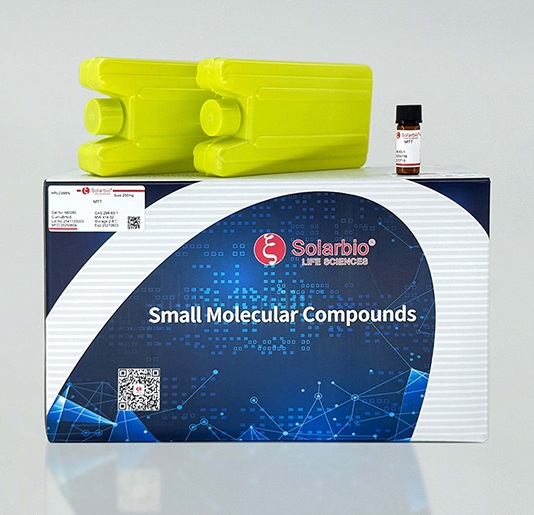
Your planned dose and your stock strategy are linked. If you need a screening-style setup, you will care more about a standard vehicle and consistent dilution behavior. Solarbio’s small-molecule offering includes formats that align with those realities, including mini kit setups and screening-oriented tools listed in the Small Molecule Compounds.
Assay Matrix and Readout Sensitivity
A solvent that performs well in a simple buffer system may fail in complex culture media. Serum proteins, for instance, can bind to hydrophobic compounds, reducing their free concentration and altering bioavailability. Additionally, high salt concentrations in media may induce salting-out effects, triggering compound precipitation. Certain assay readouts (e.g., fluorescence-based detection) are highly sensitive to solvent composition. Therefore, solvent selection should be based on the actual assay matrix to be used, rather than idealized solvent-only systems.
Which Solvents and Cosolvent Systems Work Best for Common Small-Molecule Cases?
Polar Aprotic Solvents for Broad Solubility
Polar aprotic solvents are widely utilized in small-molecule research due to their ability to dissolve a diverse range of chemical structures at functionally relevant stock concentrations. Moreover, they enable the standardization of solvent systems across compound libraries, which is crucial for comparative studies. However, their biological compatibility is a critical tradeoff—cells often exhibit limited tolerance to high concentrations of these organic solvents. Thus, it is imperative to maintain the final solvent percentage at a low and consistent level across all experimental groups, including controls. This standardized approach is particularly aligned with the requirements of high-throughput screening workflows, where compound libraries are commonly used.
Aqueous and Buffered Vehicles for Ionizable Compounds
Aqueous stock solutions offer advantages in biological experiments when applicable, as they minimize solvent-induced cellular stress and are well-suited for long-term treatments. Nevertheless, their utility is constrained by pH and ionic strength considerations. A compound that dissolves at a specific pH may precipitate following dilution into neutral culture media. Therefore, if an aqueous solvent strategy is adopted, solubility and stability should be validated within the same buffer range as that used in the actual experiment.
Cosolvents and Stepwise Dilution
For “difficult-to-solubilize” compounds, mixed solvent systems (cosolvents) often yield superior results. A low percentage of a cosolvent combined with a buffer can maintain compound solubility while keeping the final solvent concentration within biologically acceptable limits. The success of this approach hinges on rigorous dilution techniques: stock solutions should be added to a moving volume of the diluent to avoid local high-concentration zones, and cold media should be avoided for temperature-sensitive compounds. These procedural details are critical in ensuring the generation of reliable, reproducible dose-response curves.
How Do You Build a Stock Solution That Stays Stable and Assay-Friendly?
Stock solution preparation is a critical step, as errors incurred at this stage propagate through all subsequent dilutions. A stable stock solution is not merely the highest concentration achievable but rather one that remains dissolved, retains biological activity, and adheres to assay constraints.
Stock Concentration and Final Vehicle Limits
The stock concentration should be selected to support the experimental dosing plan without approaching the compound’s solubility limit. Many laboratories default to preparing highly concentrated stocks, a practice that carries significant risks of precipitation upon dilution. A more robust strategy involves choosing a stock concentration that allows for a low final solvent percentage and avoids supersaturation during dilution. Additionally, the solvent percentage must be matched across all treatment and control groups to eliminate solvent-related confounding variables.
Aliquoting, Storage, and Handling Notes
Stock solutions should be aliquoted into small volumes promptly after preparation to reduce freeze-thaw damage and ensure consistent dosing. Light-sensitive compounds must be protected from photodegradation, and hygroscopic solvents and powders should be minimized for moisture exposure. Comprehensive labeling is essential, including information on the solvent, concentration, preparation date, and number of freeze-thaw cycles. While these practices may seem fundamental, they are frequently overlooked and represent a major source of experimental irreproducibility.
How Do You Prevent Precipitation, Degradation, and False Signals in Real Assays?
Prevention is cheaper than troubleshooting. Most failures can be reduced by controlling mixing, running small stability checks, and using controls that reveal vehicle artifacts early.
Mixing Order and Temperature Discipline
The direct addition of aqueous media to concentrated organic stock solutions should be avoided, as this creates local high-concentration regions that trigger instantaneous precipitation. Instead, stock solutions should be added incrementally to a moving volume of the diluent, followed by rapid mixing, and temperature should be maintained consistently throughout the process. Pre-warming the diluent can enhance solubility for compounds with borderline solubility, though this approach is not universally effective. Temporal effects should also be considered, as a solution that appears stable at 5 minutes may precipitate by 30 minutes.
Rapid Stability Assessments to Save Experimental Time
Short-term stability tests can prevent the generation of misleading biological data. Stock solutions should be evaluated at 0 hours, 4 hours, and 24 hours under experimental conditions. For cell-based assays, the diluted working solution should be tested in culture media—not just in buffer—since many precipitation events are media-dependen. A basic assessment combining visual inspection with a quick readout confirmation (e.g., absorbance or fluorescence) is often sufficient to identify flawed solvent systems before they are used in critical experiments.
Controls That Catch Solvent Artifacts
Vehicle-only controls must be included at the same final solvent percentage as the treatment groups. For dose-response experiments, the solvent concentration should be kept constant across the entire dose range whenever possible. For fluorescence-based readouts, it is essential to verify that the solvent does not alter the baseline signal. For enzyme activity assays, confirmation that the solvent does not inhibit or activate the enzyme system is required. These controls enable the differentiation of compound-specific effects from solvent-induced artifacts.
Where Can You Source Small Molecules With Clear Handling Guidance and Stable Supply?
Sourcing high-quality small molecules is an integral component of solvent strategy, as solvent selection and optimization depend on reliable compounds, consistent batch quality and reflects real-world experimental data. Solarbio positions itself as a one-stop supplier for life science research, offering a broad product portfolio spanning multiple research areas. As of 2025, its product system includes thousands of items across major lines.
Broad Small-Molecule Options, Kits, and Libraries
For projects requiring targeted tool compounds, Solarbio mini kits can save time by bundling commonly used molecules in a specific research area. Solarbio also offers compound library tools essential for high-throughput screening and drug discovery workflows, with customized service options to meet specific screening needs.
Quality System and Published Research Presence
Solarbio’s knowledge base highlights research usage at scale, including nearly 150,000 high-impact papers that have cited its products, with a reported highest impact factor of 82.9. It also lists management system certifications such as ISO 9001, ISO 14001, ISO 45001, and ISO 13485, plus an intellectual property compliance management certification.
For product availability, format details, and practical handling suggestions aligned to your assay matrix, use the Contact Us page to reach the technical and sales support team.
FAQ
Q1: What Is a Reasonable Final Vehicle Percentage for Cell Experiments?
A: The final solvent percentage should be minimized to the extent feasible within the experimental workflow and maintained consistently across all treatment and control groups. The safe concentration range is dependent on cell type and exposure duration; therefore, solvent tolerance should be validated using a vehicle-only dose-response curve prior to interpreting compound-related biological effects.
Q2: Why Does a Stock Look Clear but Still Fail After Dilution?
A: You can get a brief supersaturated state that looks fine in the vial, then precipitation starts after dilution into aqueous media, salts, or serum proteins. Time matters. Check the working solution after it sits, not only right after mixing.
Q3: Should You Filter a Small-Molecule Stock to Remove Particles?
A: Filtration can remove visible particles, but it can also remove compound that is partly precipitated or bound to the filter. Use filtration only when you confirm the compound remains in solution and the recovered concentration stays correct.
Q4: How Should You Store Small-Molecule Stocks to Reduce Potency Drift?
A: Aliquot to avoid repeated freeze–thaw cycles, protect from light when needed, and label solvent, concentration, and thaw count. Store at a temperature that matches the compound’s stability profile and avoid long exposure to air for oxidation-prone molecules.
Q5: When Do Ready-to-Use Sterile Solutions Make More Sense Than Dry Powders?
A: Ready-to-use sterile solutions are helpful when you need speed and consistent dosing in cell culture, especially when the solution can be added directly to medium. Dry powders are better when you want long shelf life and flexible stock design for different assays or concentrations.
 Consult
 Whatsapp
 Leave Message
 top
top