




Related news
Cystathionine-beta-synthase: Linking Sulfur Amino Acid Metabolism, Oxidative Defense, and Cell Signaling
Table of Contents
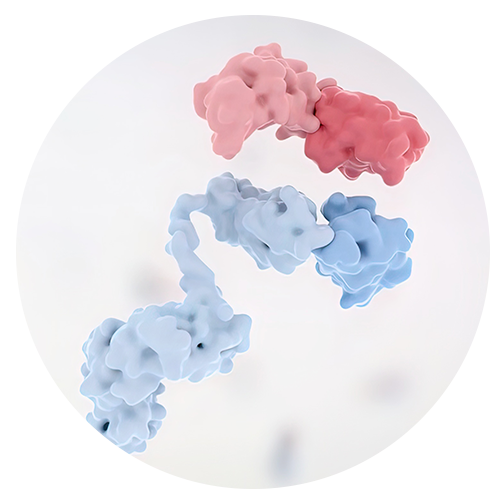
Cystathionine-beta-synthase, usually called CBS, is one of those enzymes that looks simple at first but quickly becomes important once you start looking at metabolism in detail. It sits at a key branch of sulfur amino acid metabolism and helps decide how homocysteine, cysteine, glutathione, and hydrogen sulfide are handled inside cells.
In many laboratories studying oxidative stress, ferroptosis, cardiovascular biology, liver injury, cancer or metabolic diseases, measuring CBS activity could be very useful as it not only is a marker on a pathway but it also affects redox balance, sulfur metabolism and gas signaling.
Solarbio provides laboratory tools for biochemistry, cell biology, molecular and immunology for life sciences researchers. In order to carry out a full experiment for studying CBS researchers need more than one type of product. In general a full experiment for studying CBS would require measurement of CBS activity, of cysteine, study of the glutathione pathway and of hydrogen sulfide.
Why Is CBS Important in Sulfur Amino Acid Metabolism?
CBS Guides the Fate of Homocysteine
Sulfur amino acid metabolism mainly involves methionine, homocysteine, cysteine, and glutathione. Methionine enters the methionine cycle and forms S-adenosylmethionine, also known as SAM. SAM is a major methyl donor in cells and can transfer methyl groups to DNA, RNA, proteins, phospholipids, creatine, epinephrine, and other molecules.
After methyl transfer, SAM becomes S-adenosylhomocysteine, or SAH. SAH is then hydrolyzed to homocysteine. At this point, homocysteine has two possible directions. It can be converted back into methionine, or it can enter the transsulfuration pathway.
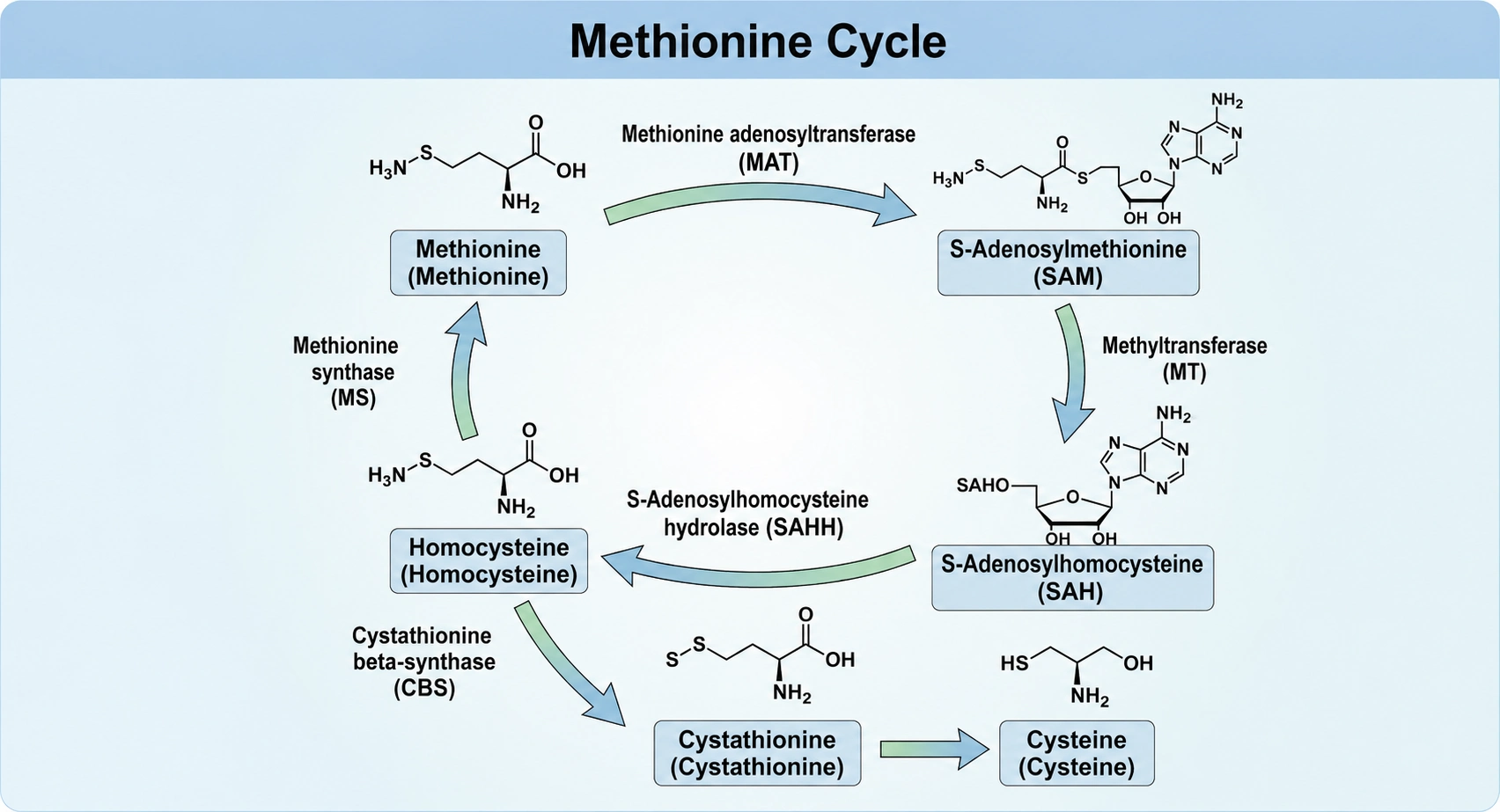
CBS controls one step in this alternative route to cysteine. This step is catalyzed by the vitamin B6 coenzyme pyridoxal phosphate, in reaction of homocysteine with serine to form cystathionine. The intermediate cystathionine is then cleaved by cystathionine gamma-lyase to yield alpha-ketobutyrate and cysteine.
This matters because cysteine is not just a regular amino acid. It is a raw material for several protective and signaling molecules. In sulfur amino acid metabolism research, CBS helps show where the metabolic flow is moving and whether cells are shifting toward cysteine production and downstream antioxidant defense.
CBS Connects Metabolism With Antioxidant Defense
CBS is closely tied to glutathione synthesis. Glutathione, often written as GSH, is one of the main antioxidants inside cells. It helps remove reactive oxygen species, supports detoxification, and works as a substrate for glutathione peroxidase enzymes.
Cysteine can become a limiting factor for the synthesis of GSH. As CBS is involved in the transsulfuration pathway for the generation of cysteine, the activity of this enzyme can affect the degree of antioxidant capacities of cells.
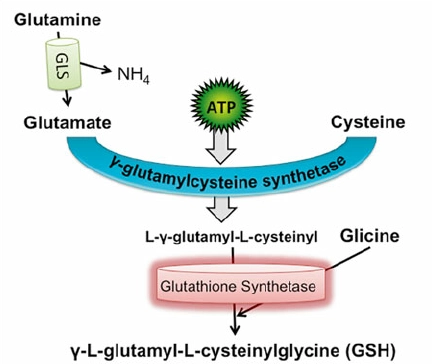
In studies on oxidative stress and ferroptosis, this information is highly relevant. GSH and GPX4 form a defense system against the increase of lipid peroxides. When the supply of cysteine is low, GSH synthesis is impaired and cells can become sensitive to oxidative stress or undergo ferroptosis-like damage.
So, CBS is not only a homocysteine producing enzyme but in many cell models it also can explain increased redox pressure, lipid peroxidation and cellular stress resistance.
How Does CBS Relate to Hydrogen Sulfide Signaling?
H2S Has a Real Signaling Role
CBS can also participate in hydrogen sulfide production. H2S is now widely studied as a gas signaling molecule. It can regulate cell behavior through protein persulfidation and other sulfur-related modifications.
H2S is found in biological systems and can exert protective effects against oxidative damage as well as regulate inflammatory responses. H2S can also modulate mitochondrial functions and affect vascular tone. In vascular smooth muscle cells, H2S activates ATP-sensitive potassium channels, leading to vasodilation. Thus, CBS is often studied in the context of cardiovascular functions as well as in the studies of inflammation, mitochondrial metabolism and cellular stress responses.
CBS links amino acid metabolism with gas signaling and therefore for some of these projects simply measuring CBS is not sufficient. Also measurement of H2S by appropriate detection methods is necessary to fully understand the signaling part of this pathway.
Activity Data Can Be More Useful Than Expression Data
First, many researchers determine the mRNA or protein expression of CBS in their respective studies. However, the expression of an enzyme does not necessarily equal its activity. The activity of an enzyme can be influenced by the availability of cofactors, the concentration of substrates, the oxidative status, post-translational modifications or by inhibitors.
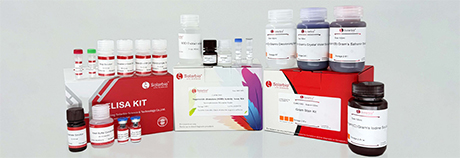
Measuring direct CBS activity provides more practical data than comparing expression of activity of CBS. The BC649F Cystathionine-beta-synthase (CBS) Activity Fluorometric Assay Kit is designed for the measurement of CBS activity with research samples. It allows for comparison of treated samples with control samples.
For labs making oxidative stress, ferroptosis, metabolic damage or signal transduction models, CBS activity can provide the critical distinction between upregulation of interest and upregulation of artifact to separate out expression changes from functional changes.
Which Assay Kits Help Build a CBS Pathway Study?
CBS Activity Is the Starting Point
A CBS study usually starts with enzyme activity. BC649F Cystathionine-beta-synthase (CBS) Activity Fluorometric Assay Kit can be used to evaluate the direct activity of CBS.
When a researcher conducts a project about the cysteine supply, he or she might also need the Cysteine (Cys) Content Assay Kit. For visible spectrophotometry measurements the BC0180 can be used, for measurements in a microtiterplate with a spectrophotometer the BC0185 is the most appropriate choice.
If the work moves toward glutathione synthesis, GCL activity becomes useful. BC1210 Gamma-glutamylcysteine ligase (GCL) Activity Assay Kit and BC1215 Gamma-glutamylcysteine ligase (GCL) Activity Assay Kit help researchers check the first key step in GSH synthesis.
For downstream antioxidant status, researchers often measure GST, GR, GSH, and GSSG together. Solarbio provides related glutathione pathway assay kits, including BC0350 and BC0355 for GST activity, BC1160 and BC1165 for GR activity, BC1170 and BC1175 for GSH content, and BC1180 and BC1185 for GSSG content.
H2S Detection Adds the Signaling Layer
If your study involves gas signaling, vascular response, inflammation or mitochondrial function, it can be complemented by the measurement of H2S using BC205F Hydrogen Sulfide (H2S) Content Fluorometric Assay Kit or BC2055 H2S Content Assay Kit.
The Hydrogen Sulfide (H2S) Content Fluorometric Assay Kit is also useful for researchers requiring a fluorescence-based method. In practice, the best choice of indicators will depend on the model system studied. For example, ferroptosis assays may require to measure the indicators CBS, Cys, GSH, GSSG and lipid peroxidation products. Vascular and inflammation type models are best analyzed using a combination that focuses on measuring CBS and H2S.
How Should Researchers Plan a CBS Experiment?
Start With the Research Question
CBS is connected to several pathways. It is possible to measure too many indicators for CBS and still miss the core of the issue. It is better to start with the main question for CBS.
If the project is about homocysteine metabolism, CBS activity and cysteine content may be the first choices. If the question is about oxidative defense, GSH, GSSG, GR, GST, and GCL should be considered. If the question is about gas signaling, H2S detection becomes more important.
Sample handling also matters for enzyme activity, i.e. the influence of temperature, storage time as well as of several freeze-thaw cycles. For the fluorometric assays the samples have to be handled with care in order to prevent too much light exposure as well as interference with the background.
For special samples or new models the Solarbio technical service can be contacted prior to carrying out a large amount of tests.
Use More Than One Marker in Oxidative Stress and Ferroptosis Work
CBS is often discussed in oxidative stress and ferroptosis research, but one marker is not enough to support a mechanism. Ferroptosis studies usually need several types of evidence, such as lipid peroxidation, iron-related indicators, GSH status, GPX4-related data, and rescue experiments.
To position CBS upstream of cysteine and GSH. When the activity of CBS decreases then also cysteine and GSH may decrease. If in this case also lipid peroxidation would increase then the result is very strong. In this case it also would be informative to look at the changes in H2S production to study both its metabolism as signaling pathway.
This pathway view is more valuable than a single enzyme measurement. It makes the data so much easier to explain in papers, reports, etc. as well as in product development work.
Why Work With Solarbio for CBS-Related Assay Kits?
Broad Product Coverage Saves Time
Enzyme activity kits, metabolite content kits, oxidative stress kits as well as fluorescence detection tools are needed for CBS research. Having all of these products from one supplier for the smooth workflow of a lab is very important.
Researchers can also search for products in Solarbio’s product catalog such as CBS activity assay kits, Cys, GCL, GSH, GSSG, GST, GR and H2S detection kits, and track latest research and product updates on related studies of this biochemical pathway.
Support Matters for Non-standard Models
Different CBS studies could be working with different samples, such as cells, tissues, serum, plasma, or plant samples and therefore the sample preparation would be critical and affect the results. It is best to double check the amount of sample, detection wavelength, storage of samples and expected range of detection before starting a new model.
Researchers can contact Solarbio for help with selecting products, preparing samples and designing an assay workflow.
Conclusion
Cystathionine-beta-synthase is a key connection between sulfur containing amino acids, an antioxidant function and the signaling molecule hydrogen sulfide. It determines the homocysteine pathway of transsulfuration, supplies cysteine and influences glutathione synthesis. The enzyme is also a component of H2S signaling in cells.
For practical research, it is better to measure CBS together with related pathway markers. To measure CBS activity directly, we offer the BC649F Cystathionine-beta-synthase (CBS) Activity Fluorometric Assay Kit. For a more complete view of the CBS pathway, we also offer Cys, GCL, GST, GR, GSH, GSSG and H2S assay kits.
FAQ
Q1: What is the function of Cystathionine-beta-synthase in metabolism studies?
A1: Cystathionine-beta-synthase is an enzyme that makes cystathionine from homocysteine and serine in the transsulfuration pathway. It helps make cysteine which can then make glutathione. It also connects homocysteine metabolism with the rest of the metabolism.
Q2: Why is CBS activity relevant to oxidative stress research?
A2: The activity of CBS affects the supply of cysteine which is a substrate for the synthesis of glutathione. Glutathione is a major antioxidant in cells that controls amounts of reactive oxygen species as well as lipid peroxidation.
Q3: Can CBS be studied in ferroptosis models?
A3: Yes. CBS is involved in production of cysteine and glutathione. Therefore CBS activity is related to studies on ferroptosis using GSH and GPX4 as key molecules.
Q4: Which product can measure CBS activity?
A4: BC649F Cystathionine-beta-synthase (CBS) Activity Fluorometric Assay Kit measures CBS activity directly in research samples for which appropriate.
Q5: Which related indicators should be measured with CBS?
A5: Common related indicators include cysteine, GCL activity, GST activity, GR activity, GSH content, GSSG content, and H2S content. These markers help connect CBS changes with sulfur metabolism, antioxidant defense, and gas signaling.
Q6: Why measure H2S in CBS-related research?
A6: Does CBS also produce hydrogen sulfide? Since H2S is involved in several processes such as oxidative stress response, inflammation, mitochondrial function and effects on vascular functions, its detection might add another signaling pathway in studies on CBS.
 Consult
 Whatsapp
 Leave Message
 top
top