




Related news
GABAB Receptor Small Molecule Inhibitors: Research Tools for Neuroscience Studies
Table of Contents
GABAB receptor regulation is a serious topic in neuroscience research. This receptor is closely linked with inhibitory signaling, neuronal excitability, synaptic balance, and several disease-related pathways. When the GABAB receptor activity stays in a normal range, neural signals are easier to control. When the signaling becomes too weak, too strong, or mistimed, researchers often connect it with epilepsy, anxiety, depression, drug dependence, chronic pain, and other nervous system conditions.
Small molecule inhibitors of the GABAB receptor and related modulators are very useful tools for drug discovery and basic research. They can be used to modulate a receptor, to study effects of modulation on a signaling pathway, and to set up a model for a disease. For CNS compound screening or research on GABA-related pathways, antagonists, agonists, inhibitors, and allosteric modulators all have their specific applications and the choice between them often determines the outcome of the experiments.
Solarbio provides a variety of small molecule compounds and research tools for life science research including Receptor Biology research, Neuropharmacology studies, signaling pathway studies, and molecular mechanism studies. In this article, we describe the GABAB receptor, categorize its small molecule inhibitors, and outline how related Solarbio research products can be used when planning experiments.
What Is the GABAB Receptor?
It is a slow inhibitory receptor in the nervous system
GABA, or γ-aminobutyric acid, is the main inhibitory neurotransmitter in the central nervous system.
GABAA receptor is the faster one. It works through ion channels and produces quick inhibitory effects.
GABAB receptor works in another way. It belongs to the class C family of G protein-coupled receptors, also called GPCRs. Its response is slower, but the effect lasts longer. This slow control is important in many neuroscience studies because it affects synaptic transmission, neurotransmitter release, neuronal rhythm, and long-term network balance.
GB1 and GB2 must work together
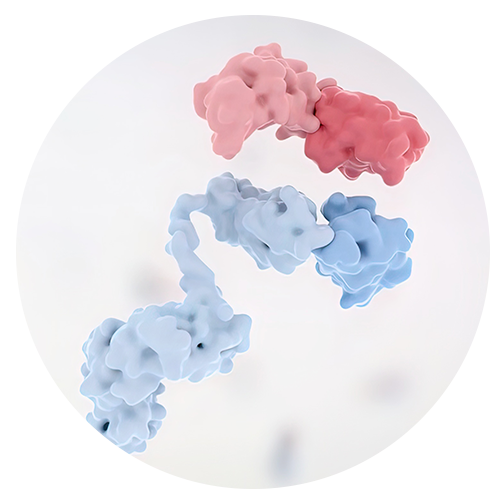
The GABAB receptor is not a simple single-unit receptor. It needs two subunits, GB1 and GB2, to form a functional heterodimer.
GB1 part of the receptor binds GABA. The GB2 part activates a G protein. One part of the receptor recognizes the ligand, and the other part transmits the signal into the cell. If one of the subunits is missing or not correctly folded, the receptor does not function properly.
Researching GABAB receptors is even more complicated because their structure allows for many different compounds to modulate their activity. A compound can influence the ligand binding to the receptor, the receptor’s conformation, the coupling to the G protein, the receptor’s trafficking within the cell, or the signal transduction downstream of the activated receptor. As a result, most studies do not rely on a single classic antagonist, but instead compare various tools to assess their effects on the different steps involved in the receptor’s signaling.
Why the GABAB receptor matters in disease research
The activated GABAB receptor can decrease the influx of calcium ions and increase the efflux of potassium ions. This will decrease the amount of release of the excitatory neurotransmitter and can calm the neurons.
This pathway is typically studied in the context of basic research into learning and memory, motor control, emotions, pain, addiction, as well as into specific neural circuits that are active during seizures. When working with GABAB receptor signaling pathway targets, scientists are interested in both their activation and their inhibition. Which direction to go in depends on the disease model under investigation.
Three Main Types of GABAB Receptor Small Molecule Inhibitors
Orthosteric inhibitors block the main binding site
Orthosteric inhibitors are called competitive antagonists or simply competitive. They bind to the main binding site for a ligand; for GABAA receptors, this is usually the binding site for the GB1 Venus flytrap domain. Their effect is very direct: they compete with GABA for the activated receptor complex.
In scientific studies, this compound is of great value because it allows for full expression of a receptor-blocking effect. AZ 1100 is utilized in the study of the structure of receptors, in pharmacological studies, and in control experiments.
The advantages are that it has strong specificity and rapid efficacy, and can quickly block abnormal inhibitory signals.The disadvantage is also clear, however. Such an approach can block normal receptor function. For long-term or very detailed studies, an orthosteric antagonist is not necessarily the first choice of antagonist.
A common example used in research papers is CGP 54626 and CGP 64213. As a model antagonist for GABAB receptor mechanism of action studies, CGP 54626 is a widely used substance. CGP 64213, on the other hand, is used for receptor localization and other studies with probes.
Negative allosteric modulators reduce receptor response
Negative allosteric modulators, often called NAMs, do not compete with GABA at the main binding site. They bind to an allosteric site, often related to the GB2 transmembrane region, and change receptor conformation. The final effect is weaker receptor activation by GABA.
This type gives researchers a softer way to control the receptor. Instead of shutting down the receptor completely, NAMs reduce overactive signaling. That makes them useful in models where receptor overactivation is the problem.
NAMs are of special interest for drug discovery teams as they are expected to provide better selectivity on certain signal transduction pathways than simple antagonists. In addition, NAMs may help to avoid some of the problems associated with full receptor blockade.
The majority of research done with NAMs is in preclinical or initial research stages, often being explored for use in specific epilepsy models, studies of addiction, and CNS studies where an overactive signaling by a receptor needs to be decreased.
Isoform-selective inhibitors are a newer direction
GB1 has more than one isoform, and the different isoforms show different distribution and function in tissues. This allows the design of selective inhibitors.
Most work has targeted all GABAB receptors. We aim to design compounds that selectively target receptors containing particular GB1 isoforms. This will allow us to exploit central nervous system receptors, which will produce the effects of interest, while minimizing effects on peripheral tissues. For example, by targeting receptors that contain a GB1a-related GB1 isoform, a compound could be highly effective in the CNS while avoiding the side effects caused by activating receptors in peripheral tissues.
Inhibition of specific isoforms with selectivity is an area of interest for CNS models that are increasingly being modeled with greater precision than by broad allosteric modulators or even by simple orthosteric antagonists.
Where GABAB Receptor Modulators Are Studied
Epilepsy-related research
GABAB receptors can modulate both neuronal excitability and synaptic inhibition. Reduced function of GABAB receptors has been observed in several models of epilepsy and appears to contribute to diminished normal inhibition. Conversely, in other models of epilepsy, abnormal signaling by GABAB receptors, which can be excessive, also needs to be considered.
Both positive and negative modulators have been identified to be used in epilepsy research. Positive allosteric modulators can be used to test whether receptors of interest can be made sensitive again. Negative allosteric modulators can be used to study overactivation of receptors in certain subtypes.
The main point is that different compounds may be needed to study different types of epilepsy models. Thus, the first decision for the lab would be to decide whether the model requires activation of a receptor, inhibition of a receptor, or just comparison of signaling pathways.
Anxiety, depression, and addiction research
Anxiety and depression are thought to be mediated in part by imbalances in excitatory and inhibitory signaling. GABAB receptor signaling is a key component of this type of signaling and can be studied using small molecule inhibitors or modulators of receptor function to test effects of alterations in receptor signaling on behavior, release of neurotransmitters, and activation of downstream signaling pathways and markers.
The GABAB receptor also modulates the dopamine system. Given the large changes in dopamine release and function that occur with drug addiction, compounds acting on the GABAB receptor are studied in models of alcohol dependence, opioid dependence, and other drug dependences.
For these kinds of studies, compound selectivity is important, and the use of a nonselective tool can make the data generated very difficult to interpret. A clean modulator used in conjunction with the right controls typically yields better data. We can also support the choice of reagents for your studies on small molecules, antibodies, proteins, and assay kits within the Solarbio technical service team.
Peripheral tissue and gastrointestinal research
GABAB receptors are not restricted to the central nervous system. The receptors also occur in peripheral tissues, for example, in the gastrointestinal system. There it may be involved in regulating the motility of the gut, in the regulation of gastric emptying, and other functions.
While wider distribution of a compound is generally good for research purposes, there is also the consideration that a compound intended for use on the CNS may affect other peripheral tissues. As a result, research into isoform-selective and tissue-selective compounds is increasing.
Product Examples for GABAB and GABA-Related Studies
Check the product role before use
Just because something is GABA-related does not mean that it is an inhibitor. There are also antagonists and agonists, and positive allosteric modulators of GABA receptors. It is a good idea to check the function of any GABA-related molecule before you order it.
If the goal is to block GABAB receptor activity, a receptor antagonist is more suitable. If the goal is to activate the receptor, an agonist such as (R)-Baclofen may be used. If the goal is to enhance receptor response without acting like GABA itself, a positive allosteric modulator such as COR659 may fit better.
Related research compounds
Products listed below can be considered for GABAB receptor and GABA pathway research based on the experimental design:
|
CAS |
Catalog No. |
Name |
Purity |
Research Role |
|
60142-95-2 |
IG1130 |
Gabapentin hydrochloride |
≥98% |
A GABA analogue |
|
60142-96-3 |
IG0940 |
Gabapentin |
HPLC≥98% |
A GABA analogue |
|
139667-74-6 |
IC7030 |
CGP52432 |
≥98% |
GABAB receptor antagonist |
|
544450-68-2 |
IC7730 |
COR659 |
≥98% |
Positive allosteric modulator of GABAB |
|
69308-37-8 |
IB5370 |
(R)-Baclofen |
≥98% |
Selective GABAB receptor agonist |
The mentioned compounds are research tools. They are not interchangeable. Prior to their use, researchers have to check e.g. purity, solvents, storage, stock concentration, required treatment dose, and the design of controls. For compound screening, the broader research solution also has to be checked before starting the workflow.
What Researchers Should Check Before Choosing a GABAB Compound
Confirm the exact pharmacological role
Please do not choose a product that appears on a GABA-related list. You must first figure out whether the product is an antagonist, agonist, positive allosteric modulator, negative allosteric modulator, or even a GABA analog.
CGP52432 and (R)-Baclofen should not be treated as similar tools. CGP52432 is a GABAB receptor antagonist. (R)-Baclofen is a selective GABAB receptor agonist. Their use in an experiment is different.
Check purity, solubility, and storage
For small molecule work, it is generally best to have them at a high purity for cleaner pathway work. Also, storage of compounds can be key as some are sensitive to moisture, light, freezing and thawing, and being in solution for long periods of time.
Stock solutions should be prepared based on solubility data, not rough guessing. DMSO, ethanol, and water may lead to different practical results. Vehicle controls should be included.
Match the compound with the assay
Binding studies, cell signaling assays, animal models, and pathway screening experiments can be set up very differently, i.e. concentration range, treatment time, readout, and control experiments have to be chosen according to the real experiment to be performed.
If you have custom questions or need help selecting products for your lab for a bulk order, please contact Solarbio first.
Conclusion
GABAB receptor research has moved from simple receptor blocking to more careful signal regulation. Orthosteric inhibitors are still useful for direct antagonism and basic mechanism studies. Negative allosteric modulators offer a softer way to reduce receptor activation. Isoform-selective inhibitors may become more important as researchers look for cleaner CNS targeting and fewer peripheral effects.
For studies that focus on the effects of certain conditions such as epilepsy, mood disorders, addiction pathways, chronic pain, or gastrointestinal signaling, the choice of compounds should follow from the question that is to be answered. GABAB antagonists, GABA analogs, selective GABAB receptor agonists, and allosteric modulators are all useful compounds, but each one is useful for different things.
Solarbio is committed to supporting the neuroscience and drug discovery research community with a range of small molecule compounds, pathway-related reagents, and a broad portfolio of life science research products. At Solarbio, we have years of experience in providing life science reagents, conducting quality control, and providing research support. Further details regarding the Solarbio company background can be found on our website. While good compound selection will not solve all of the problems that a researcher encounters, it can make the data that they generate far easier to not only reproduce but also to understand and utilize for future experiments.
FAQ
Q1. What is the GABAB receptor?
A1. GABAB receptors are G protein-coupled receptors that activate slow inhibitory processes in the brain. There are two subunits that constitute a functional receptor, the GB1 and GB2 subunits.
Q2: How is the GABAB receptor different from GABAA receptor?
A2: The GABAA receptor acts by opening ion channels and usually causes fast inhibition. GABAB receptor acts by activating G proteins and causes a slow, sustained response.
Q3: What does a GABAB receptor antagonist do?
A3: A GABAB receptor antagonist is a substance that blocks the activation of a GABAB receptor. Some antagonists are so-called competitive and act as GABA antagonists at the main binding site. Others are modulators that decrease the activity of the receptor. They act at so-called allosteric sites.
Q4. Is CGP52432 a GABAB receptor inhibitor?
A4. CGP52432 is a GABAB receptor antagonist. CGP52432 can be used as a receptor blocker in experiments where such activity is desired.
Q5: Is COR659 an inhibitor?
A5: COR659 is a positive allosteric modulator of GABAB receptors. Therefore, it is NOT an inhibitor, and it is NOT a direct antagonist. We use COR659 to STUDY or ENHANCE receptor response.
 Consult
 Whatsapp
 Leave Message
 top
top