



Maîtriser la voie de signalisation Notch : du mécanisme aux principaux axes de recherche
Table des matières
Parmi la vaste famille des voies de signalisation cellulaire se trouve un régulateur maître et polyvalent : conservé au cours de l’évolution, il existe de la drosophile à l’homme. Au lieu d’une transmission de signal à longue distance, il fonctionne par simple contact étroit entre cellules adjacentes. Gouvernant la survie, la mort, la différenciation et la prolifération cellulaires, il joue un rôle primordial dans le développement embryonnaire et contribue de manière significative à la progression des maladies. Il s’agit de la voie de signalisation Notch.
Cet article passe en revue de manière exhaustive le mécanisme, les composants essentiels, les réseaux de régulation, les fonctions physiologiques et les orientations de recherche de pointe de cette voie, fournissant ainsi de précieuses références académiques aux chercheurs débutants et confirmés dans le domaine de la biologie moléculaire et cellulaire.
Introduction à la voie de signalisation Notch
La voie de signalisation Notch est un système de signalisation hautement conservé au cours de l'évolution, dépendant du contact direct entre cellules et dont la fonction principale est la régulation du devenir cellulaire. Elle ne nécessite pas d'amplification en cascade complexe. Les signaux sont transmis rapidement par la liaison directe des récepteurs et des ligands à la surface des cellules adjacentes, régulant ainsi des activités cellulaires vitales telles que la prolifération, la différenciation et l'apoptose. Elle est essentielle au développement embryonnaire et au maintien de l'homéostasie des tissus adultes, et est également étroitement liée à diverses maladies.
Composantes essentielles de la voie Notch
L'exécution de la cascade de signalisation Notch repose sur quatre composants principaux, chacun contribuant de manière unique à la transduction précise des signaux biochimiques. Ces éléments clés coopèrent de façon systématique pour garantir que les stimuli externes soient traduits en réponses nucléaires.
| Composant | Fonction | Variantes mammifères | Rôle dans la signalisation |
|---|---|---|---|
| Récepteurs Notch | Protéines transmembranaires à passage unique sur les cellules réceptrices de signaux | Encoche 1, Encoche 2, Encoche 3, Encoche 4 | Lier les ligands et libérer NICD pour l'activation transcriptionnelle |
| Ligands Notch (protéines DSL) | Protéines transmembranaires sur les cellules de signalisation | DLL1, DLL3, DLL4, JAG1, JAG2 | Induire des changements conformationnels du récepteur pour initier la signalisation |
| Facteur de transcription CSL | protéine régulatrice de liaison à l'ADN | CBF1/Su(H)/Lag1 | Il agit comme un répresseur transcriptionnel jusqu'à ce que la liaison de NICD le convertisse en activateur. |
| Gènes cibles en aval | Effecteurs contrôlant le destin cellulaire | HES, familles HEY | Préserver les états indifférenciés et réguler la prolifération et l'apoptose |
Pour les études in vitro, les ligands et récepteurs Notch recombinants permettent une modulation précise de l'activité de la voie de signalisation.
Mécanisme d'activation : clivage protéolytique en trois étapes
La caractéristique la plus marquante de l'activation de la voie de signalisation Notch est l'absence de phosphorylation par une kinase. L'ensemble du processus repose sur trois clivages protéolytiques successifs, qui se déroulent dans un ordre précis, à la manière du décryptage d'un code, libérant ainsi la molécule active NICD pour initier la transcription du gène cible.
Clivage S1 (traitement d'amorçage)
Dans l'appareil de Golgi, le récepteur Notch est clivé par des convertases de type furine, générant le domaine extracellulaire (NECD) et le fragment transmembranaire-intracellulaire (NTM). Ces deux fragments sont liés par des ponts disulfure pour former un récepteur hétérodimérique mature, qui est ensuite transporté vers la membrane cellulaire pour la liaison ultérieure d'un ligand.
Clivage S2 (après liaison du ligand)
Les ligands présentés à la surface des cellules émettrices se lient aux récepteurs Notch des cellules réceptrices, induisant des changements conformationnels de ces récepteurs. La région extracellulaire juxtamembranaire est clivée au niveau du site S2 par des métalloprotéinases ADAM telles que TACE, entraînant la libération du domaine NECD, qui est ensuite internalisé par les cellules exprimant le ligand.
Clivage S3 (étape d'activation clé)
Le fragment transmembranaire restant est clivé au niveau du site S3 dans le domaine transmembranaire par le complexe γ-sécrétase contenant la préséniline et d'autres composants, libérant le domaine intracellulaire Notch (NICD), la molécule effectrice centrale pour l'activation de la voie.
Finalement, NICD migre vers le noyau grâce à des signaux de localisation nucléaire, se lie au facteur de transcription CSL et recrute des co-activateurs, dont MAML, pour former le complexe d'activation transcriptionnelle NICD-CSL-MAML. Ce complexe se fixe aux promoteurs des gènes cibles en aval et déclenche la transcription de HES, HEY et d'autres gènes cibles, achevant ainsi la transduction du signal. Cette voie concise et efficace élimine les cascades de signalisation complexes et forme une boucle de régulation fermée : contact intercellulaire → activation de la signalisation → régulation génique.
Régulation de la voie de signalisation Notch
Contrôle au niveau des récepteurs : La glycosylation modifie l'affinité du ligand, et l'ubiquitination dirige l'internalisation et la dégradation.
Contrôle au niveau du ligand : Les fragments de ligand solubles agissent comme inhibiteurs compétitifs ; l'endocytose du ligand régule l'intensité du signal.
Contrôle en aval : NICD est ubiquitiné pour être dégradé, et les protéines HES fournissent une rétroaction négative.
Ces mécanismes assurent une signalisation précise aussi bien dans les tissus en développement que dans les tissus adultes.
Fonctions biologiques de la voie de signalisation Notch
Développement embryonnaire
Notch régule l'organogenèse dans de multiples systèmes :
Système nerveux : Équilibre la prolifération des progéniteurs et la différenciation neuronale.
Système cardiovasculaire : guide la spécification artérielle-veineuse et la formation des valves cardiaques.
Systèmes squelettique et digestif : Dirige la différenciation et l’organisation des tissus.
Homéostasie des tissus adultes
Notch maintient les populations de cellules souches :
Cryptes intestinales : contrôlent le renouvellement épithélial.
Peau : Module la différenciation des kératinocytes.
Système hématopoïétique : maintient l’équilibre entre la prolifération et la spécification de la lignée.
Système immunitaire : Soutient la maturation des lymphocytes T et B.
Réglementation de la réparation des blessures
Il module la prolifération et la différenciation cellulaires lors de la cicatrisation des lésions cutanées, de la restauration hépatique et de la régénération vasculaire, facilite la réparation des tissus endommagés et prévient la fibrose causée par une réparation tissulaire excessive.
Signalisation Notch dans les états pathologiques
Lorsque l'équilibre régulateur de la voie de signalisation Notch est perturbé, une régulation anormale du destin cellulaire se produit et déclenche diverses maladies, ce qui en fait une cible centrale pour la recherche scientifique et le développement de médicaments.
maladies oncologiques
Des mutations activatrices de Notch1 sont retrouvées dans plus de 50 % des leucémies lymphoblastiques aiguës à cellules T (LLA-T), entraînant une prolifération cellulaire illimitée. L'activation excessive de la voie de signalisation Notch dans les tumeurs solides, notamment les cancers du sein, les cancers du sein triple négatifs, les cancers du poumon et les cancers de l'ovaire, favorise la croissance tumorale, les métastases et le maintien des propriétés des cellules souches cancéreuses. À l'inverse, l'inactivation de la voie de signalisation Notch exerce des effets suppresseurs de tumeurs dans certains cancers de la peau et certaines hémopathies malignes.
Autres troubles
La signalisation anormale de Notch est étroitement liée à de multiples maladies, telles que le syndrome d'Alagille causé par des mutations de Jagged1 ou Notch2 avec des anomalies de développement multisystémiques, la maladie CADASIL résultant de mutations du gène Notch3 qui conduit à une maladie des petits vaisseaux cérébraux et à la démence, ainsi que des maladies cardiovasculaires, des maladies auto-immunes et la fibrose hépatique.
| Catégorie de maladie | Mécanisme | Connaissances | Axes de recherche |
|---|---|---|---|
| Leucémie lymphoblastique aiguë à cellules T (LLA-T) | mutations activatrices de Notch1 | Favorise une prolifération incontrôlée | inhibiteurs de la γ-sécrétase |
| Cancer du sein, du poumon et de l'ovaire | Suractivation de Notch1-3 | Maintient les cellules souches cancéreuses ; favorise les métastases | Ciblage de NICD ou de ligands |
| Maladies génétiques | Alagille syndrome (JAG1/Notch2), CADASIL (Notch3) | Défauts de développement multisystémiques | Thérapie génique et études fonctionnelles |
| Maladies cardiovasculaires et auto-immunes | Signalisation dérégulée | Différenciation aberrante | Thérapies régénératives et immunomodulatrices |
Applications de la recherche et considérations expérimentales
Les ligands/récepteurs recombinants, les inhibiteurs de la γ-sécrétase, les anticorps NICD/HES/HEY et les marqueurs fluorescents ou les tests ELISA sont couramment utilisés. Pour les études d'intervention basées sur les anticorps, Brontictuzumab (IZP0268) peut être cité comme un anticorps monoclonal ciblant Notch1 utilisé pour étudier l'inhibition au niveau du récepteur de la signalisation Notch.
Enoticumab (IZP0325) Il peut être utilisé comme anticorps monoclonal se liant à DLL4 pour des études examinant la perturbation de la voie Notch induite par un ligand. Pour la détection de la signalisation active, l'anticorps monoclonal anti-NICD est largement employé.
Pièges courants dans les expériences d'encoche
-
Identification erronée de NICD comme ligand plutôt que comme effecteur nucléaire.
-
Variabilité des réactifs ou utilisation d'anticorps non validés.
-
Conditions de culture ayant un impact sur les interactions récepteur-ligand.
-
L'utilisation de réactifs non standard entraîne des fluctuations importantes des données. Le recours prioritaire à des réactifs standard certifiés peut grandement améliorer la reproductibilité expérimentale.
Conclusion
La voie de signalisation Notch joue un rôle central dans la régulation du devenir cellulaire, du développement embryonnaire et de la progression des maladies. Caractérisée par son mode d'activation unique dépendant du contact cellulaire et ses mécanismes de régulation complexes, elle est devenue un axe de recherche majeur en sciences de la vie. Elle est profondément impliquée dans le développement embryonnaire, le maintien de l'homéostasie des cellules souches adultes et la régénération tissulaire, ce qui lui confère une grande valeur pour la recherche translationnelle. Associée à des technologies de détection avancées et à des stratégies de régulation ciblées, elle permet un criblage efficace des cibles thérapeutiques, l'élucidation de la pathogenèse des maladies et favorise le développement de nouveaux protocoles de diagnostic et de traitement en médecine régénérative.
Crenigacestat (IC3040) est un inhibiteur de Notch et de la γ-sécrétase qui peut être utilisé dans les études de suppression de voies et les investigations mécanistiques de la signalisation dépendante de Notch.
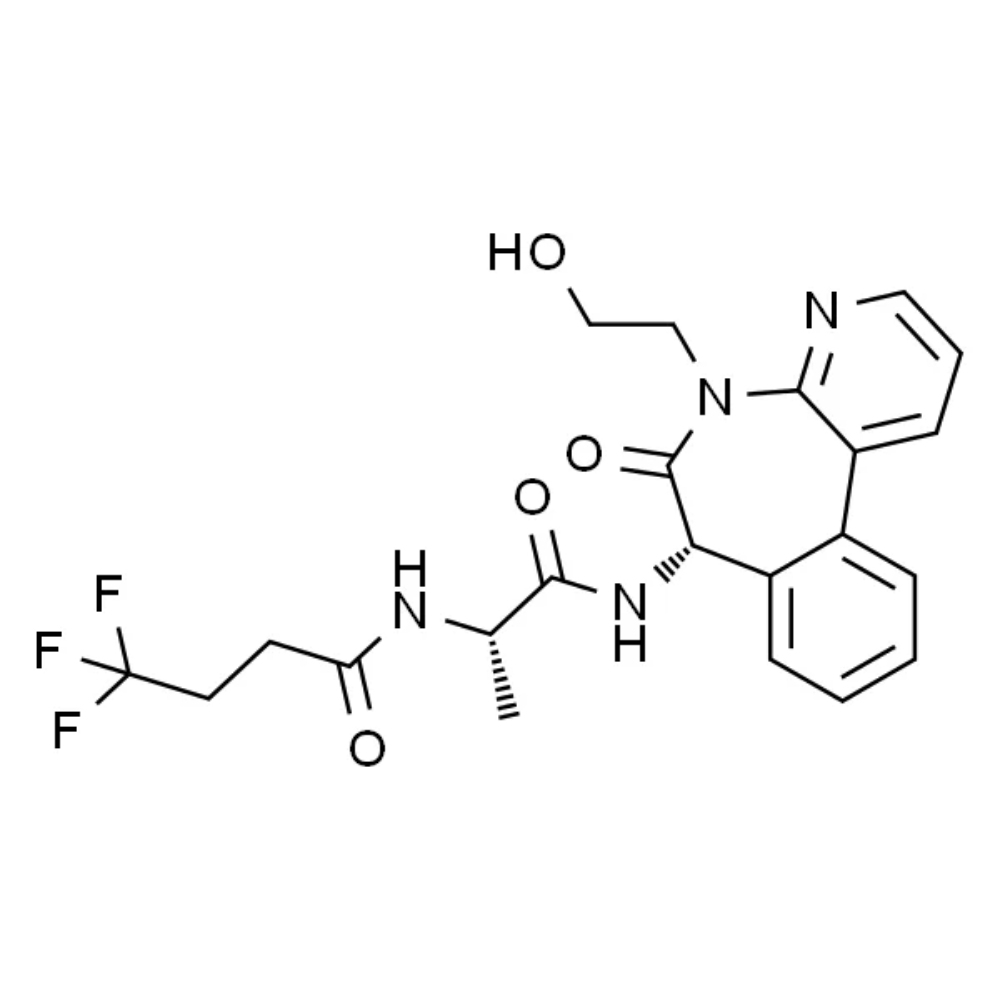
RO4929097 (IR0550) est un autre inhibiteur de la γ-sécrétase fréquemment utilisé dans les modèles expérimentaux pour examiner comment le blocage de Notch affecte la signalisation associée aux tumeurs et la régulation du destin cellulaire.
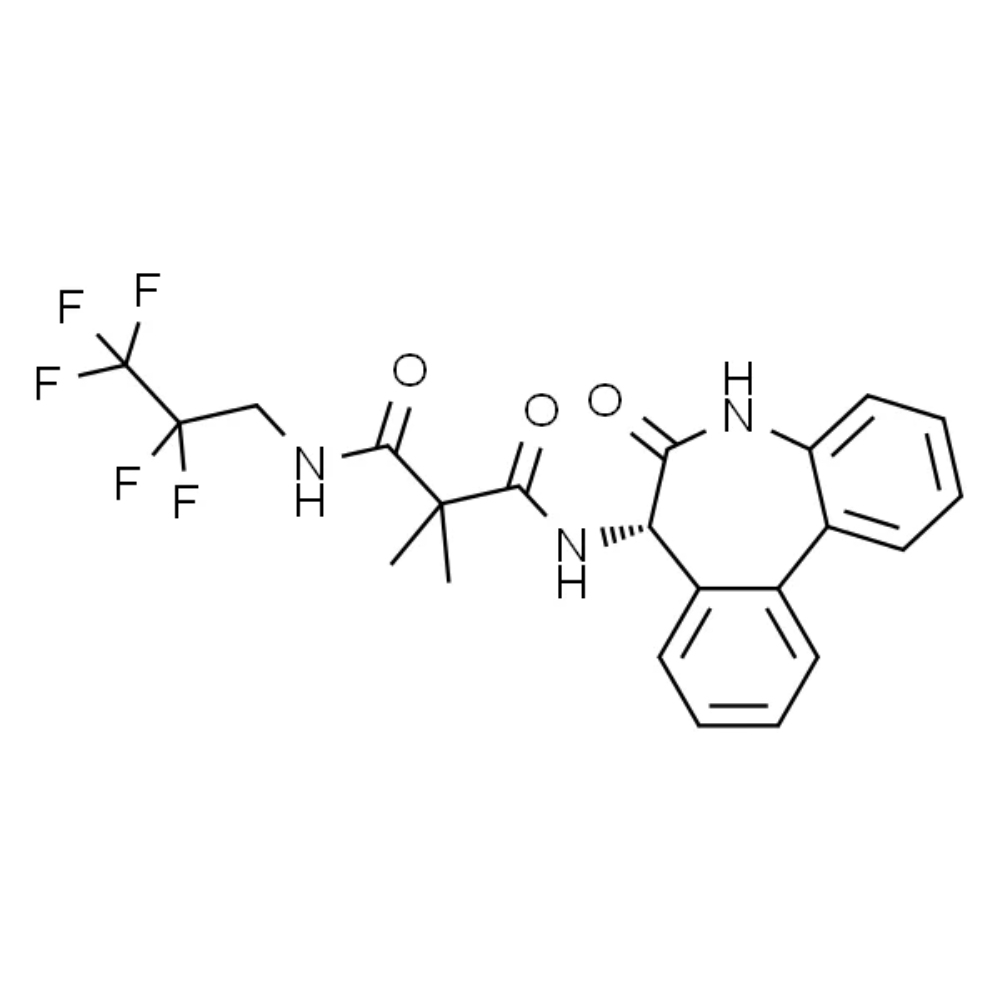
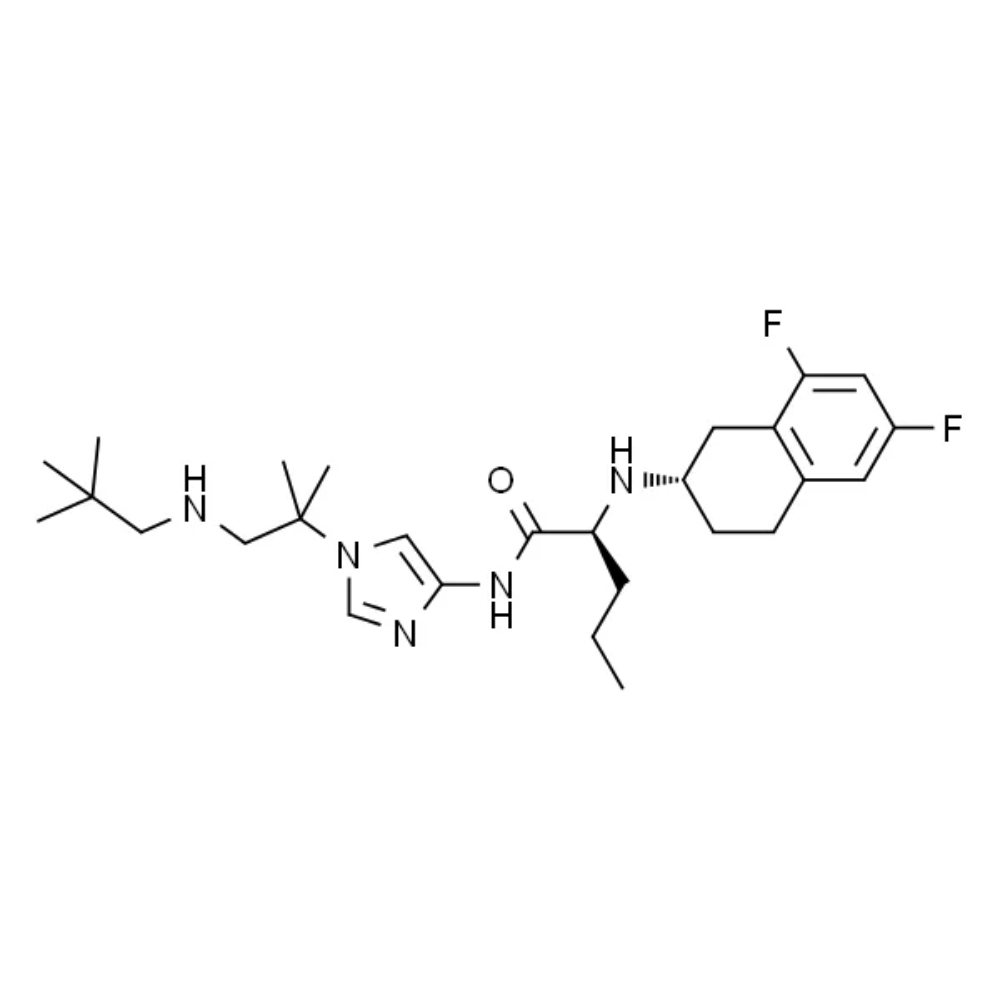
Nirogacestat (IN1250), un inhibiteur sélectif de la γ-sécrétase, convient également aux recherches axées sur la modulation de la voie dépendante du récepteur Notch.
FAQ (questions fréquentes)
Q1 : En quoi la voie de signalisation Notch se distingue-t-elle des autres voies ?
A : Notch repose sur un contact direct cellule-cellule, activé par un clivage protéolytique séquentiel S1-S3, libérant NICD pour la transcription nucléaire.
Q2 : Quels sont les outils expérimentaux essentiels ?
A : Ligands/récepteurs recombinants, inhibiteurs de la γ-sécrétase, anticorps ciblant NICD, kits ELISA HES/HEY, disponibles auprès de Solarbio.
Q3 : Comment le dérèglement de Notch contribue-t-il au cancer ?
A : La suractivation entretient les cellules souches cancéreuses et stimule leur prolifération ; la perte de fonction peut agir comme un suppresseur de tumeur.
Q4 : Quel est le rôle de Notch dans les cellules souches adultes ?
A : Régule l'auto-renouvellement et la différenciation des tissus intestinaux, épidermiques et hématopoïétiques.
Q5 : Comment garantir la reproductibilité expérimentale ?
A : Utilisez des réactifs certifiés ISO, des anticorps validés et des ligands recombinants standardisés de Solarbio.
Q6 : Produits recommandés pour la détection en aval ?
A : Kits ELISA HES1/HEY et anticorps monoclonal anti-NICD.
Q7 : Inhibiteurs ou modulateurs recommandés ?
A : Inhibiteurs de la γ-sécrétase et ligands recombinants spécifiques disponibles via Solarbio.
 Consulter
 sur Whatsapp
 Laisser un message
 haut
haut