




Related news
Common Protein Tags Explained: His, GST, MBP, FLAG and Fluorescent Tags
Table of Contents
Tags are used for many purposes during the expression of recombinant proteins. They aid in the purification, identification and studies of protein interactions. If you have worked with recombinant proteins then you will have come across the His tag, the GST tag, the MBP tag or the FLAG tag. These are mentioned in the expression vectors that are used to create the recombinant protein, in the protocols that are used for its purification and in the antibodies that are used to detect it.
Even when a protein gives a strong expression band on SDS-PAGE it can be very difficult to purify. The protein may form large, insoluble aggregates or, after having been purified successfully with the help of an antibody, it may not react with this antibody as expected.
Different protein tags are used for different purposes. By knowing the properties of tags, one can plan the experiment of interest before even ordering the necessary reagents. This can help minimize several potential problems.
What Are Protein Tags and Why Are They Used?
How Tagged Proteins Work
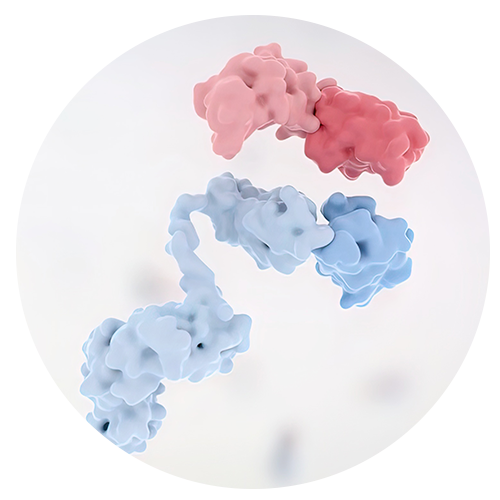
A protein tag is a short peptide or even larger protein which is fused to a target protein by recombinant DNA technology.
The resulting fusion protein consists of the target of interest and the tag. The properties of the tag enable its use for protein purification, increasing protein solubility, detection with antibodies in Western blots and other applications, and others. Tagged proteins can also be followed in cells.
A protein tag can be attached to the N-terminus or to the C-terminus of a target protein. Depending on the structure of the protein and the aim of the experiment the better attachment site has to be selected.
Small tags have minimal impact on the overall size of the protein. In contrast, larger tags can affect protein folding, solubility, and interactions.
Choosing a protein tag goes beyond simply finding an appropriate expression vector for it.
Choosing Tags Based on Experimental Goals
Before you can select a tag for expression, determine what you need to do with the expression.
For routine affinity purification, a His tag is sufficient, whereas for solubility problems like GST and MBP are very useful. For antibody-based detection like FLAG tag is very often used for detection of proteins of interest. Fluorescent tags are very useful for studies of protein localization.
Short peptide tags and larger fusion partners differ in their effects on protein solubility, purification, and function. Small tags such as His and FLAG generally add less molecular weight, while larger partners such as GST and MBP may improve the soluble expression of certain proteins. The optimal choice depends on the experimental goal and the properties of the target protein.
There is no single protein tag that is optimal for all proteins. The choice of tag typically depends on several criteria, including the expression host system, the planned downstream purification steps and the degree to which it is essential that the expressed protein retain its natural biological activity.
His Tag and GST Tag for Protein Purification
His Tag: A Small Tag for Affinity Chromatography
The His tag is one of the most commonly used protein tags in recombinant protein production.
The typical 6×His tag is a sequence of 6 histidine residues, HHHHHH. The small size of the 6×His tag makes it suitable because it does not add too much weight to the target protein of interest.
His-tagged proteins are commonly purified using immobilized metal affinity chromatography, also known as IMAC.
In the affinity chromatography of a histidine-tagged fusion protein, the histidine residues of the fusion protein interact with metal ions such as nickel or cobalt, which are attached to a chromatography matrix. After washing away any impurities, the bound fusion protein is eluted using a buffer containing imidazole and other suitable elution conditions.
His tags are among the most commonly used tags for bacterial protein expression, especially in E. coli.
In addition to sufficient protein expression, the accessibility of a His tag is important for binding to the resin. A buried His tag is not able to bind to the resin and thus can lead to very poor purification results.
Also, the composition of the buffer can interfere with metal affinity purification, for example by chelating agents or by other components of the buffer.
GST Tag: Improving Solubility and Purification
GST is a protein tag of approximately 26 kDa called glutathione S-transferase.
Tags of GST are often used in prokaryotic expression systems. Some recombinant proteins become more soluble after tagging with GST and can be purified using affinity-chromatography with glutathione.
Note that while a small His tag would normally form a rather small fusion partner, the GST fusion partner forms a rather large fusion partner which can be very useful if the target protein is unstable or even insoluble on its own.
Solarbio offers Recombinant GST Tag protein (P02337) for protein related researches.
Protein interaction studies can also be performed using GST fusion proteins. These can be used in conventional GST pull-down assays after which the tagged protein has been attached to glutathione resin. Subsequently, all proteins that interact with the tagged protein can be washed off from all other proteins attached to other resins and detected using Western blot.
In practice there are limitations to using GST. The protein can dimerize and the size of the tag can affect the target protein’s conformation or activity.
A suitable protease cleavage site can be included in the fusion partner during construct design to remove the GST tag after purification if necessary and interfere with your experiment.
MBP Tag and FLAG Tag in Recombinant Protein Research
MBP Tag: A Useful Option for Poorly Soluble Proteins
Maltose-binding protein, MBP. This is a 40 kDa protein which is used as a tag for proteins expressed in bacteria as a fusion protein.
MBP can improve the apparent solubility of some recombinant proteins for which it is expressed.
Expressing eukaryotic proteins in E. coli can be a challenge because of incorrect folding and the protein forming insoluble inclusion bodies. This can be helped by using a 6xHis tag.
MBP fusion proteins can also be purified using amylose affinity chromatography.
Recombinant MBP Tag protein (P02841) is available from Solarbio as Recombinant Tag Proteins.
Just because your protein becomes more soluble, doesn’t mean it’s folded up correctly or that it’s active.
Test the activity of your fusion protein as a purified protein and do not solely rely on the amount of protein that remains in solution as the fusion protein.
FLAG Tag: Small Size and Convenient Antibody Detection
FLAG is a very short peptide tag consisting of 8 amino acids and has the sequence DYKDDDDK.
In comparison to GST and MBP, FLAG is a tag that adds very little molecular weight to a recombinant protein.
The main advantage of an antibody binding tag such as the FLAG-tag is the convenient recognition of the corresponding antigen by specific antibodies. FLAG-tagged proteins can be detected using anti-FLAG-antibodies and purified using suitable anti-FLAG-affinity matrices.
The properties of the FLAG tag enable its use in Western blotting, immunoprecipitation, and in the study of protein complexes.
In addition to serving as a recognition motif for anti-FLAG antibodies, the FLAG sequence contains a recognition motif for the enzyme enterokinase which can be used to cleave the tag from a fusion protein provided the correct fusion is made and suitable cleavage conditions are employed.
Researchers looking for a corresponding recombinant tag product can consider Recombinant FLAG Tag protein (P02839).
The FLAG tag, although small, should be placed with consideration of the nearest functional domain. It can affect interactions of the protein with other molecules or even the accessibility to the detection antibody.
Testing N-terminal and C-terminal versions of the detection reagent can solve a detection problem without having to make an antibody.
Fluorescent Protein Tags for Localization and Detection
GFP Variants and mCherry Tags
Fluorescent protein tags can be used to observe the location of, and track the movement of, fusion proteins by fluorescence microscopy.
Common examples include eGFP, eCFP, eYFP, and mCherry.
All of the fluorescent proteins have different excitation and emission maxima. Thus, different imaging channels can be chosen for different proteins. Occasionally, it is even possible to monitor more than one protein in an experiment.
mCherry is a red fluorescent protein often used for making fusion proteins to study protein localization. Solarbio offers Recombinant mCHERRY Tag protein (P02838) for research.
Fluorescent tagging can be used to locate proteins within cells and to study protein transport. It can also be used to determine how changes in gene or protein expression affect the distribution of proteins within a cell.
Note, however, that simple fluorescence does not necessarily prove that a given protein is functional. Larger fluorescent proteins like these can interfere with protein behavior depending on their position within a given protein.
Expression, fluorescence maturity and background fluorescence must also be taken into account when analyzing images.
Matching Recombinant Tag Proteins With Tag Antibodies
Why Tag Antibodies Matter
Using “tag” antibodies can also be very convenient for detecting fusion proteins instead of having to generate a new antibody for each single target.
Unrelated proteins can be studied using several different proteins with the same GST tag. They can be detected using a suitable anti-GST antibody.
Solarbio Anti-GST Tag Monoclonal Antibody (K200006M) is designed for GST-tag detection in compatible experimental applications. Researchers should confirm antibody suitability based on the intended assay and product validation data.
In addition to the antibodies listed above, we also offer Anti-GST Tag Polyclonal Antibody, Anti-MBP Tag Monoclonal Antibody, Anti-MBP Tag Polyclonal Antibody, and Anti-Flag Tag Polyclonal Antibody.
Monoclonal and polyclonal antibodies can be very useful in different applications, but they recognize different epitopes and have different properties.
The selection of an antibody needs to take into account the experimental approach, the conditions under which the sample was prepared, and the accessibility of the fusion tag.
Antibody specificity, epitope accessibility, and the method of antibody production can influence the detection of tagged proteins. Recombinant antibody technologies also provide options for developing detection reagents with defined binding properties.
Detecting Fluorescent Fusion Proteins With Antibodies
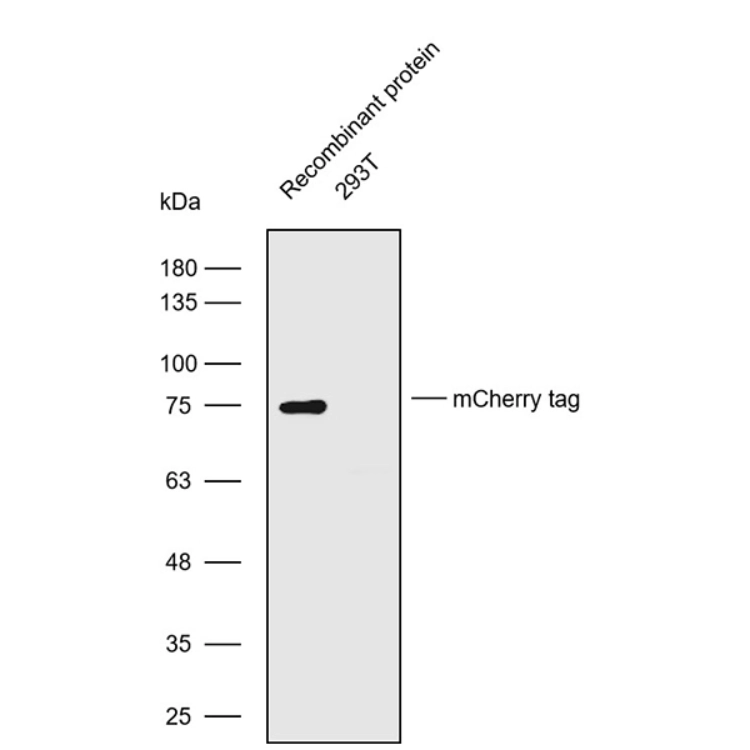
Fluorescent proteins can also be detected with tag-specific antibodies.
This can be very useful in a number of situations: when the fluorescence signal is very weak; when samples have already been processed for Western blotting; or simply to provide an additional means to check for protein expression.
For detection of mCherry-tagged proteins, the Anti-mCherry Tag Monoclonal Antibody (K200015M) from Solarbio can be used.
We also supply a number of recombinant multi-tag products, including Recombinant Tag-5 protein (P06425) and Recombinant Tag-9 protein (P06426).
These products are combinations of common tag sequences. They can be of use in any research project that involves tag recognition or related detection systems.
Always verify that a product is suitable for the antibody and application that you are using in your experiments.
Common Problems When Working With Tagged Proteins
High Expression Does Not Always Mean Easy Purification
One mistake that is frequently made is to pick a tag that typically yields high expression.
Even when expressed at high levels a protein can form inclusion bodies or aggregates during purification.
An MBP or GST fusion protein may be of use if solubility is the main problem to be tackled. However, if your protein is already soluble and you simply require a simple purification, a smaller His tag may be the better choice to use.
The expression, induction, buffer conditions and purification all influence results.
For customers who are unable to establish a suitable expression system in their lab, Solarbio also provides protein expression related research services including recombinant protein production and purification.
Weak Antibody Signals After Expression
A protein that has been tagged with an epitope cannot be detected with an antibody? Then first check, whether the antibody is defective!
The tag may not be accessible, the fusion protein could have degraded, or there may be lower expression than expected.
Verify the calculated molecular weight of the expressed protein and check for the presence of the tagged region.
It’s also useful to include suitable positive and negative controls on Westerns. If an antibody that recognizes a known tagged protein does not recognize the experimental sample then the problem may lie with the fusion protein or with sample preparation.
Conclusion
His, GST, MBP, FLAG, and other tags serve to solve different kinds of problems in protein research.
For routine affinity purification His-tagged proteins are most convenient. In difficult expression projects GST- and MBP-tagged proteins can often be co-expressed with the protein of interest as a fusion. Proteins that are expressed with a FLAG-tag can be purified and detected with specific antibodies. Fluorescence tags enable the localization of proteins in living cells.
Choosing the tag also means choosing the suitable purification material and detection antibodies.
Solarbio provides recombinant tag proteins, tag-specific antibodies, and protein expression services to support recombinant protein research. For product selection or technical assistance, researchers can provide the target protein, expression system, purification requirements, and intended downstream application.
FAQ
Q1: What is the difference between His tag and GST tag?
A1: His tag is a small peptide usually containing six histidine residues, while GST is a protein of approximately 26 kDa. His tags are commonly used for metal affinity purification. GST tags support glutathione affinity purification and may improve protein solubility, although their larger size can affect protein behavior.
Q2: Which protein tag is best for improving recombinant protein solubility?
A2: MBP and GST are commonly used tags for insoluble proteins. MBP is particularly useful for eukaryotic proteins expressed in bacteria. However, the results can vary with different proteins and even with different versions of the same protein. It is best to test several different fusion constructs.
Q3: Can FLAG-tagged proteins be detected by Western blot?
A3: Yes, FLAG-tagged proteins can be detected using appropriate anti-FLAG antibodies in Western blotting or immunoprecipitation experiments. The short peptide sequence of the FLAG-tag allows for specific recognition by antibodies. Detection of FLAG-tagged proteins requires compatible antibodies as well as optimal sample preparation.
 Consult
 Whatsapp
 Leave Message
 top