






Related news
Off-Target Effects of Small Molecule Inhibitors: Why Good-Looking Data Can Still Be Wrong
Table of Contents
The small molecule inhibitors are easy to use: add the compound and after a set time check the signal. It is this simple workflow which makes them so popular for research in drug discovery, target validation, and cell biology.
The problem starts when the result looks cleaner than it really is.
In addition to the intended target of a compound, it can bind to a large number of other proteins. At low doses of a compound, this can be of little importance. However, at higher doses, the other interactions can become the main cause of the observed phenotypes. This means that cells have changed, the assay now gives strong signals, and after some time it will look as if very promising results have been obtained. However, later on, others will not be able to reproduce these results.
This is what makes off-target effects difficult. They do not always produce an obvious error. More often, they produce believable data with the wrong explanation.
Researchers working with small molecule research solutions need to think about off-target activity before the first experiment, not after several months of follow-up work.
Why Do Small Molecule Inhibitors Hit More Than One Target?
Similar Proteins Often Have Similar Binding Sites
Small molecule inhibitors can bind in the pockets that are shared by members of the same protein family. In the case of the kinases, the ATP-binding sites are often similar, so that a compound developed to inhibit one kinase can also inhibit several other kinases of related families.
SP600125 is commonly used as a JNK inhibitor. It is useful, but it is not a perfect one-target compound. It can also affect PI3Kδ, S6K1, and other kinases, depending on the dose and experimental setting.
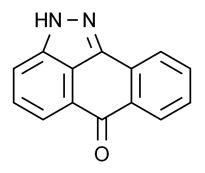
If SP600125 changes cytokine production, cell growth, or survival, that result should not be assigned to JNK immediately. Another JNK inhibitor with a different chemical scaffold can help. Genetic knockdown is also useful. Without that cross-check, the mechanism remains uncertain.
Researchers can review small molecule compounds by target, pathway, and application before selecting a working compound.
Chemical Structure Can Create Nonspecific Binding
Some compounds are more likely to stick to membranes, serum proteins, plastic surfaces, or unrelated proteins. High lipophilicity is one warning sign.
Clofazimine has a hydrophobic, aromatic structure and a high LogP. It can associate strongly with lipid membranes and serum proteins. The amount added to the culture medium may be very different from the amount that reaches the intracellular target.
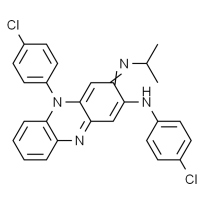
This matters when comparing results across cell lines or serum conditions. A compound may appear more active in one system simply because more free compound is available. Solubility, aggregation, DMSO level, and serum concentration should be checked before the biological result is explained.
Selectivity Changes With Concentration
Selectivity is not fixed at every dose.
A single point dose for a compound can show high selectivity at 10 nM, but prove to be a very broad-spectrum compound at 10 µM in subsequent cell-based experiments.
Alisertib is used as an Aurora A inhibitor. At a suitable nanomolar concentration, it can show clear Aurora A activity. At concentrations above its selective range, inhibition of Aurora B and broader cellular effects become more likely.
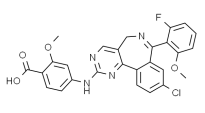
A stronger phenotype is not always a better result. Sometimes it only means the compound has moved outside its selective range.
What Can Off-Target Activity Do to an Experiment?
It Can Produce a False-Positive Phenotype
A small molecule can reduce cell viability for reasons not related to the intended target. The compound can affect, for example, mitochondrial functions, damage membranes, change redox states, or affect the cytoskeleton.
The cells may round up, detach, or stop growing. Those changes can look target-specific, especially when the target is already linked to cell survival.
One viability result is not enough. Morphology, apoptosis markers, cell-cycle data, and downstream signaling should be checked together. The pathway database can help researchers choose related markers instead of relying on a single endpoint.
It Can React With the Detection Method
Some compounds interfere with the assay rather than the cells.
Resazurin-based assays are sensitive to redox-active compounds. A test compound may reduce the dye directly, even when cell metabolism has not changed. Fluorescent compounds may raise the background. Colored compounds can affect absorbance readings.
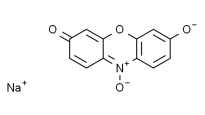
This issue is easy to miss because the plate reader still produces a number.
A simple compound-only control can reveal the problem. Add the compound to the assay mixture without cells. If the signal changes, the detection chemistry is being affected. A second assay based on another principle should then be used.
The broader Solarbio product range includes small molecule compounds, cell assays, antibodies, and detection reagents that can be matched during assay planning.
It Can Send the Whole Project in the Wrong Direction
The largest cost is usually not the failed first experiment. It is the follow-up work built on a wrong mechanism.
A researcher may decide that one protein controls a pathway because one inhibitor created a clear phenotype. More experiments follow. Animals are treated, sequencing is ordered, and a full model is built around the first result.
Months later, the same phenotype cannot be reproduced with another inhibitor or with gene knockout.
Chemical inhibition can support a mechanism. It cannot prove the mechanism by itself.
How Can Off-Target Effects Be Found Early?
Test a Real Dose Range
Testing one concentration saves time at the start, but it often creates more work later.
A full dose-response curve shows where the effect begins. It also shows whether the response appears near the known potency of the target or only after the dose becomes much higher.
If the expected target is inhibited at 20nM, but the cellular phenotype only appears at 5µM, the gap needs an explanation. Poor cell penetration is possible. Off-target activity is also possible.
The working dose should normally be the lowest concentration that gives a stable and repeatable target-related effect.
Compare the Compound With Genetic Methods
CRISPR knockout, CRISPR interference, shRNA, and siRNA provide a different way to change the same target.
The chemical result does not need to match the genetic result in every detail. A drug works quickly, while gene loss can trigger long-term adaptation. Still, the main direction should make biological sense.
If an inhibitor kills the cells but the target knockout has little effect, the compound may be acting somewhere else. If the inhibitor still works in a target-null cell line, that is an even stronger warning.
Researchers needing extra support for protein work, antibody preparation, or assay development can review Solarbio technical services.
Use More Than One Readout
A viability assay says that the cells changed. It does not say why.
A second readout should examine the target or a nearby pathway event. This may be target phosphorylation, substrate phosphorylation, protein localization, transcript change, enzyme activity, or direct target engagement.
The two assays should not depend on the same detection chemistry. If both methods can be affected by the same compound property, they are not truly independent.
How Can Off-Target Risk Be Reduced?
Use Different Inhibitors for the Same Target
Two compounds with different chemical scaffolds are much more useful than repeating the same inhibitor at several doses.
For BTK research, Evobrutinib, Acalabrutinib, and Zanubrutinib can be compared as separate tools. If they create a similar phenotype within their normal activity ranges, the conclusion becomes stronger.
The same logic applies to EGFR studies. Osimertinib and Gefitinib bind differently and have different selectivity profiles. Matching results from both compounds is more useful than an extreme response from one high-dose treatment.
Keep the Vehicle Control Truly Matched
DMSO is often treated as harmless, but cells can respond to it when the final concentration becomes too high.
Every treatment group should contain the same DMSO level. A 0.1% difference may seem small, yet sensitive cells can react to it. Stock concentration should be planned so that the working dose does not require a large amount of solvent.
Check Reversibility With a Washout Experiment
A washout experiment is simple and often informative.
Treat the cells, remove the compound, wash the cells, then continue the culture in fresh medium. If the phenotype begins to reverse, direct and reversible inhibition is more likely.
Such long-lasting effects can arise from irreversible protein binding, lasting changes in signal transduction pathways, or general toxicity. This test does not prove off-target effects, but rather that the mechanism of action of a compound needs to be further explored.
Do Not Ignore Compound Quality
Purity, identity, storage, and repeated freeze-thaw cycles can all change compound behavior.
A degraded stock may produce activity that is not listed in the product profile. Poorly dissolved material can also create uneven exposure between wells. Small aliquots are usually safer than opening the same stock tube many times.
Solarbio has worked in life science reagents since 2004 and supplies small molecule compounds, biochemical reagents, antibodies, assay kits, and related research tools. Company and quality information can be found on the Solarbio company page, while product and research updates are shared in the news center.
Conclusion
The usual problem with off-target effects is not that they ruin an experiment completely but rather that they lead to incorrect conclusions about the real target. Usually, the results look mostly correct.
The main checks are not complicated. Use a real dose-response curve. Stay close to the minimum effective concentration. Compare different inhibitors. Add genetic controls when possible. Use a second assay based on another principle. Check whether the compound interferes with the detection chemistry.
These steps take more time before the main study begins, but they are usually cheaper than rebuilding the project later. For help with compound selection, assay matching, or target validation, researchers can contact Solarbio.
FAQ
What is an off-target effect in a small molecule experiment?
An off-target effect happens when a compound interacts with proteins other than the intended target. These extra interactions may change cell growth, signaling, metabolism, or assay readouts.
Does a strong phenotype mean the inhibitor is working well?
Not always. A strong phenotype may come from high-dose toxicity, broad kinase inhibition, mitochondrial damage, or assay interference. The result should be checked at lower concentrations and with another validation method.
How many inhibitor concentrations should be tested?
A full dose-response curve is better than one or two doses. The range should cover concentrations below and above the expected target potency without moving too far into a clearly toxic range.
Can CRISPR knockout replace small molecule validation?
No. Chemical inhibition and genetic knockout answer related but different questions. Using both gives a better view because compounds act quickly, while knockout can cause long-term cellular adaptation.
Why should two inhibitors have different chemical scaffolds?
Structurally similar inhibitors may share the same off-target activity. Different scaffolds reduce the chance that both compounds create the same false phenotype for the same unrelated reason.
How can I check whether a compound interferes with a viability assay?
Run a compound-only control without cells. If the assay signal changes, the compound may be reacting with the dye or detection chemistry. A second assay based on another method should be used.
 Consult
 Whatsapp
 Leave Message
 top
top